Thursday, 6 November 2008

roasted pepper soup


Firstly, I have never felt prouder to be an American. Yes, I am American (well, half) and after last night's election results, I am happy to advertise that fact more prominently!!!

Now, onto the food!

~~~

I made this recipe a while ago, but hadn’t posted it until now.

I'm not sure why I delayed, but I guess there was always something else I wanted to post first.

Then I saw the snarky blog, Thursday Night Smackdown, and Michelle's First Thursdays event and I knew there was a reason I'd held off.

This First Thursdays theme is “An ingredient you think you don’t like” and since I detest capsicum (peppers) I knew it was exactly what Michelle was after.


I hate capsicum. Always have for as long as I can remember.

Every month I try it again, just in case, and the results are the same: no me gusta.

I like chillies, because the heat disguises the capsicum flavour, but if they’re too mild and I taste the capsicum, I’m not happy.

When I first saw this recipe in Tessa Kiros’ Falling Cloudberries, a cookbook I adore, I knew that if anyone could make capsicum tasty it would be reliable Tess.

It was a success.

For some reason, I really, really enjoyed this soup. I ate it all and went back for seconds.

I was so excited that I’d overcome my dislike of capsicum, that I tried some sweet, roasted pepper the next day and blah! Yucky, yucky, yucky!

Who knows what’s going on, but all I can say is that this recipe works for me and I enjoy it.

I think this is the spirit Michelle was aiming for when she encouraged us all to try cooking with an ingredient we don’t like.


Roasted Pepper Soup
Recipe from Falling Clouberries by Tessa Kiros. Serves 4.


Ingredients:

4 red peppers (capsicum)
2 tablespoons olive oil
2 garlic cloves, crushed
1 small onion, chopped
4 ripe tomatoes, peeled and chopped
300g plain Greek yoghurt
40g pitted black olives, chopped
Finely grated rind of 1 lemon
Leaves from 2 rosemary sprigs, finely chopped

Method:


1. Cut capsicum in half, lengthways, and remove seeds.

2. Preheat grill. Line an oven tray with foil and arrange peppers skin-side up in a single layer.

3. Grill for 30 minutes until the skin has darkened and swelled and the capsicum is soft.

4. Put hot capsicum in a plastic bag and seal. Leave for 5 minutes as the sweating helps to remove the skin.

5. Peel skin from capsicum.

6. Heat olive oil in a large pot and sauté the onion and garlic for 5 minutes or until soft.

7. Add tomato and cook until it bubbles.

8. Tear capsicum halves into large chunks and add them to pot. Season with salt and pepper.

9. Add 750ml water and bring to the boil, then lower heat, cover pan and simmer for 30 minutes.

10. Remove from heat and purée. The soup should remain thick, so if it’s watery simmer uncovered to reduce. Add more water if too thick.

11. Check seasoning then serve with dollops of yoghurt and sprinkles of lemon rind, rosemary and chopped olives.

Variations:
add chilli while cooking or shelled, cooked prawns before serving.


Tags:

Monday, 3 November 2008

cucumber limeade

 
This drink is simply delicious.

It's an iced cucumber drink apparently from Aceh on the Indonesian island of Sumatra, the unfortunate epicentre of the 2004 tsunami.

The cucumber adds a cooling, melon flavour while the lime gives zing. It was so good that I can honestly say it could be my new favourite drink.

Es Timun Aceh (Aceh-Style Cucumber Limeade)

Based on a recipe from
The Art and Science of Food. Makes 2.
Ingredients:

2 cucumbers
Juice of 3 limes
100ml kaffir lime syrup
Crushed ice

Method:


1. Halve cucumbers lengthwise and scrape out seeds.

2. Coarsely grate cucumbers, reserving juices.

3. Combine cucumber juice, lime juice, kaffir syrup and ice. Shake vigorously.

4. Stir cucumber pieces through and pour into glasses. Drink immediately.


Cucumbers (Cucumis sativus) are related to squash and muskmelons, growing from creeping vines with curly tendril and leaves that form a canopy over the elongated fruits.

Green cucumbers are the unripe fruit whereas the ripe, yellow stage is too bitter for consumption.

In the past I have always argued that cucumbers have a slight melon flavour, depsite many people scoffing at this observation. Having done my research I am pleased to report that this is not my imagination and that cucumbers indeed have a “watery, light melon taste”. Interestingly, however, a minority of people will report a “highly repugnant taste some say almost perfume like” due to the “presence of the organic compound phenylthiocarbamide”

There are many varieties of cucumber, the most interesting being the Indian dosakai which is spherical and yellow and commonly used in soups, pickles and chutneys.

The large genetic varieties of cucumber present in India leads botanist to believe it was native to the subcontinent. It has probably been cultivated in Western Asia for more than 3,000 years and was recorded in ancient Ur and the ancient saga of Gilgamesh.

Romans were very keen on cucumbers and Emperor Tiberius ate them daily. The Bible gives cucumbers two shout outs (Numbers 11:5 and Isaiah 1:8) and French emperor Charlemagne grew them in his 9th century gardens.

England had two introductions, the first in the 1300s and then again in the 1500s and Christopher Columbus introduced cucumbers to Haiti in 1494. In 1535 explorer Jacques Cartier discovered cucumbers growing in the area which is now Montreal and the Iroquois were already growing them when the first Europeans arrived in what is now upstate New York.


According to Wikipedia “The Romans are reported to have used cucumbers to treat scorpion bites, bad eyesight, and to scare away mice. Wives wishing for children wore them around their waists. They were also carried by the midwives, and thrown away when the child was born.”

Cucumbers are 96% water, making them ideally hydrating, but they also contain some vitamin C and caffeic acid which soothe the skin. Hence cucumber eye presses in beauty treatments.

Cucumber skin is rich in fibre, silica, potassium and magnesium. Silica is important for connective tissue (eg muscles, ligaments, cartilage and bone) and cucumber juice is said to benefit the skin’s complexion and relieve dermatitis and sunburnt.

The fitness worlds uses cucumbers are a diuretic and for weight loss although cucumber seeds and skin can give some people gas.

Cucumbers are flavoured by their seeds and age faster when stored with tomatoes, melons or apples. 60% of world cucumber production comes out of China, with the next largest producers being Turkey, Russia, Iran and the USA

Our family has always loved to eat cucumbers sprinkled with salt, vinegar and olive oil but there are many other ways such as pickles, tzatiki, stuffed with seafood or puréed into a cold soup.

Weekend Herb Blogging host for this week is Wiffy from Noob Cook, so be sure to visit her blog for the recap.


References & Photo Sources
http://en.wikipedia.org/wiki/Cucumber
http://www.freshforkids.com.au/veg_pages/cucumber/cucumber.html
http://www.whfoods.com/genpage.php?tname=foodspice&dbid=42
http://en.wikipedia.org/wiki/Image:ARS_cucumber.jpg

Tags:

Wednesday, 29 October 2008

fig, hazelnut & chocolate fudge cake


This is my 400th post. Yippee!

It's also the Three Year Anniversary of Weekend Herb Blogging, my favourite food blogging event.

We have been asked to post about our favourite herb, fruit or vegetable for 2008 and I have decided to go with a recently found love: figs.

This year I have managed to access a bounty of delicious, fresh figs for eating as well as chowed down a load of quality dried figs. I also made the best jam I've ever tasted, as well as this ridiculously good cake.

This cake was part of a feast I prepared for some former colleagues and the recipe, which I found in Australian Gourmet Traveller, was simply exquisite.

I love dried figs and chocolate. I think it's a match made in heaven. The nutty richness of the figs combined with the bittersweet chocolate is just superb.

I can highly recommend this sticky, nutty cake. It certainly has a fudge-like consistency and would be excellent alongside a tokay or, even better, a glass of pedro ximenez sherry.


Fig, Hazelnut & Chocolate Fudge Cake

Recipe from
Australian Gourmet Traveller, July 2007. Serves 14.

Ingredients:


Cake:

250ml Muscat (or brandy)
300g dried figs, coarsely chopped
420g hazelnuts, roasted & peeled
250g unsalted butter
300g caster sugar
6 eggs
250g dark chocolate, melted
35g fresh breadcrumbs

Ganache:

75g white sugar
125ml pouring cream
150g dark chocolate, chopped

Method:

1. Combine Muscat & figs in a saucepan. Bring to the boil then reduce heat and simmer for 10 mins or until figs have softened and absorbed some Muscat. Cool.

2. Preheat oven to 160’C. Grease 26cm spring-form cake tin. Line with baking paper.

3. Process hazelnuts in a food processor until coarsely ground.

4. With an electric mixer, beat butter and sugar until pale and creamy.

5. Add eggs one at a time, beating well after each addition to ensure they are completely combined.

6. Add fig mixture, hazelnuts, chocolate and breadcrumbs and stir to combine.

7. Spoon mixture into cake tin and bake in oven for 55 minutes or until an inserted skewer withdraws clean.

8. Cool in pan, remove and place on a wire rack over a tray.

9. To make the ganache, place sugar in a heavy-based saucepan and melt over a low heat without stirring.

10. Add cream and stir.

11. Add chocolate and stir over a low heat until melted and mixture is smooth.

12. Pour over cake, smoothing with a palette knife. Cool.

13. Serve cake at room temperature with double cream and candied oranges.

Note:
I used 200g hazelnuts and 220g pecans.


The genus ficus (from the family Moraceae) contains about 850 species of woody trees, shrubs and vines.

Distant cousins of the mulberry, breadfruit and jackfruit, figs are believed to originate in Western Asia and taken by humans throughout the Mediterranean.

The genus ficus is at least 60 million years old and possibly as old as 80 million years. According to Wikipedia, there is evidence that “the Common fig (F. carica) and Sycamore fig (F. sycomorus), were among the first - if not the very first - plant species that were deliberately bred for agriculture in the Middle East, starting more than 11,000 years ago. . . . This find predates the cultivation of grain in the Middle East many hundreds of years.”

In Ancient Egypt, latex from the soft fig wood was used for mummy caskets whereas in present-day Uganda it can produce barkcloth as well as decorations in Cambodian architecture.

The figs that we eat are consider fruit, but they are technically the flower of the tree.

Figs have a unique pollination system involving wasps who crawl into the fig fruit to lay their eggs. The wasps hatch inside the fruit and the larvae are nourished on the flesh before emerging, covered in pollen, to fly off and pollinate other trees. Scientists believe figs and wasps are an example of coevolution.

I learnt this as an eleven year old child and ever since have always cut fresh figs open to check for wasp larvae. I have never found any, mind you!

Figs must be allowed to ripen fully before they are picked as they will not continue ripening if picked immature. It’s interesting to note that any rain during the period of fruit development causes the fruits to split and spoil.

There are so many varieties of figs, and some have some cute names like Archipal, Flanders, Brown Turkey, Spanish Dessert and Persian Prolific.

A high energy food and an important food source for many wild animals, figs have always been at the centre of religious practices. In the Torah they are listed as one of seven important foods to be found in the Promised Land, figs are one of the two sacred trees of Islam, Siddhārtha Gautama (Buddha) found enlightenment meditating under a Sacred Fig (F. religiosa) and in Hinduism the Ashvastha, or "world tree", was a fig.

Other famous fig fans include Cleopatra, Odysseus, Adam & Eve (for clothing purposes) and the Greek god Dionysus.

Figs are grown in many places such as Iran, the Mediterranean, USA, Mexico, Australia, Chile and South Africa. In 2005, Turkey (285,000 tonnes) and then Egypt (170,000 tonnes) were the world’s top fig-producers, followed by other Mediterranean countries.

Figs have a good source of calcium and fibre and dried figs have excellent levels of copper, manganese, magnesium, potassium, calcium, vitamin K and antioxidants.

Figs are keystone species to many rainforest ecosystems, being a main food source for fruit bats, monkeys, birds, caterpillars and beetle larvae.

Interesting, two types of ficus (Weeping Fig F. benjamina; Indian Rubber Plant F. elastica) are proved powerful air-cleaning plants from the NASA Clean Air Study.

It was very interesting to learn that the word “sychopant” comes from the Greek words σῦκον, sýkon, "fig", and φαίνω, phaínō, "to show". It was used in Ancient Athens for the people who informed against fig exporters, since figs were so valuable that all fig growers were forced to sell their crop to the state. To accuse someone falsely was a method of defamation and potential personal gain.

This has been my contribution to Weekend Herb Blogging for another week. It's also WHB's Three Year Anniversary so you can vote on your favourite herb, fruit or veggie for 2008. Check out the recap by WHB founder, Kalyn, at Kalyn's Kitchen!

References
http://www.crfg.org/pubs/ff/fig.html
http://foodforest.com.au/figFactSheet.htm
http://en.wikipedia.org/wiki/Fig
http://en.wikipedia.org/wiki/Common_Fig


Tags:

Monday, 27 October 2008

cider & rune stones

It’s another Swedish post! Did the runic inscriptions give it away?

This time I wanted to take you through some of the alcohol I tried in Sweden, but first I wanted to introduce everyone to Systembolaget.

Systemet is a chain of government owned liquor stores. It is the only retail shop in the entire country where you can buy alcohol over 3.5%. This means, if you want to buy anything stronger than light beer, you have to go to Systemet.

The opening hours are quite restrictive and the anti-drinking messages are strong. It’s a Government monopoly to prevent underage drinking and alcoholism.

At first I was totally against it, thinking it was another one of the Swedish Government’s ploys to play parent over adult citizens, but I have been converted.

Anundshög rune stone
Why?

Because Systemet, buying for 9 million Swedes, is one of the world’s largest wine, beer and spirits buyers. I can’t even comprehend the purchasing power this commands!

They stock the most amazing range of alcohol from every nation in the world. I had no idea Romania made wine until I saw it on a Systemet shelf! Saba from Israel, I’d only read about the stuff! Beautiful Belgian beers a plenty!

Now imagine that every tiny village in Sweden has a Systemet, so even people in the remotest towns can order in the very best, the very latest alcohol at very, very, very reasonable prices. In fact some Aussie wines on the shelves were cheaper in Sweden than here!!!

With all this in mind, I was able to achieve two more of my 2008 Food Challenges: trying wine from the USA and South Africa.

Unfortunately I didn’t take a photo of the South African Drostdy-Hof Cape Red, made of Pinotage, Shiraz and Ruby Cabernet grapes. It had smoky flavours, as well as hints of liquorice, vanilla and forest berries.

But I did get a snap of the 2006 Frei Brothers Redwood Creek Chardonnay (Sonoma, California). It was a light, refreshing chardonnay without overbearing wood. Vanilla, apple and pear flavours with a pull towards lemon at the end. Very good. Me likes.


After all this alcohol talk, I’m sure you’re imagining Vikings glugging down mead, so why not throw in some photos of rune stones.

Rune stones are typically raised stones with inscriptions in the runic alphabet, the writing system of the Vikings. The tradition began in the 300s and lasted into the 1100s. Most are located in Scandinavia, but there are also rune stones in locations where the Vikings travelled. Sweden has around 2,500 with almost half of those in Uppland.

Rök, Östergötland (ÖG136)

The Rök Runestone is the most important rune stone in Sweden because it is the earliest known example of Swedish writing and therefore signifies the historical beginning of Swedish literature. It was probably carved in the 800s and the extensive writing outlines a dramatic story of battles, betrayals, heroism and monsters. It’s too long to include here so visit Wikipedia to read the full (and complicated) story. Ironically, the stone was named after the village of Rök, however this word means “stone” in Old Norse so the village was originally named after the stone anyway.

Eriksberg
I don’t like beer, but every now and then I sample a beer that makes me reconsider. Eriksberg is simply delightful. This pilsner is from the Carlsberg group and is slightly malty, quite aromatic and certainly a little stronger than most lagers. I’m a big fan.


Broby Bro, Uppland (U151) This stone is from a group of approximately 20 runestones called the Jarlabanke Runestones, pertaining to a local strongman, Jarlabanke, and his clan.
Old Norse: Þorbiorn ok Ingiþora letu ræisa stæin þenna æftiR Igul, faður sinn, ok Ærinvi æftiR boanda sinn ok æftiR ...
English: Þorbjôrn and Ingiþóra had this stone raised in memory of Ígull, their father; and Erinvé in memory of her husbandman and in memory of ...


Kiviks Fläderblomscider
This was the most beautiful, smooth and wonderful cider I have ever had. The base cider was made from apples and the extra edge came from elderflowers. It was halvtorr, which means “semi dry” and it was an excellent balance between sweet and savoury. Highly recommended and won’t even make a dent in your wallet.

Täby, Uppland (U164)
This runestone is from the mid-11th century and is located at the causeway, known as “Jarlabanke's bridge”.
Old Norse: Iarlabanki let ræisa stæina þessa at sik kvikvan, ok bro þessa gærði fyr and sina, ok æinn atti allan Tæby. Guð hialpi and hans.English: Jarlabanki had these stones raised in memory of himself while alive, and made this bridge for his spirit, and (he) alone owned all of Tábýr. May God help his spirit.


Rekorderlig Sommarcider (Rabarber/Jordgubb)This is a special edition strawberry and rhubarb flavoured cider. It looks lurid pink and it tastes luridly sweet. It was kind of nice, but it’s more like an alcoholic soft drink than a fruit cider. Maybe my tastebuds have matured more than I thought? 


Täby, Uppland (U226)
Arkils tingstad is the remains of a Viking assembly location, created by the Skålhamra clan. There are two rune stones at Arkils tingstad.
Old Norse: Ræistu stæina ok staf unnu(?) ok inn mikla at iarteknum. Ok Gyriði gats at veri. Þy man i grati getit lata. Gunnarr hiogg stæin.
English: (They) raised stones and produced the staff(?) and the great signs (of acclaim); Gyríðr also cherished her husband: he will therefore be commemorated in weeping. Gunnarr cut the stone.
 
Rekorderlig Krusbär
Wow. This gooseberry cider was sickly sweet. It was awful and I could barely finish one glass. After drinking this I realised that the Rekorderlig brand is too sweet for me.


Vallentuna, Uppland (U236)
This stone says "Ulf's heirs at Lindey had these stones raised and made the bridge after (in honour of) their father and brother. Visati hewed (cut these runes)."


Bro, Uppland (U617)One of the Hakon Jarl Runestones from the time of King Knut the Great (died 1035). Called the Bro Runestone after the church where it stands, it was commissioned by a noble family
Old Norse: Ginnlaug, HolmgæiRs dottiR, systiR SygrøðaR ok þæiRa Gauts, hon let gæra bro þessa ok ræisa stæin þenna æftiR Assur, bonda sinn, son HakonaR iarls. SaR vaR vikinga vorðr með Gæiti(?). Guð hialpi hans nu and ok salu.English: Ginnlaug, Holmgeirr's daughter, Sigrøðr and Gautr's sister, she had this bridge made and this stone raised in memory of Ôzurr, her husbandman, earl Hákon's son. He was the viking watch with Geitir(?). May God now help his spirit and soul.


For other Swedish posts try:
Swedish landscapes
Muskö, Stockholm's archipelago
Sailing on the West Coast
Swedish food
Göteborg's Xmas Markets

And these recipes:
Fisksoppa (fish soup)
Fläderblom Martini (elderflower cocktail) V
Glögg (spicy mulled wine) V
Glasört & Smör (samphire w butter) V
Kräftor i Lag (crayfish in dill broth)
Lingonberry Daiquiri V
Pepparkakor & Glacé Fruit Ice Cream Sandwich V
Pytt i Panna (potato & meat hash)
Rödbetssallad (beetroot & apple salad) V

Tags:

Saturday, 25 October 2008

sago gula bali

 
Frankly I’m disappointed at how poor these photos look, considering what a pretty little dish this actually was.

I guess I can’t do much about that, since it’s night when I cook and I don’t have a light box or suitable place to be taking photos.

Something for the Christmas wish list?

I know, I know. Here I am posting yet another Indonesian dish. You must think I’ve gone mad and I’m on some kind of Indonesian bender, but actually most of these recent recipes were cooked for the same Indonesian feast from September and I’ve been spacing the posts out.

In my opinion, sago pearls are exquisite. So many people think these gelatinous balls are repugnant, but I adore their silky smooth texture and slight toothsome resistance. They go wonderfully in drinks and dessert soups, such as my coconut milk sweetened with Balinese palm sugar, cinnamon and pandan.

I love the idea that this dessert is made from three palm products: starch (sago), sap (palm sugar) and nut (coconuts).


Sago Gula Bali (Sago w Spiced Coconut Milk)
Anna's very own recipe. Serves 4.


Ingredients:

400ml coconut milk
¼ cup water
1 pandan leaf, tied in a knot (or 1 drop pandan essence)
65ml palm sugar syrup
2 cinnamon quills
2/3 cup sago
Pinch of salt
4 mango cheeks, flesh cut into chunks

Method:


1. Rinse sago until water runs clear. Soak for 30 minutes.

2. Heat coconut milk, water, pandan, palm sugar syrup, salt and cinnamon in a pot until well combined and spices are infused. Chill.

3. In another pot, boil sago until transparent (about 5 minutes).

4. Rinse cooked sago in cold water.

5. Strain coconut milk infusion. Discard solids.

6. Divide sago between bowls and top with chilled coconut milk and fresh mango.


Pandan (Pandanus amaryllifolius) is an aromatic leaf also known as screwpine

Commonly used in South East Asian cooking, (Malaysia, Indonesia, Philippines, Thailand, Myanmar and Sri Lanka) it is particular popular as a flavouring for desserts and its green colouring explains the lurid green of many Asian sweets.

During a cooking class in Bali, our teacher explained that pandan was used similarly to vanilla in Western cuisine, and it seemed to have a similar, albeit milder, flavour.

To extract the flavour, the leaves need to be bruised which explains why they are often tied into knots and tossed into liquid to infuse. I have seen custards, jellies, pancakes and soups all flavoured with pandan.

Pandan also works with savoury food. In Thailand pandan makes an excellent wrap for grilled chicken, in many countries rice is infused during cooking and pandan can also flavour curries and pickles.

Many Asian grocery stores sell frozen leaves because the process doesn’t seem to destroy the nutty flavour.

Pandan grows in long narrow leaves fanning out from woody roots.

Interestingly, the leaves are not only flavoursome, but a good cockroach repellent and, according to Wikipedia, “the characteristic aroma of pandan is caused by the aroma compound 2-acetyl-1-pyrroline which also gives white bread, jasmine rice, basmati rice and bread flowers their typical smell”.

Indo/Malay - daun pandan / pandan wangi
Sri Lanka - rampe
Thailand - bai toey
Vietnam - lá dứa
Burmese - soon mhway

Pandan is my Weekend Herb Blogging ingredient for this week, while our host is Laurie from Mediterranean Cooking in Alaska, a delicious blog that contains some really fascinating posts about harvesting wild Alaskan herbs like spruce tips and devil’s club shoots.

References
http://www.asiafood.org/glossary_2.cfm?wordid=3294
http://www.herbsarespecial.com.au/free-herb-information/pandan.html
http://www.kurma.net/glossary/g5.html
http://en.wikipedia.org/wiki/Pandanus_amaryllifolius
http://mayfloweryeg.blogspot.com/2007/10/nature-insect-repellent.html

Monday, 20 October 2008

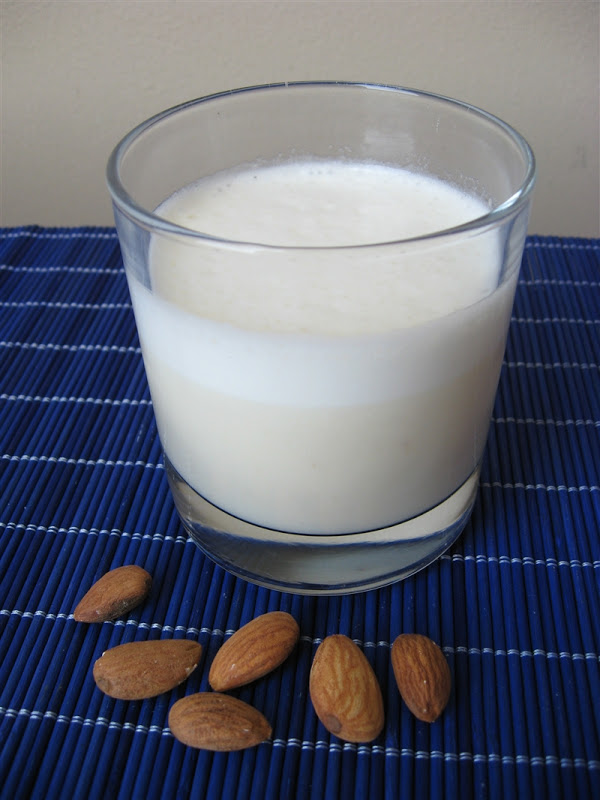
turkish almond & banana milk


This is a quick post today.

The recipe is basically a smoothie with the elegant, enriching addition of almonds. The recipe is basically the same as that posted by lovely Turkish-Canadian blogger, Binnur.

Muzlu Süt (Almond & Banana Milk)

Based on a recipe from
Binnur's Turkish Cookbook. Makes 2.
Ingredients:

1 ripe banana, sliced
4 teaspoons almond meal
1 teaspoon honey
1¼ cups milk
4 ice cubes

Method:

1. Put the ice, banana, honey, almond meal and milk into the blender. Blend well.
2. Pour into a glass and drink with the bubbles.

Tags:

Saturday, 18 October 2008

smoked salmon w currants, feta & pine nuts


In an attempt to come up with an inventive appetiser for a dinner party, I discovered this wonderful combination of smoky salmon, sour currants, tangy feta and rich pine nuts.

It was a hit and a combination I intend to repeat again and again.

Smoked Salmon Spoons w Verjuice Currants, Feta & Pine Nuts

Anna’s recipe. Serves 8 as an amuse buche.


Ingredients:
120g smoked salmon slices
32 plump currants
2 tablespoons verjuice
100g feta
16 pine nuts, toasted
1 teaspoon lemon juice

Method:


1. Soak currants in verjuice for 2 hours.

2. Divide salmon to produce 8 equal portions of bite sized pieces. Divide between spoons.

3. In the centre of each salmon slice place 4 currants, 2 pine nuts and some crumbled feta. Fold salmon over to cover.

4. Spoon the verjuice from the currants over the salmon and add a few drops of lemon juice to each spoon before serving.


Monday, 13 October 2008

acar, indonesian pickle


The theme for October's Monthly Mingle is Sensational Sides and although I have quite a few side dishes I could share, I thought I'd celebrate the Australian spring with a dish my northern friends might appreciate because the ingredients will still be available over winter.

This is one of my Indonesian feast recipes: acar.

Pronounced “a-char”, it consists of vegetables cooked in vinegar, spicy long pepper and a touch of palm sugar for good measure.

Our Monthly Mingle host this month will be Ruth's Kitchen Experiments.

Acar (Indonesian Pickle)

Anna's version of various internet recipes. Serves 4.


Ingredients:

1 carrot
1 cucumber, cut lengthways and deseeded
1 red onion
1 cup white vinegar
½ teaspoon chilli powder
½ teaspoon ground long pepper
1 teaspoon palm sugar
½ teaspoon sea salt

Method:


1. Julienne carrot and cucumber.

2. Cut onion into thin half moons.

3. In a non-reactive pan, combine vinegar, sugar, salt, chilli and long pepper.

4. Bring to the boil then add carrot. Boil 2 minutes.

5. Add onion. Boil 1 minute.

6. Add cucumber. Boil 1 minute.

7. Check seasoning, making sure the flavours are balanced.

8. Chill before serving. Store in the refrigerator for up to 1 week.


Tags:

Saturday, 11 October 2008

burkina faso's fish stew

 
I won’t leave the confused guessing: Burkina Faso, commonly shortened to Burkina, is a landlocked nation in West Africa, surrounded by Mali, Niger, Benin, Togo, Ghana and Côte d'Ivoire. Until 1984 it was known as the Republic of Upper Volta.

The 13 million people of Burkina Faso are called Burkinabé and their capital is Ouagadougou. Around 50% are Muslim, 30% Christian and the remaining 20% are traditional Animists of varying types.

Archaeological evidence suggests the area was settled around 12,000 – 5,000 BCE by hunter-gatherers and by 3,600 – 2,600 BC farms had developed. During the 1500s, Burkina Faso was an important economic area for the powerful Songhai Empire.

Today 40% of the population are the Mossi, who arrived as migrant warriors in early times. The other 60% is made up of more than 60 ethnic groups, including the Bobo, Mande, Fulani, Lobi, Malinke, Senufo and Gurunsi. With so many different people and languages, the country’s official language is French, a remnant of their colonial past.

So why am I talking about Burkina Faso?

As part of my 2008 Food Challenges I’d set myself, I decided to learn more about African food (both west and east) and so this is my second foray into west African cuisine.

I actually quite enjoyed this dish because it contained okra, my Weekend Herb Blogging ingredient this week, an event founded by Kalyn's Kitchen. I have never actually cooked with okra until now, having been slightly terrified by it’s ooze. I found the flavour moreish and would certainly recommend it for stews.


Maan Nezim Nzedo (Burkina Faso Fish & Vegetable Stew)

Based on an internet recipe. Serves 2-3.

Ingredients:

500g freshwater fish steaks (eg bream, perch)
225g okra, halved lengthways if large
500ml passata (tomato sauce)
300ml fish stock
250g cooked rice
1 onion, thinly sliced
3 carrots, cut into 5mm slices
1 small cabbage, shredded
300g French beans
1 teaspoon chilli flakes
2 teaspoons coarse salt
Vegetable oil for cooking

Method:

1. Heat some oil in a saucepan then fry fish steaks until almost cooked. Remove and keep warm.

2. In the same saucepan, heat some more oil then fry onion and carrot until onion is soft.

3. Add passata and stock. Season then bring to a boil.

4. Add okra, beans and cabbage then cover, reduce heat to simmer and cook for around 5-10 minutes.

5. Add the rice and simmer for a further 3 minutes.

6. Serve immediately, placing the warm fish steaks on top of the rice.

Variation:
cut the fish into small chunks and add to stew with rice to heat through.


Okra (Abelmoschus esculentus) is in the same family as cotton, cocoa and hibiscus and is grown in tropical and warm temperate climates.

The edible green fruit is a capsule containing many seeds and is harvested when immature to be eaten as a vegetable. Inexperienced gardeners often leave okra pods on the trees too long when they actually should be harvested when only 3-5 days old.

Okra leaves are also edible and can be eaten raw in salads. The seeds can be used for cooking oil and in a roasted, ground form can substitute coffee.

It is believed that okra originated in Ethiopia and its journey beyond was via the Red Sea through the Arabian Peninsula. One of the earliest written records is from the Egyptian travels of a Spanish Moor in 1216 who saw locals eating pods with meal.

Okra is eaten in stews throughout Egypt, Greece, Iran, Iraq, Jordan, Lebanon, Turkey and Yemen and other parts of the eastern Mediterranean. In India it is commonly added to curries and in the Caribbean it’s popular in fish soups.

It first made it to the Americas in the mid 1600s via slave traders in Brazil and by 1748 it was growing happily in Philadelphia. Being hugely popular in the Southern US, especially around Louisiana, it is believed the French colonists introduced it as a common ingredient to the US.

Okra is crucial to thickening the American gumbo, which incidentally is a word originating from various Bantu languages’ words for okra “kingombo”. This version is the basis for the Portuguese, Spanish, Dutch and French words for okra too.

In English it’s also known as lady’s finger, but the name okra came from Igbo, a language spoken in Nigeria.

Okra can be served raw, pickled, sautéed, stir fried, boiled, steamed, stewed, casseroled, baked and fried and breaded for deep frying. Be wary that okra emits a sticky, gelatinous substance that many use to thicken food. If you’re not expecting it, you may find it unpleasant.

Okra is pretty nutritious with high levels of fibre, vitamin C, folate, potassium and magnesium.

Store okra in the fridge in a paper bag or in a perforated plastic bag to allow it to breathe. If you want to freeze it, blanch it for a few minutes and then you can keep it in the freezer for around 12 months. Once cooked it lasts in the fridge for around 3-4 days.

Buy firm, colourful pods and avoid rubbery pods with dry or dull skin. Smaller pods are often better too, since large ones can be woody.

So that's my contribution to Weekend Herb Blogging, with this week's host being Susan from The Well Seasoned Cook. Check out her round-up in a few days.


References:
http://en.wikipedia.org/wiki/Burkina_Faso
http://en.wikipedia.org/wiki/Okra
http://www.formulaforlife.com.au/asp/vegetables.asp?cmd=show&vegetableid=32&letter=O
http://southernfood.about.com/library/weekly/aa081401a.htm
http://plantanswers.tamu.edu/publications/vegetabletravelers/okra.html


Tags:

Tuesday, 7 October 2008

redcurrant tart for jonas


Today is a special day, because it’s Jonas’ 30th birthday. As I like to say “he’s turning old today”.

Because 30 reasons are just too many to list here, instead I’ll share 10 reasons why I love my vegetarian import:
1. He taught me to care about people less fortunate than me and he also taught me how to articulate those concerns in an educated way.
2. He shares my love of sci-fi and introduced me to so many cool shows.
3. He does about 60% of the cleaning and 70% of the cooking.
4. He tells me he loves me multiple times a day and always makes me feel secure.
5. He can quote so many songs, ads, TV shows and films. It’s a gift.
6. He reads to me when I can’t fall asleep at night.
7. He often falls asleep on the sofa with a drink in his hand. While it’s very dangerous for the sofa, it’s quite cute to me (except when I have to clean it up).
8. He loves to cook a big feast then hunker down and watch DVDs with me all day.
9. He’s a really funny guy. Really.
10. He migrated to Australia at age 22 and took a chance on a relationship with a girl he’d only known for 4 months. Lucky I married him!

In honour of Jonas’ big 3-0, here’s a recipe from his father, Staffan, who made this tart for Jonas when we visited Stockholm in July.


Röd Vinbärstårta (Redcurrant Tart)

Staffan’s recipe. Serves 6.


Ingredients:
100g melted butter
150ml oatmeal
150ml wheat flour
3 tablespoons sugar
250g redcurrants
1 apple, sliced finely

Method:


1. Preheat oven to 225’C.

2. Grease a glass or ceramic baking dish.

3. Scatter redcurrants and apple with sugar.

4. Combine butter, oatmeal, cinnamon and flour to create a crumbly topping.

5. Spread over fruit then bake for 20 minutes or until golden brown on top.

6. Eat with cream or ice cream.

Variations:
add a sprig of rosemary to the fruit for a delicious change.

Tags:

Saturday, 4 October 2008

swedish food

Below are some of the meals that Jonas and I enjoyed during our recent Swedish holiday.

Rökt Makrill: mackerel is my favourite type of smoked fish.
 
Kalles Kaviar med Banan:
Swedes love caviar in a tube. The first time I heard about it I was disgusted. Then Jonas told me they put this tube caviar on eggs and I was even more disgusted. Then I tried it and I was a convert. It rocks! It’s delicious! What is not delicious is this version pictured here that combines the original caviar cream with chemical banana flavouring. Warning: do not eat this rubbish!


Filmjölk:
a cultured milk somewhere between yoghurt and buttermilk. It is simply delicious and comes in many fruit flavours. When eating the original version, I love it best with sugar and ginger, but it’s also great on cornflakes.


Strömming:
Baltic herring crumbed and fried then marinated in a sweet vinegar. It has a special name (which I’ve forgotten) but it’s one of my favourite kind of fishy Swedish dishes.


Elephant Ear Salmon:
that’s the name of the “cut of fish”. It’s very thin and gets crispy. Here it’s served with parmesan and herbs.


This is one of the best desserts I’ve ever ordered in a restaurant (Avalon Hotel): delicious roasted strawberry sorbet with stewed rhubarb, fresh strawberries and homemade vanilla marshmallows.


Halibut with fresh horseradish. Another Avalon dish, also wonderful!


Plankstek
: steak cooked on an oak board so that it absorbs some of the smoky, wood flavours. The potatoes are also cooked on the oak.


Sill med Hjortron
: this was delicious pickled herring with cloudberries. An amazing, very Scandinavian flavoured dish.


Puck
(rhymes with cook): salt liquorice flavoured candy around vanilla ice cream with salt liquorice swirls. Shaped like a hockey puck. Tastes gross, unless you're Swedish - in which case it tastes like heaven.


Lax med Senapsås & Potatissallad
: fried salmon served with mustard sauce and a potato salad with a really tasty herb dressing.


Renkött med Lingonsylt & Mandelpotatis
: Jonas’ dad made this one. Slices of reindeer are fried up then served with lingon sauce and “almond potatoes”, a special potato from northern Sweden.


Laxfilé med Citronsås
: Jonas’ stepmother made these salmon fillets with a delicious creamy lemon sauce.


Rökt Lax
: we bought this beautiful smoked salmon from an old man who lived all alone in the middle of the Swedish countryside and filled his smokehouse with manikins which we suspected he kept for company. He was odd but his smoked fish was great.


Prästost
is the very tasty cheese and Havrekaka is the bread, which Jonas loves but I’m not so keen on.


Falvkorv
: traditional sausage that’s fried then served a mustard sauce and potatoes.


Nyponsoppa
: a sweet, thickened rose hip soup served with sweet almond crouton and usually ice cream. Can be eaten hot or cold.


Sill
: pickled herring comes in many flavours, but the most common are Senap (mustard), Inglad (sweet onion vinegar) and Matjes (spiced vinegar). They are commonly eaten with boiled new potatoes. Potatoes in Sweden taste better than any potatoes I’ve eaten from any other countries (I’ve visited 23 countries).

Stekt Strömming med Lingonsylt & Potatismos
: this is fried Baltic herring with lingon sauce and mashed potatoes.

For more Sweden-related posts check out Göteborg's Xmas Markets or these recipes:
Fisksoppa (fish soup)
Fläderblom Martini (elderflower cocktail) V
Glögg (spicy mulled wine) V
Glasört & Smör (samphire w butter) V
Kräftor i Lag (crayfish in dill broth)
Lingonberry Daiquiri V
Pepparkakor & Glacé Fruit Ice Cream Sandwich V
Pytt i Panna (potato & meat hash)
Rödbetssallad (beetroot & apple salad) V

Tags:
Related Posts with Thumbnails