

This will probably be my last post until I’m home from Sweden at the end of August. We’re away for 5 weeks travelling all over Sverige, with a few days on either side in Tokyo and Bangkok.
I wanted to leave you with a recipe I really love and which takes the humble potato to new heights while also turning breakfast into an exciting meal.
A lot of people (obviously not Indians) will baulk at the idea of curry for breakfast, but Rick Stein’s potato curry served with poached eggs is so gently spiced that anyone would adore it.
I love eating interesting things at breakfast (Breakfast Crumble, Çılbır, Fatteh, Khabeesa, Moringa Omelette, Quinoa Porridge etc) whereas Jonas is an absolute traditionalist. Nonetheless this potato curry won him over entirely and is a recipe that will make repeat appearances in our home.
Who could have thought breakfasts and potatoes could be so exciting!

Potato Breakfast Curry w Poached Eggs
Recipe by Rick Stein, Delicious Magazine April 2008. Serves 4.
Ingredients:
500g waxy potatoes (eg nicola or kipfler)
1/3 cup sunflower oil
1½ teaspoons black mustard seeds
1 teaspoon cumin seeds
1 large onion, finely chopped
1 tablespoon freshly grated ginger
1 teaspoon turmeric
½ teaspoon ground coriander
½ teaspoon ground cumin
2 green cardamom pods
2 vine-ripened tomatoes, skinned, deseeded and roughly chopped
1 teaspoon lemon juice
1½ tablespoons roughly chopped fresh coriander
4 very fresh, free-range eggs
Pinch of chilli flakes
Splash of white wine vinegar
Coriander sprigs, to garnish
Method:
1. Peel potatoes and cut into 1cm cubes.
2. Cook the potatoes in a pan of boiling salted water for 5-6 minutes until almost tender, then drain and set aside.
3. Heat oil in a deep frypan over medium heat. Add mustard and cumin seeds. Cover with a lid until the popping subsides (about 2 minutes).
4. Meanwhile cut the cardamom pods in half and shake out the seeds into a mortar and pestle. Throw the husks away and lightly crush the seeds.
5. Uncover the pot and add onion, ginger and dried chilli and fry until soft but not brown (6-7 minutes).
6. Stir in ground spices then cook, stirring, for 1 minute until fragrant.
7. Stir in potatoes, 200ml water and 1 teaspoon salt. Simmer over a medium-low heat for 10 minutes, stirring occasionally, until potato is tender.
8. Stir in tomatoes and lemon juice and cook for another 2 minutes.
9. Stir in coriander, cover and keep warm over a very low heat.
10. To poach eggs, measure enough water so it reaches 5cm in a wide, shallow pan.
11. Bring to the boil then add 1 ½ teaspoons vinegar and ½ teaspoon salt for every 1.2 litres of water.
12. Reduce heat to medium-low and break eggs into simmering water. Poach for 3-5 minutes until white is cooked but yolk is still soft.
13. Remove with slotted spoon and drain on paper towel.
14. Lightly salt the eggs and serve on top of the curry with coriander garnish.

My feature ingredient this week is the humble spud.
And what a veggie it is! The root of the Solanum tuberosum is the world's most widely grown tuber and is in fourth place as the most produced food crop, after rice, wheat, and corn. Today China and then India are the largest potato producers.
The United Nations have decreed 2008 as the International Year of the Potato and many organisations see it as part of the solution for world food production since it is cheap to cultivates, generates good harvests and grows in diverse climates.
Research seems to put the potato’s origin in the Andes from Colombia/Venezuela to northern Argentina and the first evidence of cultivated took place in Peru 7,000 years ago. Some 99% of the world’s cultivated potato varieties descend from a subspecies indigenous to South-Central Chile, probably due to the trading routes that carried the first plant exports.
Potatoes made the journey to Europe in the mid 1500s and quickly became a staple food crop, particularly for the poor.
Lack of genetic varieties in Europe left potato crops vulnerable to diseases, such as Phytophthora infestans, which resulted in the infamous Irish famine and a reduction of Irelands population by 25% from starvation, disease and emigration to the New World.
The English word potato comes directly from the Spanish patata, which itself is a compound of two Native American words for potato and sweet potato: papa (Quechua) and batata (Taino)
Many Slavic, Baltic, Germanic, Scandinavian and Balkan languages derive their word for potato from an ancient word for potato which also meant “truffle”. French, Dutch, Hebrew, Finnish all have names meaning “earth fruit/apple/pear”, whereas Slovak and Polish use words that mean simply “ground”. Different Chinese languages have meanings such as “foreign taro”, “horse yam” or “earth bean”. Although the Hindi and Nepali word for potato is aloo and in Indonesian it is kentang, I don’t know what the base meaning of these words are.
Potatoes have excellent carbohydrate content but also good levels of Vitamin C, potassium, Vitamin B6 and traces of thiamin, riboflavin, folate, niacin, magnesium, phosphorus, iron and zinc.
The glycemic index (GI) of potatoes can vary considerably depending on the type, location grown, cooking methods and with what it is consumed.
Potatoes contain glycoalkaloids such as solanine and chaconine, which are toxic compounds found in high concentrations in wild potatoes. Light exposure and aging increases toxin levels but cooking at over 170°C (340°F) partly destroys the toxins. Affects are weakness, confusion, headaches, diarrhea and cramps and although coma or death could occur, poisoning from potatoes is very rare.
Common international varieties include Bintje; Désirée; Fianna; King Edward; Kipfler; New; Nicola; Pink Eye; Pink Fir Apple; Red Pontiac; Rooster; Russet Burbank and Spunta.
Interesting regional potato dishes:
Colcannon (Ireland, side dish)
Fish & Chips (Britain, main)
Gnocchi (Italy, pasta)
Locro de Papas (Ecuador, thick soup)
Papa a la Huancaina (Peru, salad)
Patatas Bravas (Spain, tapas)
Poutine (Canada, snack)
Stamppot (Netherlands, main)
Fun Wikipedia facts!
• Potatoes are part of the deadly nightshade family, a group of poisonous plants including tomatoes and tobacco.
• There are about five thousand potato varieties world wide. Three thousand of them are found only in the Andes, where over 100 varieties of potato can be found in one valley alone!
• A notice of 1573 shows that potatoes were being fed to the sick in a monastery of Seville, under their Quechua name papa.
• In France the potato was considered suitable only for cattle. In the mid 1700s Antoine Parmentier devised an ingenious strategy to encourage the French peasants to eat potatoes. Apparently he grew a field of potatoes and had it heavily guarded to make it look like a delicacy for the nobility. The peasants stole samples and started to enjoy them.
• The earliest reference to the potato in India is in a British journal from 1847.
• Belarus has the world’s highest consumption of potato per capita with each Belorussian consuming 338 kg in 2005.
• The fibre content of a potato with skin equals that of many whole grain breads, pastas, and cereals.
• The notion that “all of the potato’s nutrients” are found in the skin is an urban legend. While the skin does contain approximately half of the total dietary fibre, the majority (more than 50%) of the nutrients are found within the potato itself.
Weekend Herb Blogging is host by Simona from Briciole, who has the coolest blog tagline of "an idiosyncratic and opinionated dictionary of Italian words related to food, with audio accompaniment". Be sure to visit her blog for the round-up.
References:
http://en.wikipedia.org/wiki/Potato
http://en.wikipedia.org/wiki/Great_Irish_Famine
Tags: morsels and musings food blog food and drink australia recipes weekend herb blogging whb main course curry breakfast curry potato curry potato breakfast recipes curry recipes potato recipes indian recipes indian food indian cuisine



 Thon à la Provençale (Provencale Tuna)

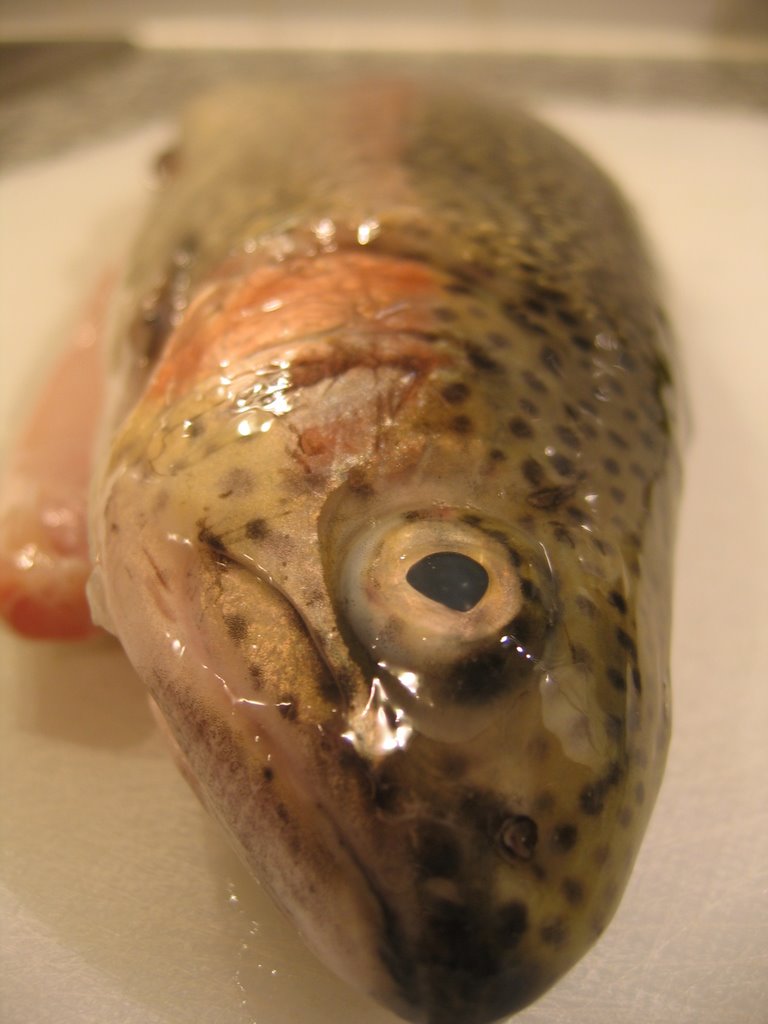

 Pan-fried Rainbow Trout w Salsa Verde
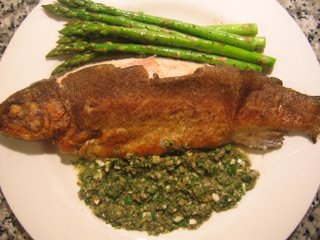 I simply adored this salsa verde and will use it again and again with anything I possibly can. This whole meal was incredible and I was a very content diner afterwards.
 So Pan-fried Rainbow Trout w Salsa Verde is my contribution to
 Sardines en Escabèche
