Showing posts with label south asia. Show all posts

Friday, 19 November 2010

bbq feast at zaaffran

It’s the third time that Jonas and I have been to Zaaffran.

The first, many years ago, was a romantic Valentine’s Day banquet when I lovingly ate vegetarian food with him.

naan
The second was a New Years Eve when some staffing issues resulted in a tasty yet chaotic celebration (isn’t NYE always chaotic though?).

And in late September we were back again, this time with a host of food bloggers, being treated to a BBQ Banquet.

Zaaffran is located in a strange spot, accessible through the touristy Harbourside shopping mall in Darling Harbour. Fortunately once you enter the restaurant, the bright fluorescent shopping strip is replaced by soft, intimate lighting and the twinkling of the city skyline reflected across the water view.

potato dumpling
The air is thick with the spicy aromas of the kitchen, promising a good meal.

I do a head count around the restaurant and note that more than half the clientele are Indians. Always a good sign!

Our host for the evening, owner Rush Dossa, had certainly done his research when he hand-picked the group of bloggers. My own email invitation made reference to a raft of ideas and recipes across the years, indicating he had done more than just skim through my blog, and when I arrived he greeted Jonas and I with knowledge of our lives and even of Jonas’ vegetarian past. It was the first sign of the great warmth and hospitality Rush displayed throughout the evening.

Rush had invited us to demonstrate that Indian food isn’t always about curries. And while we all (well, those of us with any sense) love Indian curries, there’s so much more to try from the vast Indian continent and its diverse ethnic groups.

And so we were all shouted the 5 Course BBQ Banquet, usually charged at $54.50 per person.

We start with canapés on the balcony. Three delightful little morsels: wonderful whole-wheat pancake-like wraps stuffed with mushrooms, mint, coriander and cheese; fat and round potato dumplings plumped up with carrot, peas, ginger, cashews, mustard and chilli; and spoons of prawns in fragrant coconut broth flavoured with saffron, chilli, lemon and lime. So rich and flavoursome, easily everyone’s favourite of the canapés and already sparking ideas for new recipes at home.

prawns in coconut broth

To start the meal proper we’re served a pleasantly-salty salad of greens and brimming bowls of pappadums and steaming garlic naan. The four colourful dips are a thick, syrupy date chutney (not too sweet), beetroot & yoghurt, tomato & chilli and mint & yoghurt. Surprising even myself, the date turns out to be my favourite.

dips

Gol Guppas are next. These strange mini pooris are like the Indian answer to Mexican tortilla chips and salsa. Their hollow, spherical shape was perfect for holding the moong bean & potato mix, and dousing in mint or tamarind water, then shoving into our gobs before the liquid destroyed the thin crunchy shell and gushed all over us.

gol guppas

My favourite starter, as always, was the chaat. I’m a sucker for these street snacks, usually made out of vegetables (spinach, potato), always drizzled with mint, yoghurt and tamarind. I adore them and Zaaffran’s Aloo Makkai Tikki Chaat were particularly good: 20-cent sized circles of warm potato and corn crisscrossed with yoghurt, date-tamarind and mint sauce.

aloo makkai tikki chaat

Our second course arrives: Tandoori King Prawns and Chicken Seekh Kebabs. The prawns are cooked perfectly and flavoured heavily with cardamom, their tails crunchy enough to eat. The chicken mince kebabs are flecked with loads fresh minced coriander leaves, just the way I like it.


They serve the second course with mushroom and truffle naan! It's delicious, and while there's a heady scent of truffle in the air, the truffle flavour is not very strong.

mushroom naan with truffle butter

Throughout the meal we drank Blickling Estate Riesling 'Methode Champenoise' 2007 (New England Tablelands NSW), Aja Sauvignon Blanc Semillion Verdelho 2008 (Polkobin NSW) and Kalleske Clarry’s Grenach Shiraz 2008 (Barossa Valley SA)

Rush was thoughtful in his choice of wines to match the food

Fried seasonal fish turns out to be barramundi. The flaky white fish meat is complimented perfectly by a very spicy, crispy batter and a side salad of red chilli and spinach.

crispy seasonal fish

The oven-roasted salmon is flavoured with ginger, garlic and chilli, then covered in a lemon-turmeric reduction, drizzled with mint chutney and sitting atop a bed of fiery mustard mash. A surprising winner.

oven baked salmon

Interestingly, we’re served a small scoop of mango kulfi to cleanse the palate for the next course. In European restaurants, this is usually served after the savoury courses and before the sweet dishes, but after the spicy fish dishes it’s an excellent reprieve before launching into the meats.

mango kulfi

Jonas hates eggplant, which was problematic when he was a vegetarian, but fortunate for me because I love it and therefore get his serving. At Zaaffran they served thin slices topped with spicy lentils and doused in tamarind and mint sauces and fresh yoghurt.

eggplant

Tandoor lamb mince skewers, singly with the vibrant notes of onion, herbs, ginger and garam masala, lay across pretty streaks of bright pink, green and black sauce.

lamb seekh kebab

The moreish, rich lamb ribs had been braised and roasted, flavoured heavily with ginger, honey, pepper, cardamom and yoghurt. They with an inspired and wonderfully refreshing salad of julienned celery, carrot and green apple – a perfect accompaniment to the fatty ribs.

lamb ribs

Dessert was a combination of the usual and the unique. Kulfi, an Indian classic, was taken to new levels in a cone of subtle saffron, luscious honey and almond crunch. I adored it. The sphere of rose kulfi was almost as good, but matched the dome of gulab jamun well. But the hitherto untried, newcomer on the plate was the Bibinca, a Goan multi-layered cake strongly spiced with honey, nutmeg, cloves and cinnamon.

banquet dessert platter

Overall it was a wonderful evening and Rush and Vikrant were very successful in demonstrating how amazingly diverse and delicious Indian barbecued food can be.

The regular BBQ menu that we were served is great value for money at $54.50 because you really do get a lot of food and a chance to sample a wide range of dishes from the delicious Zaaffran menu.

Yes, I will be back to Zaaffran again for Round Four!

Zaaffran on Urbanspoon

Friday, 2 October 2009

falooda - sweet vermicelli shake


This lurid pink oddity is Falooda, a dessert-drink popular in India, Pakistan, Bangladesh, Sri Lanka, Myanmar and most of the Middle East.

The falooda drink is an adaptation of an ancient Persian dessert made from noodles frozen with pistachio, rose water and lime juice, thought to be one of the world’s earliest frozen desserts (400 BCE).

Falooda drinks are unusual in composition because they contain basil seeds and wheat vermicelli noodles doused in cold milk and a variety of other flavourings.


My version is based on an Indian-style falooda with scoops of ice cream and jelly, topped off by the sweetest, most toxic-food-colour-red rose syrup that will give you a sugar headache for 3 days!

You can ditch the rose syrup and go for mango or fig falooda instead, but I think that’s wimping out. What’s the pleasure without the pain?

Making falooda was one of my 2009 Food Challenges: I have wanted to make this dessert-drink at home ever since I tried it at a local Indian restaurant. It's got few steps to it, but it's very easy to prepare.

If you like rose-flavoured sweets, you can’t beat this recipe.

One every few months can’t hurt, right?


Falooda (sweet vermicelli shake)

Recipe by Anna Fedeles. Makes 2.

Ingredients:
250ml milk
½ cup strawberry or raspberry jelly
½ cup dried wheat (or arrowroot) vermicelli noodles
2 scoops ice cream
2 tablespoons rose syrup
1 tablespoon basil seeds

Method:


1. Soak basil seeds in water. They will appear like tiny frogs eggs. Drain.

2. Boil vermicelli according to manufacturers instructions. Drain, rinse and chill.

3. In glasses, layer vermicelli, jelly, basil seeds, milk and rose syrup.

4. Top with ice cream a drizzle of syrup and a drop of basil seeds.

5. Serve with a thick straw and long-stemmed spoon.

This falooda is my contribution to Presto Pasta Nights, hosted by the event founder, Ruth from Once Upon A Feast.


Saturday, 19 September 2009

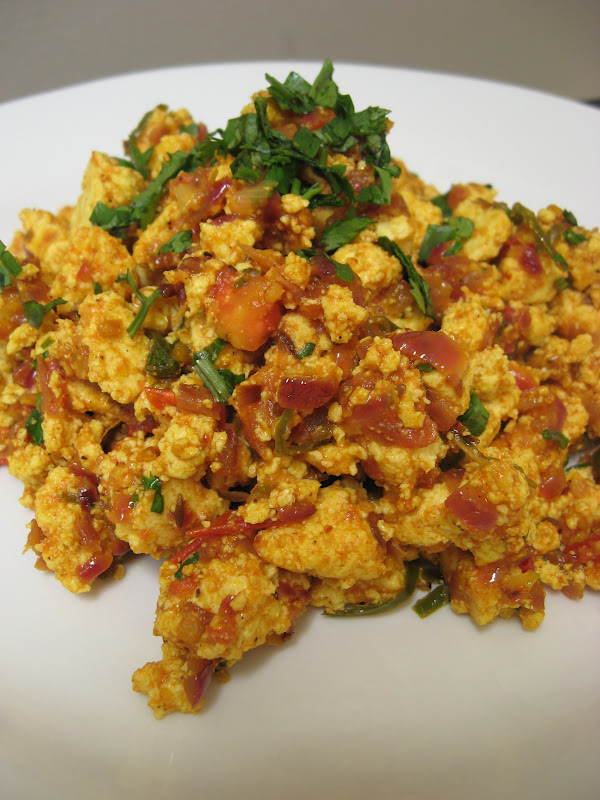
paneer bhurji (fried paneer)


Bored of bacon and eggs?
Toast just not cutting it?
Cereal getting you down?
Then here’s a brekkie recipe for you!

Chilli and spices are tempered with the mild creaminess of paneer (cheese) in this Indian breakfast best served with flatbread.


Paneer Bhurji (Fried Paneer)

Anna’s very own recipe based on various internet versions. Serves 2.

Ingredients:

300g fresh paneer, crumbled coarsely
1 small onion, finely chopped
1 green chilli, finely chopped
1 tomato, chopped
1 teaspoon freshly grated ginger
1 teaspoon lime juice
½ teaspoon freshly ground black pepper
½ teaspoon red chilli powder
½ teaspoon sugar
¼ teaspoon turmeric powder
¼ teaspoon salt
¼ teaspoon garam masala powder
¼ teaspoon cumin seeds
¼ teaspoon coriander powder
Pinch of asafeotida (hing) powder
Chopped fresh coriander, to garnish
Rice or flatbread, to serve

Method:


1. Heat the oil, add the onion and green chilli and fry until soft.

2. Add the cumin seeds and fry until browned and fragrant.

3. Add the pepper, chilli powder, turmeric powder, garam masala powder, coriander powder and asafeotida (hing) powder and fry until fragrant.

4. Next add the grated ginger, sugar and chopped tomato.

5. Now add the paneer and salt and fry, stirring continuously, until heated through.

6. Remove from the heat and stir through lime juice and fresh coriander leaves.

7. Serve hot with rice or Indian flat breads like roti, chapati or naan.


Interested in some other exciting breakfast recipes from the M&M archives?
Baked Eggs & Beans V
Blackberry Breakfast Cake V
Blueberry & Sour Cream Wholemeal Pancakes V
Blueberry Focaccia V
Breakfast Crumble V
Chilaquiles (Mexican bean, tomatillo & tortilla bake) V
Çılbır (Turkish eggs w spiced yoghurt) V
Fatteh (Syrian chickpeas, tahini & yoghurt) V
Grape & Aniseed Schiacciata V
Jonas' Breakfast Beans V
Khabeesa (Omani rose & cardamom porridge) V
Khachapuri (Georgian cheese bread) V
Moringa Omelette V
Mulberry & Vanilla Muffins V
Pears Poached in Passionfruit Juice V
Persimmon & Bourbon Bread V
Persimmon Fruit Salad V
Potato Breakfast Curry w Poached Eggs V
Quinoa Porridge V
Ricotta, Strawberry & Choc-Chip Muffins V
Roquefort Popovers V
Zucchini, Mint & Feta Bake V


Tuesday, 16 September 2008

drumstick masala


This Recipe Road Test comes straight from fellow blogger Lakshmi from Flavors of Indian Rasoi.

It worked wonderfully and Jonas and I really enjoyed the unique flavours. If you wanted you could easily apply the basic gravy to any vegetable combinations and have a delicious meal.

I have written about Moringa oleifera for WHB before, but then I was focusing on the leaves. This time I want to draw your attention to the most commonly used part of the tree, the long pods which give the tree its common English name: Drumstick Tree.


Munagakaayala Pulusu (Drumstick Masala)
Recipe by Lakshmi from Flavors of Indian Rasoi.


Ingredients:
4-6 drumstick pods
1 medium sized potato, cut it into big pieces
2-3 medium sized tomatoes, chopped
1 big onion
4-5 teaspoons fresh coconut
1 teaspoon ginger-garlic paste
1 teaspoon coriander powder
1 teaspoon cumin powder
1 teaspoon cumin seeds
2-3 dried red chillies
10 curry leaves
½ teaspoon garam masala powder
1½ teaspoon red chilli powder
Pinch of turmeric powder
Salt to taste
2 tbsp of curd
½ cup rice milk

Method:

1. Grind coconut, coriander leaves, ginger-garlic paste, coriander powder, cumin powder and onion and keep it aside.

2. Heat 3 tbsp of oil in a pan, add the mustard seeds, cumin, curry leaves, dried chillies, garam masala, turmeric powder and fry well.

3. Add coconut-spice paste and tomatoes and fry well.

4. After 5 minutes, add drumsticks and potato and fry for some time.

5. Add water, chilli powder and salt. Cover it and let it cook on medium heat.

6. When it starts boiling add curd.

7. To check whether the drumsticks are properly cooked, take a spoon and touch them to see if they are soft

8. When the drumsticks are ready, add the milk and cook on low heat for not more than 5 minutes. Transfer to serving dish and eat with rice.


Drumstick pods are extremely popular in Indian cooking, and for good reason. They are delicious (almost like asparagus) and highly nutritious. In India, young drumstick pods can be turned into curries, stews, sambars, kormas and dals. They can be served steamed or boil and it’s also common to add cooked pulp to finished dishes for a unique flavour. Older pods yield peas that can be eaten like nuts.

Moringa grows in semi-arid tropical and sub-tropical areas, continuously flowering and fruiting.

The tree is native to the southern foothills of the Himalayas but is widely grown throughout Africa, Central and South America, Sri Lanka, India, Mexico, Malaysia and the Philippines.

Moringa is an amazing tree because almost every part can be eaten and is exceptionally nutritious due to its high vitamin and mineral content. The leaves taste like spinach, the pods taste like asparagus and the cooked flowers are supposed to taste like mushroom.


Last time I blogged about moringa during WHB I included this list, but I think it’s amazing enough to include again. Weight for weight, moringa leaves have:
- 7 times the Vitamin C content of oranges
- 4 times the calcium of milk
- 4 times the Vitamin A of carrots
- 3 times the potassium of bananas
- 3 times the iron of spinach
- 2 times the protein of milk

Some of the world’s most poverty stricken areas are prime habitat for moringa trees, which are also one of the fastest growing biomasses on the planet! For this reason aid agencies see it as a huge nutritional benefit for those suffering serious malnourishment.

People use drumstick trees to assist stomach aches, gastric ulcers, skin diseases, low blood sugar, poor bone density, nervous conditions, diabetes, fatigue, poor lactation, hay fever, haemorrhoids, headaches and sore gums.

It’s also believed to strengthen the brain, gall bladder, liver as well as digestive, respiratory and immune systems.

Flower infused honey is used as a cough syrup, leaf infusions are used as eye washes for conjunctivitis and seed oil is used for earaches, skin problems and as an insect repellent.


Other drumstick and leaf recipes include:Drumstick Pickle
Mboum (Senegalese sauce)
Moringa Bread
Drumstick, Potato & Eggplant Bhaji
Moringa Omelette
Yeruvalli Kuzhambu (drumstick & coconut curry)
Moringa Juice
Munakkaya Pulusu (drumsticks in tamarind)
Moringa Dal
huge list of international recipes

The recipe also happens to satisfy one of my 2008 Food Challenges (learning about regional Indian cooking) because the dish comes from Andhra Pradesh.

Known as the "rice bowl of India", Andhra Pradesh is located in the south: bordered by the regions of Maharashtra, Chhattisgarh and Orissa in the north, the Bay of Bengal in the East, Tamil Nadu to the south and Karnataka to the west.

It is the 4th largest Indian state (by area and population) and is certainly the largest in southern India with a population of 76 million people. The capital is Hyderabad and the official language of the state, spoken by 84% of the population, is Telugu.

Agriculture is an important income source, with the main crops being rice, sugarcane, cotton, chilli, mango and tobacco.

The food of Andhra Pradesh is famously spicy and rich, with heavy influences from Muslim cuisine.

Lamb, chicken and fish are used a lot, as well as spices and ghee. The Hyderabadi biryani, a delicious rice concoction, has spread throughout India and the world and is very popular.

Pickles and chutneys (pachchadi) from Andhra Pradesh are also very famous, the most well known probably the mango pickle Aavakaaya.

This week our WHB host is the lovely Zorra from Kochtopf. Be sure to visit her blog for the round-up.


References:
http://en.wikipedia.org/wiki/Andhra_Pradesh
http://www.abc.net.au/gardening/stories/s1345822.htm
http://www.herbsarespecial.com.au/free-herb-information/drumstick-tree.html
http://www.daleysfruit.com.au/Herbs/horseradish.htm
http://en.wikipedia.org/wiki/Moringa_oleifera
http://en.wikipedia.org/wiki/Moringa


Tags:

Saturday, 12 July 2008

potato breakfast curry


This will probably be my last post until I’m home from Sweden at the end of August. We’re away for 5 weeks travelling all over Sverige, with a few days on either side in Tokyo and Bangkok.

I wanted to leave you with a recipe I really love and which takes the humble potato to new heights while also turning breakfast into an exciting meal.

A lot of people (obviously not Indians) will baulk at the idea of curry for breakfast, but Rick Stein’s potato curry served with poached eggs is so gently spiced that anyone would adore it.

I love eating interesting things at breakfast (Breakfast Crumble, Çılbır, Fatteh, Khabeesa, Moringa Omelette, Quinoa Porridge etc) whereas Jonas is an absolute traditionalist. Nonetheless this potato curry won him over entirely and is a recipe that will make repeat appearances in our home.

Who could have thought breakfasts and potatoes could be so exciting!


Potato Breakfast Curry w Poached Eggs

Recipe by Rick Stein, Delicious Magazine April 2008. Serves 4.


Ingredients:

500g waxy potatoes (eg nicola or kipfler)
1/3 cup sunflower oil
1½ teaspoons black mustard seeds
1 teaspoon cumin seeds
1 large onion, finely chopped
1 tablespoon freshly grated ginger
1 teaspoon turmeric
½ teaspoon ground coriander
½ teaspoon ground cumin
2 green cardamom pods
2 vine-ripened tomatoes, skinned, deseeded and roughly chopped
1 teaspoon lemon juice
1½ tablespoons roughly chopped fresh coriander
4 very fresh, free-range eggs
Pinch of chilli flakes
Splash of white wine vinegar
Coriander sprigs, to garnish

Method:

1. Peel potatoes and cut into 1cm cubes.

2. Cook the potatoes in a pan of boiling salted water for 5-6 minutes until almost tender, then drain and set aside.

3. Heat oil in a deep frypan over medium heat. Add mustard and cumin seeds. Cover with a lid until the popping subsides (about 2 minutes).

4. Meanwhile cut the cardamom pods in half and shake out the seeds into a mortar and pestle. Throw the husks away and lightly crush the seeds.

5. Uncover the pot and add onion, ginger and dried chilli and fry until soft but not brown (6-7 minutes).

6. Stir in ground spices then cook, stirring, for 1 minute until fragrant.

7. Stir in potatoes, 200ml water and 1 teaspoon salt. Simmer over a medium-low heat for 10 minutes, stirring occasionally, until potato is tender.

8. Stir in tomatoes and lemon juice and cook for another 2 minutes.

9. Stir in coriander, cover and keep warm over a very low heat.

10. To poach eggs, measure enough water so it reaches 5cm in a wide, shallow pan.

11. Bring to the boil then add 1 ½ teaspoons vinegar and ½ teaspoon salt for every 1.2 litres of water.

12. Reduce heat to medium-low and break eggs into simmering water. Poach for 3-5 minutes until white is cooked but yolk is still soft.

13. Remove with slotted spoon and drain on paper towel.

14. Lightly salt the eggs and serve on top of the curry with coriander garnish.


This is my last Weekend Herb Blogging entry for a while, until I’m back.

My feature ingredient this week is the humble spud.

And what a veggie it is! The root of the Solanum tuberosum is the world's most widely grown tuber and is in fourth place as the most produced food crop, after rice, wheat, and corn. Today China and then India are the largest potato producers.

The United Nations have decreed 2008 as the International Year of the Potato and many organisations see it as part of the solution for world food production since it is cheap to cultivates, generates good harvests and grows in diverse climates.

Research seems to put the potato’s origin in the Andes from Colombia/Venezuela to northern Argentina and the first evidence of cultivated took place in Peru 7,000 years ago. Some 99% of the world’s cultivated potato varieties descend from a subspecies indigenous to South-Central Chile, probably due to the trading routes that carried the first plant exports.

Potatoes made the journey to Europe in the mid 1500s and quickly became a staple food crop, particularly for the poor.

Lack of genetic varieties in Europe left potato crops vulnerable to diseases, such as Phytophthora infestans, which resulted in the infamous Irish famine and a reduction of Irelands population by 25% from starvation, disease and emigration to the New World.

The English word potato comes directly from the Spanish patata, which itself is a compound of two Native American words for potato and sweet potato: papa (Quechua) and batata (Taino)

Many Slavic, Baltic, Germanic, Scandinavian and Balkan languages derive their word for potato from an ancient word for potato which also meant “truffle”. French, Dutch, Hebrew, Finnish all have names meaning “earth fruit/apple/pear”, whereas Slovak and Polish use words that mean simply “ground”. Different Chinese languages have meanings such as “foreign taro”, “horse yam” or “earth bean”. Although the Hindi and Nepali word for potato is aloo and in Indonesian it is kentang, I don’t know what the base meaning of these words are.

Potatoes have excellent carbohydrate content but also good levels of Vitamin C, potassium, Vitamin B6 and traces of thiamin, riboflavin, folate, niacin, magnesium, phosphorus, iron and zinc.

The glycemic index (GI) of potatoes can vary considerably depending on the type, location grown, cooking methods and with what it is consumed.

Potatoes contain glycoalkaloids such as solanine and chaconine, which are toxic compounds found in high concentrations in wild potatoes. Light exposure and aging increases toxin levels but cooking at over 170°C (340°F) partly destroys the toxins. Affects are weakness, confusion, headaches, diarrhea and cramps and although coma or death could occur, poisoning from potatoes is very rare.

Common international varieties include Bintje; Désirée; Fianna; King Edward; Kipfler; New; Nicola; Pink Eye; Pink Fir Apple; Red Pontiac; Rooster; Russet Burbank and Spunta.

Interesting regional potato dishes:
Colcannon (Ireland, side dish)
Fish & Chips (Britain, main)
Gnocchi (Italy, pasta)
Locro de Papas (Ecuador, thick soup)
Papa a la Huancaina (Peru, salad)
Patatas Bravas (Spain, tapas)
Poutine (Canada, snack)
Stamppot (Netherlands, main)

Fun Wikipedia facts!
• Potatoes are part of the deadly nightshade family, a group of poisonous plants including tomatoes and tobacco.
• There are about five thousand potato varieties world wide. Three thousand of them are found only in the Andes, where over 100 varieties of potato can be found in one valley alone!
• A notice of 1573 shows that potatoes were being fed to the sick in a monastery of Seville, under their Quechua name papa.
• In France the potato was considered suitable only for cattle. In the mid 1700s Antoine Parmentier devised an ingenious strategy to encourage the French peasants to eat potatoes. Apparently he grew a field of potatoes and had it heavily guarded to make it look like a delicacy for the nobility. The peasants stole samples and started to enjoy them.
• The earliest reference to the potato in India is in a British journal from 1847.
• Belarus has the world’s highest consumption of potato per capita with each Belorussian consuming 338 kg in 2005.
• The fibre content of a potato with skin equals that of many whole grain breads, pastas, and cereals.
• The notion that “all of the potato’s nutrients” are found in the skin is an urban legend. While the skin does contain approximately half of the total dietary fibre, the majority (more than 50%) of the nutrients are found within the potato itself.

Weekend Herb Blogging is host by Simona from Briciole, who has the coolest blog tagline of "an idiosyncratic and opinionated dictionary of Italian words related to food, with audio accompaniment". Be sure to visit her blog for the round-up.

References:
http://en.wikipedia.org/wiki/Potato
http://en.wikipedia.org/wiki/Great_Irish_Famine

Tags:

Thursday, 19 June 2008

tamarind & peppercorn broth


Legumes are a vegetarian’s delight. They are any plant (or fruit of a plant) from the family Fabaceae (Leguminosae) and include alfalfa, clover, peas, beans, lentils, lupins and even peanuts.

Since the No Crouton Required team have requested a soup or salad featuring legumes for there monthly recipe collection, I thought it might be interesting to use some pigeon peas in an unexpected way.

In India, dried, split pigeon peas become known as toor dal, lentils which are often cooked into a side dish or ground to make a flour.

Apart from the usual contributions to stews and soups, dals can act as a thickening agent. For instance, if you dry fry then grind the dal and add it to soups it will help to thicken the broth the same way flour is used in European cooking.

Rasam, a Southern Indian soup, is an excellent example of this cooking technique in practice.

Traditionally rasam is a sour and spicy water (broth) flavoured predominantly by tamarind and pepper or chillies. In most cases it’s served in a clear, liquid format but occasionally cooks add a little dal flour to thicken the broth into something a little more substantial.

This Tamil Nadu version, based on black peppercorns and tart tamarind is a good example of a thicker rasam. Although I compiled the recipe myself, I drew it from numerous sources across the blogosphere to ensure my own personal version was still true to traditional rasam principles.


Puli Milagu Rasam (Tamarind & Peppercorn Broth)

Anna’s adaptation of various blogger’s recipes. Serves 2-4.


Ingredients:
2 tablespoons toor dal
1 teaspoon cumin seeds
1 teaspoon coriander seeds
½ teaspoon black peppercorns
½ small dried red chilli
2 tablespoons tamarind purée
1 tablespoon fresh coriander, chopped
2 tomatoes, chopped
2 garlic cloves, crushed
½ teaspoon mustard seeds
½ teaspoon yellow asafoetida (hing)
15 curry leaves
1 teaspoon oil or ghee
Salt to taste

Method:


1. Dry fry the toor dal for a minute then add cumin seeds, peppercorns, coriander seeds and chilli. 2. Fry a little longer or until fragrant. Remove from heat and grind to a powder in spice grinder.

3. Mix tamarind purée with 2½ cups of hot water.

4. Heat oil/ghee in a saucepan and fry mustard seeds until they start to pop.

5. Add garlic, asafoetida and curry leaves and fry for 30 seconds.

6. Add spice and dal powder and fry for another 10 seconds.

7. Add tamarind water, half the tomato and salt. Boil for 10 minutes.

8. Strain broth into a clean bowl, press pulp to extract liquid then discard.

9. Rinse saucepan and return broth to saucepan. Add remaining tomato and boil for another 5 minutes.

10. Serve with rice or pappadums or both.

Note:
I know this suggestion is going to bring shrieks of horror from Indian readers, but if the rasam is too spicy, you could always add a few spoonfuls of yoghurt. It won’t be the traditional broth anymore, but you’ll still taste the key flavours of tamarind and pepper and it’s very delicious.


The pigeon pea (Cajanus cajan, syn. Cajanus indicus) has been cultivated for 3000 years and most likely came from Asia to Africa and then through the slave trade to the Americas and Caribbean.

It is widely cultivated in more than 25 tropical and semi-tropical countries of the world, with India producing around 82%. It’s not hard to see why toor dal is India’s most popular dal, especially when you know it is very drought resistant and has huge levels of protein and amino acids (methionine, lysine, and tryptophan).

In India, toor dal is known by many names: tuvar dal (Gujarati), arhar dal (Uttar Pradesh, Orissa & Bengal), togari bele (Kannada), kandi pappu (Telugu), tuvara parippu (Malayalam), tuvaram paruppu (Tamil).

Cooking the rasam from Tamil Nadu (Wikipedia map below), accomplished another of my 2008 Food Resolutions and provided me something to contribute to the June challenge for No Crouton Required: a monthly vegetarian soup and salad blogging event.

Tags:

Monday, 5 May 2008

pineapple pulisseri

Meeta has called on her fellow bloggers to whip up something under the Bollywood Cooking theme for her May Monthly Mingle.

Non-Indian readers have it easy, since we are invited to pick one of our favourite Indian dishes, whereas Indian food bloggers are thrown a more complex challenge and have to make something slick enough to be served to glamorous Bollywood starlets and heart throbs.

I’ve gone for a dish that’s always intrigued me: the pulisseri. This curry usually combines a sweet fruit with chillies and sour curd.

It is sublime.

Although mango seems the most common option, I’ve gone for a pineapple pulisseri because I wanted a fruit that would hold its shape and remain chunky in the sauce.

The recipe turned out really well. The sweetness of the pineapple shone through, but it wasn't overbearing and the heat from the chilli and sourness of the yoghurt really brought it back to a savoury dish. I'd definitely make this again.

I found the recipe on another blogger’s site and followed it carefully, so this post has turned into a Recipe Road Test as well!

Pineapple Pulisseri
Recipe by The Budding Cook. Serves 6.
Ingredients:
550g pineapple chunks
½ teaspoon turmeric powder
5-6 curry leaves
375ml yoghurt, whipped (sour curd)
Salt
For the paste:
4-5 tablespoons grated coconut (frozen is fine)
½ teaspoon cumin seeds
5-6 red chillies
For the seasoning:
1 tablespoon coconut oil
½ teaspoon mustard seeds
½ teaspoon fenugreek seeds
2-3 red chillies
3-4 curry leaves
A pinch of yellow asafoetida (hing)
Method:
1. Grind the grated coconut, cumin and red chillies until they form a paste.
2. On medium heat, cook the pineapple cubes with the curry leaves, salt and turmeric powder in a little bit of water until the pineapple is soft.
3. Add the ground paste to the cooked pineapple and continue cooking for another 3-4 minutes.
4. Reduce heat and add the yoghurt. Mix well and remove from heat to prevent curdling.
5. In another pan, heat the coconut oil and add the seasoning ingredients. Fry until fragrant then add to pulisseri as a garnish.
6. Serve with steaming hot rice, thoran and pappadams.

Bollywood Cooking is a great theme for me because I had already set myself a challenge to investigate various Indian regional specialties throughout 2008.

This dish is from Kerala, a region of south-western India along the Malabar Coast, known as the Land of Coconuts. Interestingly, Kerala has the highest living standards in all of India and its biggest agricultural outputs are rice, coconuts, tea, rubber, cashews, spices and seafood.

Previously Kerala was made up of two states (Travancore and Malabar) which have different cuisines. Travancore tends to be spicier than Malabar and often vegetarian.

Generally Kerala’s cuisine seems to focus heavily on coconuts (cream, milk, freshly grated) and they usually use coconut oil for cooking.

Other common dishes from the region include idli (fluffy rice pancakes) and dosa (huge, crispy crepes stuffed with savoury fillings and served with chutneys and dal).

On another note, today is my sister Shamu's birthday and I want to wish her a whale of a day!!!


Map: http://commons.wikimedia.org/wiki/Image:Kerala_map.jpg
Tags:

Sunday, 4 May 2008

aam ki lassi (mango & cardamom lassi)

Chris from Mele Cotte is hosting a playful mango themed event that I only discovered today: Cinco de Mango!

With the revamp of the Is My Blog Burning? website there is an avalanche of great food blogging events and I was lucky to be able to catch this one.

Mangoes are simply delicious. As a child they were an integral part of my Christmas. Stomach already bulging enormously from lunch, I’d sit in the swimming pool eating mangoes since it didn’t matter if my face got messy. And the buoyancy of the water would always take the weight off my bursting tummy.

I am sure the Northern Hemisphere readers are perplexed with this story, but when your Christmas is in summer, it’s just not Christmas without trays and trays of ripe mangoes.

One of my all time favourite mango recipes is the lassi, an Indian yoghurt shake perfect for cooling down after spicy foods. It’s also an excellent breakfast shake.

And why not post an Indian recipe, since mangoes are the national fruit and India accounts for more than half of global mango production. Along with China, Mexico and Thailand, the four countries comprise more than 80% of global production!

I am sure there will be several entries for the humble mango lassi in this Cinco de Mango event, but here’s my version:


Aam Ki Lassi (Mango Yoghurt Shake)

Anna’s very own recipe. Serves 4.


Ingredients:

250ml plain yoghurt
200g fresh mango pulp
2 green cardamom pods
Ice and ice water, to taste

Method:


1. Split the cardamom pods and remove the tiny seeds. Crush to a fine powder with a mortar and pestle.

2. In a blender combine all the ingredients until smooth.

3. Adjust the consistency to suit use by adding ice water and ice. Serve immediately.

~ ~ ~

So this is my contribution to Cinco de Mango. The round-up will be posted on Mele Cotte on the 5th of May, just in time for the real Cinco de Mayo celebrations in Mexico.

If you’re after some more mango information or recipes, try the Australian Mango Industry Association or the US National Mango Board.

On another note, this drink contributes to one of my 2008 Food Resolution, to explore foods from India's different regions. Apparently the lassi comes from the northern Indian region of Punjab (below in the Wikipedia map), although it has now spread throughout the country, the region and the world!


Tags:

Tuesday, 4 March 2008

sri lankan lotus curry

This week I’m hosting Weekend Herb Blogging!!!

If you have a herb, vegetable, fruit or flower recipe then blog about it and join in the fun. For more info on the rules and instructions scroll to the end of this post.

For my part, my contribution this week is all about the lotus root.

I’d never cooked with lotus before and it always seemed like such an exotic ingredient with its beautiful patterned web and crunchy fresh texture. I’d seen it for sale, pre-sliced in packages but on a recent junket into Chinatown I saw fresh roots for sale. I think they were going for around $5 per kilo.

Nelum Ala Uyala (Sri Lankan Lotus Root Curry)
Anna’s version of a widely circulated internet recipe. Serves 2-4 as part of a banquet.
Ingredients:

110 grams lotus root
125ml coconut thick milk
1 tomato, chopped
4 snake beans, chopped into small rounds
1 green chilli, finely chopped
2 garlic cloves, crushed
½ red onion, finely chopped
6 fresh curry leaves
1 teaspoon freshly grated ginger
½ teaspoon Madras curry powder
½ teaspoon fenugreek seeds
½ teaspoon salt
¼ teaspoon ground turmeric
¼ teaspoon paprika
Pinch of chilli powder
2 tablespoon ghee (or peanut/vegetable oil)
Method:
1. Wash and peel the lotus root then slice into thin circles, discarding the tough ends.
2. Heat the ghee in a pan and fry the onions until translucent and soft. Add the chilli, garlic and curry leaves and fry until softened.
3. Next add the ginger, chilli, fenugreek, turmeric, curry powder, chilli powder and paprika and fry until fragrant.
4. Now add the snake beans, tomato and salt and fry until the tomato disintegrates a little.
5. Next add the lotus slices and coconut milk and stir until combined.
6. Reduce heat to low and simmer for 15-20 minutes. Serve with rice.
Note: the lotus root will remain crunchy.

Nelumbo nucifera is also known as blue lotus, Indian lotus, sacred lotus, bean of India, and sacred water-lily. It was native to huge areas of land across South East and Central Asia and is used widely as a food and ornamental plant. The lotus is the national flower of both India and Vietnam.

If seeds are well maintained they should keep flowering and amazingly a 1300 year old seed was found in a dried up lake bed in China and was successfully germinated!


The plants roots take hold of the pond or river bed and the leaves and flowers float on the water surface. Every part of the plant is edible, whether it be the roots, leaves, petals or seeds.

The lotus root, or rhizome, contains large air pockets running through the length of the root in order to maintain buoyancy.

Lotus roots are fried into chips, used in curries and soups, stir-fried into vegetable dishes and even braised. They can also be eaten raw in salads, although the risk of parasites in some water means they should probably be cooked.

The Chinese believe that eaten raw, lotus roots cool the blood.

According to Wikipedia, lotus roots are "rich in dietary fibre, vitamin C, potassium, thiamin, riboflavin, vitamin B6, phosphorus, copper, and manganese and very low in saturated fat".

China: ngau, ǒu 藕
Japan: renkon,レンコン,蓮根
India: kamal-kakri, bhe
Indonesia: teratai
Malaysia: seroja
Philippines: baino
Sri Lanka: nelum-ala
Thailand: bua-luang

If you want to join Weekend Herb Blogging this week, the only rules are that:
1) posts must be for WHB only and not entered into other events (DMBLGIT and other photo events excluded).
2) posts must mention Weekend Herb Blogging and link back to the weekly host (this week it’s my blog!)
3) posts must feature a herb, vegetable, fruit or flower. Recipes are more than welcome and info on the featured ingredient would be great!
4) deadline to email the links are 3pm MST (which is -7 UTC/GMT) Sunday 9 March.
Send to morselsandmusings AT yahoo DOT com DOT au

Head back here for the round-up of everyone's recipes on Monday or Tuesday next week!

References:
http://en.wikipedia.org/wiki/Lotus_root
http://www.asiafood.org/glossary_2.cfm?wordid=3361
http://www.specialfoods.com/lotus.html

Tags:

Related Posts with Thumbnails