Showing posts with label caribbean. Show all posts

Thursday, 12 January 2012

caramelised pineapple & coconut cake


One of my favourite cakes is the rich and moist Persian Orange Cake, where whole oranges are blended with almond meal and egg to make a sticky, dense cake.

So instead of using oranges, what about pineapple instead? And what goes better with pineapple than it’s old pal the coconut. Add that too!

What do you get? This awesome sticky-sweet, tropical cake.

And to bring out the natural sugars of the pineapple, cook it a little in advance. This adds a whole new complexity of flavour to the dessert. I hope you enjoy it.


Caramelised Pineapple & Coconut Cake

Anna’s very own recipe. Serves 8-10.

Ingredients:

Cake
550g pineapple flesh
60ml dark rum
6 eggs, beaten
300g almond meal
50g desiccated coconut
100g caster sugar
100g brown sugar
50g demerara sugar
1 teaspoon baking powder


Coconut Rum Syrup
¼ cup small pineapple pieces
¼ cup water
¼ cup sugar
40ml coconut rum

Method:

1. Preheat oven to 190ºC/170ºc fan forced. Grease springform tin.

2. Panfry or barbeque the pineapple until golden brown and caramelised. Place on a plate or in a bowl and pour rum over hot pineapple. Allow to cool.

3. Blend pineapple and rum mixture thoroughly in a food processor.

4. Add remaining ingredients and blend completely.

5. Pour batter into prepared tin. Bake for 1 hour (if cake is still very wet, cook a little longer).

6. Meanwhile make the coconut rum syrup by heating water and sugar until sugar is dissolved.

7. Add the pineapple pieces then bring to the boil for a minute or two and allow the sugar syrup to thicken.

8. Remove from heat and add coconut rum. Mix well.

9. When the cake is cooked, remove from oven and pour hot syrup all over hot cake, reserving pineapple pieces.

10. Cool cake in tin before gently removing. Decorate with remaining pineapple pieces from the syrup.


Pineapples supplied by the team at King of Fruit

Tuesday, 10 January 2012

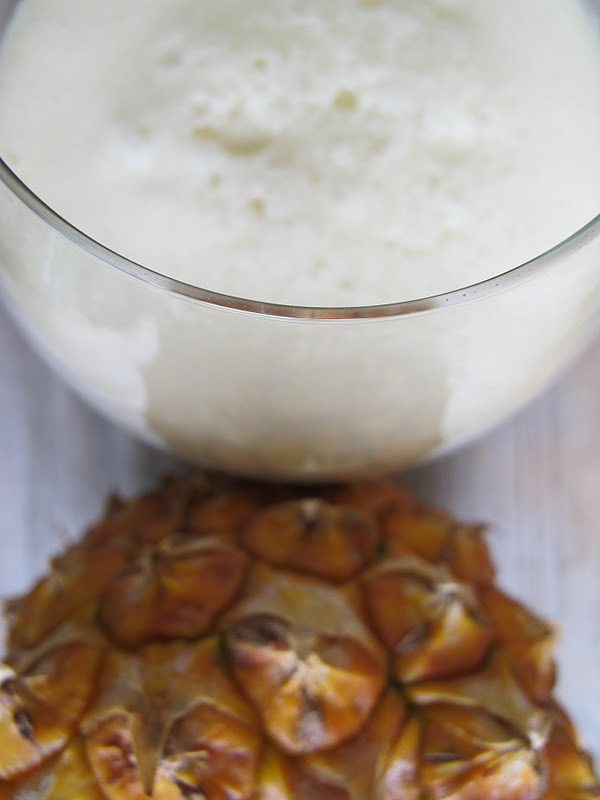
amaretto piña colada


On the morning of a big birthday year, I met my friends and sisters on the rooftop pool of a Barcelona hotel and drank these for breakfast.

It’s a typical piña colada, only incredibly enhanced by the sweet almond flavour of amaretto. Combined with the pineapple juice and coconut milk, the almond is divine.

I could drink a gallon of this stuff. Oh, hang on, I did!


Amaretto Piña Colada

Anna’s recipe. Makes 2.

Ingredients:
90ml amaretto
65ml white rum
40ml coconut cream
125ml pineapple juice
1 cup ice
1 cup pineapple chunks

Method:

1. Blend all ingredients together.

2. Decorate with ridiculous paper umbrella, plastic mermaid or oversized pineapple wedge.

3. Drink, pretending your poolside somewhere in the Caribbean (or a Barcelona roof top).


Pineapples supplied by the team at King of Fruit

Saturday, 30 January 2010

agua fresca cítrica - citrus drink


It’s summer, it’s hot and this is the perfect way to cool down.

I love agua frescas and they go especially well with the fragrant spiciness of Mexican and Caribbean food.

Strawberry and tamarind agua frescas are also good, but this time I made a citrus combination from ruby grapefruit, juicy Tahitian limes and navel oranges.

Served with ice, these drinks keep the summer heat at bay. And if you're feeling a little naughty, add a shot of rum or tequila to the mix.


Agua Fresca Cítrica (Mexican Citrus Drink)

Recipe from ‘Mexican’ by Jane Milton. Makes 2 litres.


Ingredients:
9 limes
6 oranges
3 grapefruit
3½ cups (900ml) water
2/3 cup (135g) caster sugar
Fruit wedges, to decorate
Ice, to serve

Method:


1. Squeeze the juice from the limes, oranges and grapefruit. Pour the mixture into a large jug.

2. Add the water and sugar and stir until all the sugar has dissolved.

3. Chill for at least 1 hour before serving with ice and fruit wedges.

Note:
Some fruit pulp may collect when squeezing the juice. This should also be used, once any seeds have been discarded. Will keep for up to 1 week in a covered container in the fridge.


Monday, 22 December 2008

arroz congrí: cuban tomato & black bean rice


This Cuban rice recipe was great.

Jonas made it (because rice is my kryptonite) and we served it as a side at a BBQ and stretched out to make ten portions that we ate on the day and over the next few days.

It even made it’s own salad with some cubed avocado and a sprinkling of lime juice and fresh coriander, plus it's really good served with Creole-Spiced Chicken.

This is the last of my 2008 food challenges covering Caribbean cuisine and realistically it’s probably the last food challenge of the year as I don’t think I’ll be to complete anymore in time.


Arroz Congrí (Cuban Tomato & Black Bean Rice)

Based on a recipe by Nancy Sanchez. Serves 6-8 as a buffet dish.

Ingredients:
5 cups long grain rice
880g canned black beans
1 litre vegetable stock
1 cup tomato passata
2 small onions, chopped finely
3 garlic cloves, crushed
Vegetable oil, for frying
Salt and pepper, to taste
Method:
1. Fry the onion and garlic in the vegetable oil till transparent.
2. Add tomato passata. Stir to combine
3. Add vegetable stock, beans and rice. Season.
4. Cook, covered, for twenty minutes or until the rice and beans are ready and the liquid has absorbed.

Tags:

Monday, 12 May 2008

coco y crema

I have been coveting this recipe for quite a while, but I think it’s time to share. The world deserves the Coco y Crema.

It could quite possibly be the best cocktail I’ve ever made.

That’s a big call, I know, but it has to be pretty good if it can get Jonas drinking a whole glass of coconut milk and then ask for seconds. He usually hates the stuff.

But this is wonderful. Just wonderful.

It’s a creamy, summery, tropical drink that's so ridiculously moreish you’ll be cursing coconuts for having such high fat content.

This is my contribution to Mixology Monday’s rum theme.

I’ve used two types of rum: a rich, strong, dark rum (Mount Gay) and a light, coconut rum (Malibu - gasp). The condensed milk does give it a great additional flavour but if you wanted a vegan version sugar syrup would suffice.

The ice is really important though, because the low temperature of the drink ensures it’s not cloying. Use lots of ice.

The instructions are simple, the ingredients are all easily available, and all you need to do is hit a button on a blender and sit back with your drink.

Coco y Crema
Anna’s very own recipe. Makes 4 tumblers.
Ingredients:
400ml coconut milk
200ml sweetened condensed milk
150ml coconut rum
150ml dark rum
2 cups ice
Method:
1. Put in blender.
2. Process until smooth.
3. Drink with relish.

Our MxMo host this week is TraderTiki. Check out his blog to see what other rum based goodies are on display.

Tags:

Friday, 25 April 2008

jerk pork

Carrying on the Caribbean theme after my Bajan pikelets, here’s something straight from Jamaica: jerk!

No, I’m not shouting insults. I’m talking about Jamaica’s dry-rub spice used on chicken, goat, pork, fish . . . hell, I’m sure you could spice up anything with jerk.

From all recipes, it seems the two most important components of jerk are the allspice berry (pimento) and the scotch bonnet pepper.

The scotch bonnet, a habenero cultivar, is one of the hottest chillies in the world and ranks third after the Naga Jolokia and Red Savina Habanero. It's Scoville rating is 100,000-350,000 whereas a Cayenna is only 30,000-50,000 and the Jalapeño is a piddly 2,500-8,000. Yes, the scotch bonnet is one hot chilli!

Authentic jerk is cooked slowly on allspice wood over coals. Since it’s a little difficult to gets your hands on any allspice wood in urban Sydney, I had to forgo the allspice wood for a regular barbeque.

The word jerk originates from jerky, an anglicised version of the Spanish charqui (dried meat).

Jamaicans serve their jerk alongside foods that cool down the spices such as dumplings, rice, potatoes and beans.

The exact recipe for jerk spice varies and many Jamaicans keep their blend a closely guarded secret, but there are enough published versions to develop a spice rub to suit your own tastes.

This one I got from Lonely Planet World Food: Caribbean, but I added fresh ginger, garlic powder and orange juice.

Jerk Pork
Recipe from Lonely Planet World Food: Caribbean. Serves 6.
Ingredients:
1 tsp allspice berries
1 tsp dried thyme leaves
1 tsp cayenne powder
1 tsp black peppercorns
1 tsp nutmeg
1 tsp cinnamon
1 tsp garlic powder
1 tsp freshly grated ginger
1 dried red chilli
3 cloves garlic, chopped
1 onion, chopped
1 tablespoon sugar
¼ cup vegetable oil
¾ cup cider vinegar
Juice of 3 limes
Juice ½ orange
Scotch bonnet peppers, add one at a time to taste
6 pork chops
Method:
1. Dry fry allspice berries, cayenne powder, black peppercorns, nutmeg, cinnamon and red chilli until aromatic. Cool and grind in a spice grinder with the thyme leaves until a powder if formed.
2. In a blender, combine spice mix with all the remaining jerk spice ingredients and blend until smooth. Be sure to only add one scotch bonnet pepper at a time and taste in between because they are lethal!
3. In a non-metallic dish, place meat and cover completely with marinade. Ensure everything is coated. Cover and marinate in fridge overnight.
4. The next day, slowly cook the meat on the barbeque, basting with jerk sauce as you cook.

Tags:

Wednesday, 23 April 2008

plantain pikelets w rum-butter sauce


When the weather starts getting cooler, I start craving warm desserts.

Pikelets are great afternoon treats, perfect served with a blob of jam and even a dash of whipped cream if you're feeling decadent.

Here I went for a Bajan (Barbadian) flavour, using Barbados' Mount Gay dark rum and squishy ripe plantains which taps into my plan to discover Caribbean-style food over 2008.


Bajan Plantain Pikelets w Rum-Butter Sauce

Based on a recipe from Mossop Honey. Makes 15 pikelets.


Ingredients:

Pikelets
1 cup self raising flour
1 egg
¾ cup milk
1/8 cup sugar
25g butter, melted
1 ripe mashed plantain
2 tablespoons honey
Pinch of salt
Butter, for frying
Rum-Butter Sauce¼ cup dark rum
2 tablespoons butter
4 tablespoons honey
Toasted coconut, garnish

Method:


1. Make sauce by combining over a low heat until honey and butter has melted. Simmer for 1 minute then remove from heat and keep warm.

2. Start the pikelets by beating the eggs and sugar together.

3. Stir through small batches of flour and milk alternately until just combined.

4. Add salt and melted butter and combine.

5. Combine mashed banana, rum and honey together then add to mixture.

6. Heat fry pan and grease with butter. Spoon pikelet mixture into pan, turning when bubbles appear on upper side.

7. Serve with rum-butter sauce and a sprinkle of toasted coconut.

Tags:

Sunday, 8 April 2007

ceviche mixto del mar

More raw food!

I adore raw fish, and raw beef for that matter, but fish is much easier to prepare at home.

This time I tried out a Cubanesque recipe for ceviche mixto and was more than pleased with the results.

To be honest, I’m not sure whether this recipe is Cuban or not, but the recipe book said it was so I’m sticking to it!

Ceviche is said to have originated in Peru and spread quickly throughout Latin America. It’s easy to see why: crisp, clean flavours and fresh fish, what more could you ask for?

Apparently Cubans like to add allspice and habenero chillies to their ceviche, but since habeneros are impossible to find fresh in Australia, a jalapeno was listed instead.

This recipe also brought in a touch of sweetness in the form of mango and called for a garnish of spiced popcorn. I was too lazy and omitted the popcorn, but apparently this is a common ceviche garnish in some countries.

Strange but true.

Ceviche Mixto del Mar (Cubano)
Recipe by Victor Pisapia (Gourmet Traveller Modern Salads). Served 6-8 as a starter.
Ingredients:

300g small green prawns, peeled and cleaned
300g scallops, halved or quartered depending on size
300g salmon fillet, skinned and pin-boned
1 tomato, chopped
1 mango, peeled and cubed
¼ red onion, chopped
1 jalapeño chilli, seeded and finely chopped
250ml lime juice (1 cup)
150ml orange juice
½ cup loosely packed coriander leaves, chopped
1 tablespoons caster sugar
1 large orange or pink grapefruit, peeled and segmented
Popcorn, seasoned with chilli, cumin and salt
Method:
1. Boil water. Blanch prawns for 30 seconds then transfer to ice water immediately. Drain.
2. Combine all seafood with tomato, mango, onion and chilli in a large bowl and cover with lime and orange juice. Toss gently and ensure all seafood is submerged in juices.
3. Cover and refrigerate for 3 hours.
4. Drain seafood and discard marinate.
5. Add coriander, sugar and orange/grapefruit, season to taste.
6. Spoon into serving bowls and top with coriander. Pass popcorn separately.
Note: I used Moreton Bay bugs instead of the salmon.

This week I’m again using my favourite herb, coriander. I can’t believe how much I’ve adopted this herb after such violent reactions against it during my youth.

Ahhhh, the joys of an adaptive palate!

This Easter WHB is being hosted by the lovely Anh from Food Lover’s Journey. Be sure to check up her recap, as well as the wonderful Vietnamese recipes she has on her blog.


Tags:

Monday, 13 November 2006

coco baby bitters cocktail

Today’s Mixology Monday is hosted by Michael at A Dash of Bitters and the theme is (surprise, surprise!) bitters.

I considered buying some Cynar, but spending money on a liqueur made out of artichokes that I just know will be disgusting is frivolous.

Jonas is a huge bitters fan. He particularly loves Campari and Montenegro even more so.

A classic Italian digestive: run an orange wedge around the rim of a glass, throw in some ice, top up with a nip of Montenegro, squeeze in the orange juice then drop the empty orange wedge in. Eccolo! Un digestivo buonissimo!

For my cocktail I decided to explore the idea of a dash of bitters using the Angostura bitters I had in my liquor cabinet. I wanted to see whether the ingredients we use as cocktail flavour enhancers could become more prominent elements in their own right.

After doing a little research on Angostura bitters, which is headquartered in Trinidad and Tobago, I learnt the recipe was created back in 1824 by a German surgeon Johann Gottlieb Benjamin Siegert. He was fighting with Simon Bolivar in Venezuela and developed the concoction as a tonic and digestive aid for the soldiers.

Other producers often add the bark of an angostura tree (cusparia febrifuga) so they can legally call their product Angostura, but the original does not include this.

One trademark of the original Angostura bitters is that the label is oversized for the bottle. Rumour has it this was the result of the relaxed Caribbean culture and when someone ordered the wrong size label for the bottle they just made do.

Angostura bitters are pretty versatile. They are included in a huge number of cocktails and are also used in a lot of Caribbean cooking. Stories on the internet claim some people even use it as insect repellent.

Be warned though, when using Angostura bitters you’ll find that it stains easily and if given a chance to dry it will be near to impossible to remove.

My cocktail is based on an idea I saw on the Angostura website, but I’ve changed it quite a bit to suit my palate and the ingredients available in Sydney.

Coco Baby Bitters
Anna’s recipe. Makes 1.
Ingredients:

5 tablespoons coconut milk
1 tablespoon condensed milk
1 tablespoon gin
1 tablespoon coconut rum
1 teaspoon Angostura bitters
Ice
Method:
1. Mix coconut milk and condensed milk
2. Add gin, coconut rum and bitters
3. Add ice and shake.
4. Serve with more ice.

Check out the Mixology Monday recap for more bitters cocktail recipes.


Tags:

Related Posts with Thumbnails