Showing posts with label west africa. Show all posts

Monday, 1 December 2008

west african plantain fritters


Marcus Samuelsson is a European and an African. As a three year old, he and his older sister were adopted from an Ethiopian orphanage and taken to Sweden to live their lives with a food-loving family.

Now Samuelsson is well-known in international circles as the chef who championed the quality and inspiration behind modern Scandinavian cuisine. His arrival at the famous New York restaurant, Aquavit, saw it ranked three stars from the NY Times and spawned a beautiful book by the same name.

In his other book, The Soul of a New Cuisine: A Discovery of the Foods and Flavors of Africa, Samuelsson explores the continent of his birth.

One of his recipes is a West African banana fritter, which I transformed into something a little more special by using plantains, and covered off the last of my West African cooking challenge for 2008.


Plantain Fritters
Recipe from The Soul of a New Cuisine by Marcus Samuelsson. Makes 12 fritters.

Ingredients:

3 ripe plantains
½ cup fine cornmeal
1 teaspoon sugar
¼ teaspoon salt
3 – 4 cups canola oil, for deep-frying
2 tablespoons honey

Method:


1. Combine the plantains, cornmeal, sugar, salt in a bowl and mash with a fork until smooth.

2. Heat 2 ½ inches of oil in a deep pot to 180’C.

3. Working in batches, add a heaped spoonful of the plantain mixture and fry until golden brown (about 2-3 minutes). Turn once halfway through cooking.

4. Remove from the oil and drain on paper towels.

5. Before serving, drizzle with honey.
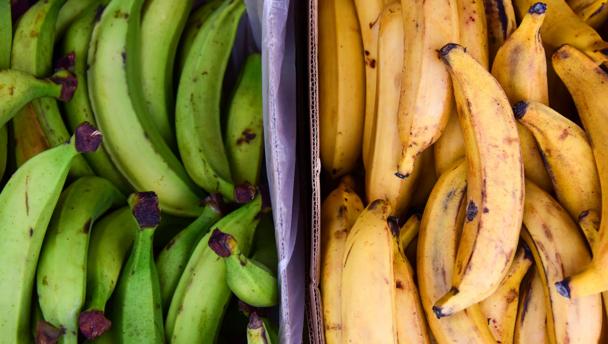

I have blogged about plantains before for Weekend Herb Blogging and because I am flat out at work these days I'm going to be really naughty and copy straight from an old post:

Plantains are very starchy fruit which are used more like a vegetable. They should usually be cooked before eating and are low in sugar content, although I suppose a black plantain (at its ripest stage) may be eaten raw.

It seems that green plantains are best for savoury dishes but when they get a little riper you can use them for desserts too.

Green plantains are very hard to peel and I used a potato peeler to get into the starchy flesh. In fact it’s so starchy my hands were coated with sticky starch even after washing.


Apparently they come from tropical South East Asia, particularly the Malay Archipelago, but they feature heavily in the diets of the Caribbean and West Africa. There they use plantains the way Europeans use potatoes: they can be fried, boiled, mashed or baked.

In Vietnam and Laos the plantain flowers are used to make salads and soups and the large leaves can be used as plates or wraps when cooking food. As the plant will only fruit once, after the harvest the stalk can be peeled to reveal a soft shoot which is also eaten.

Our WHB host for the week is Ivy from Kopiaste, a beautiful food blogger from Athens who often highlights the Cypriot delicacies of her homeland.


References
http://www.grabemsnacks.com/what-is-a-plantain.html
http://en.wikipedia.org/wiki/Plantains

Tags:

Saturday, 11 October 2008

burkina faso's fish stew

 
I won’t leave the confused guessing: Burkina Faso, commonly shortened to Burkina, is a landlocked nation in West Africa, surrounded by Mali, Niger, Benin, Togo, Ghana and Côte d'Ivoire. Until 1984 it was known as the Republic of Upper Volta.

The 13 million people of Burkina Faso are called Burkinabé and their capital is Ouagadougou. Around 50% are Muslim, 30% Christian and the remaining 20% are traditional Animists of varying types.

Archaeological evidence suggests the area was settled around 12,000 – 5,000 BCE by hunter-gatherers and by 3,600 – 2,600 BC farms had developed. During the 1500s, Burkina Faso was an important economic area for the powerful Songhai Empire.

Today 40% of the population are the Mossi, who arrived as migrant warriors in early times. The other 60% is made up of more than 60 ethnic groups, including the Bobo, Mande, Fulani, Lobi, Malinke, Senufo and Gurunsi. With so many different people and languages, the country’s official language is French, a remnant of their colonial past.

So why am I talking about Burkina Faso?

As part of my 2008 Food Challenges I’d set myself, I decided to learn more about African food (both west and east) and so this is my second foray into west African cuisine.

I actually quite enjoyed this dish because it contained okra, my Weekend Herb Blogging ingredient this week, an event founded by Kalyn's Kitchen. I have never actually cooked with okra until now, having been slightly terrified by it’s ooze. I found the flavour moreish and would certainly recommend it for stews.


Maan Nezim Nzedo (Burkina Faso Fish & Vegetable Stew)

Based on an internet recipe. Serves 2-3.

Ingredients:

500g freshwater fish steaks (eg bream, perch)
225g okra, halved lengthways if large
500ml passata (tomato sauce)
300ml fish stock
250g cooked rice
1 onion, thinly sliced
3 carrots, cut into 5mm slices
1 small cabbage, shredded
300g French beans
1 teaspoon chilli flakes
2 teaspoons coarse salt
Vegetable oil for cooking

Method:

1. Heat some oil in a saucepan then fry fish steaks until almost cooked. Remove and keep warm.

2. In the same saucepan, heat some more oil then fry onion and carrot until onion is soft.

3. Add passata and stock. Season then bring to a boil.

4. Add okra, beans and cabbage then cover, reduce heat to simmer and cook for around 5-10 minutes.

5. Add the rice and simmer for a further 3 minutes.

6. Serve immediately, placing the warm fish steaks on top of the rice.

Variation:
cut the fish into small chunks and add to stew with rice to heat through.


Okra (Abelmoschus esculentus) is in the same family as cotton, cocoa and hibiscus and is grown in tropical and warm temperate climates.

The edible green fruit is a capsule containing many seeds and is harvested when immature to be eaten as a vegetable. Inexperienced gardeners often leave okra pods on the trees too long when they actually should be harvested when only 3-5 days old.

Okra leaves are also edible and can be eaten raw in salads. The seeds can be used for cooking oil and in a roasted, ground form can substitute coffee.

It is believed that okra originated in Ethiopia and its journey beyond was via the Red Sea through the Arabian Peninsula. One of the earliest written records is from the Egyptian travels of a Spanish Moor in 1216 who saw locals eating pods with meal.

Okra is eaten in stews throughout Egypt, Greece, Iran, Iraq, Jordan, Lebanon, Turkey and Yemen and other parts of the eastern Mediterranean. In India it is commonly added to curries and in the Caribbean it’s popular in fish soups.

It first made it to the Americas in the mid 1600s via slave traders in Brazil and by 1748 it was growing happily in Philadelphia. Being hugely popular in the Southern US, especially around Louisiana, it is believed the French colonists introduced it as a common ingredient to the US.

Okra is crucial to thickening the American gumbo, which incidentally is a word originating from various Bantu languages’ words for okra “kingombo”. This version is the basis for the Portuguese, Spanish, Dutch and French words for okra too.

In English it’s also known as lady’s finger, but the name okra came from Igbo, a language spoken in Nigeria.

Okra can be served raw, pickled, sautéed, stir fried, boiled, steamed, stewed, casseroled, baked and fried and breaded for deep frying. Be wary that okra emits a sticky, gelatinous substance that many use to thicken food. If you’re not expecting it, you may find it unpleasant.

Okra is pretty nutritious with high levels of fibre, vitamin C, folate, potassium and magnesium.

Store okra in the fridge in a paper bag or in a perforated plastic bag to allow it to breathe. If you want to freeze it, blanch it for a few minutes and then you can keep it in the freezer for around 12 months. Once cooked it lasts in the fridge for around 3-4 days.

Buy firm, colourful pods and avoid rubbery pods with dry or dull skin. Smaller pods are often better too, since large ones can be woody.

So that's my contribution to Weekend Herb Blogging, with this week's host being Susan from The Well Seasoned Cook. Check out her round-up in a few days.


References:
http://en.wikipedia.org/wiki/Burkina_Faso
http://en.wikipedia.org/wiki/Okra
http://www.formulaforlife.com.au/asp/vegetables.asp?cmd=show&vegetableid=32&letter=O
http://southernfood.about.com/library/weekly/aa081401a.htm
http://plantanswers.tamu.edu/publications/vegetabletravelers/okra.html


Tags:

Monday, 23 June 2008

yassa au poulet

 
I have been participating in a lot of vegetarian events lately (a salute to my veggie-loving husband) but now I am turning to the dark side.

Hank, author of Hunter Angler Gardener Cook, won me over with his About Me page. I really identified with his sentiments when he wrote:
“Honest food is what I’m seeking . . . I am a fan of farmer’s markets, eating locally and making good food from scratch. If you know how to cook, a good meal doesn’t have to be expensive. I am especially interested in those meats and veggies that people don’t eat much any more, like venison or cardoons. I have nothing against good grass-fed beef or a head of lettuce, it’s just that others are doing just fine writing about those foods. I’m trying to walk a less-traveled path.”
Although I’m probably less fastidious about sourcing straight-from-the-farmer produce (not having a driver’s license can narrow your options) I certainly try to investigate new techniques, trial interesting recipes and source unique ingredients.

With this in mind I decided to join Hank’s monthly meat event, Meat & Greet. This month the theme is “things that used to fly”. But it’s not as simple as that. Hanks has thrown us all a worthy challenge to ensure either the ingredients (ie the flyer) is unique or the recipe is unusual.

Since I’ve already covered emu (which technically doesn’t fly anyway), I resorted to chicken rather than a weird exotic flying thing. I can hear Hank crying out in frustration but when you have a vegetarian husband I can assure you it's hard justifying a mega cook-off for one.

I went with boring ingredients but an interesting recipe. I decided to trial some Senegalese food!

Yassa au Poulet is a recipe that is appearing more and more across the net, and I went with the version appearing on a fellow food blogger, Marga’s website, since she lists it as one of her favourite recipes. She’s not wrong! It was delicious.

I’m big on sour flavours and this dish really delivers. Soaking chicken in vinegar and lemon juice overnight certainly creates a pucker.


Yassa au Poulet (Lemon-Vinegar Chicken)
Recipe by
Marga. Serves 4.

Ingredients:

2kg chicken thigh fillets, skinned
1¼ cup of lemon juice
½ cup white wine vinegar
½ cup peanut oil
3 onions, sliced
2 sprigs of thyme
Cayenne pepper, to taste
2 cups water
4 bay leaves

Method:


1. Mix the lemon juice, the vinegar, half the oil, the onions and pour over the chicken. Marinate overnight, or longer.

2. Remove the chicken and the onions from the marinade.

3. In a saucepan, heat the remaining oil and brown the chicken on both sides.

4. In the same pan, fry the onions for a few minutes until soft.

5. Add the marinade, thyme, cayenne, water and bay leaves. Simmer on medium heat for about 10 minutes.

6. Return the chicken to the sauce and cook until done, about 30 minutes.


Another reason for choosing a Senegalese recipe is because, as part of my 2008 Food Challenges, I committed to learning more about the food of Western Africa (ie Benin, Burkina Faso, Cape Verde, Cote d'Ivoire, Gambia, Ghana, Guinea, Guinea-Bissau, Liberia, Mali, Mauritania, Niger, Nigeria, Saint Helena, Senegal, Sierra Leone & Togo).

I also committed to learning about cuisine from East Africa, the Andes, the Caribbean and India and I have managed to cover some of these, but Yassa au Poulet is the first recipe I’ve tried from West Africa.

Senegal is bordered by Mauritania (north), Mali (east), Guinea and Guinea-Bissau (south) and the Atlantic Ocean (west).

It is believed that Senegal has been inhabited since prehistoric times. Since 11th century the territory has been part of various African and Islamic empires and in the 15th century the Europeans began fighting over it too.

In 1677, France took the reigns and used the island of Gorée as a major slave trading port until France abolished slavery (for the second time!) in 1815. Under the African, Islamic and European empires (between 1300 and 1900), it is estimated that close to one-third of the population was enslaved!

Senegal is comprised of various ethnic groups and the Wolof people are the largest population at 43%. Other large groups include the Peul, Toucouleur (also known as Halpulaar, Fulbe or Fula), Serer and Lebou. There are even minority Vietnamese communities!

French is the official language of the country, uniting the different ethnic groups under a common, albeit colonial, language. In the capital Dakar, however, Wolof is the most commonly spoken language on the street. 95% of the population are Moslem, 4% Christian (various Catholic and Protestant denominations) and around 1%, particularly in the south-east, maintain animistic beliefs.


Tags:

Saturday, 14 July 2007

soupe d'avocat abidjanaise (avocado soup)


This recipe from Côte d'Ivoire seems to be all over the internet and would be great for those currently experiencing warm summer days in the northern hemisphere.

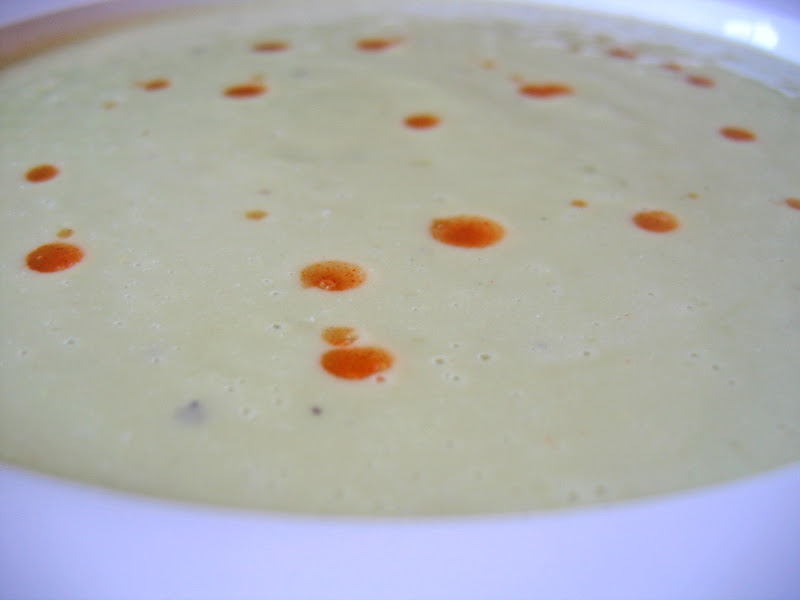
The thick soup has a wonderful creamy texture and the lime juice and spicy Tabasco cuts through perfectly.

In Côte d'Ivoire they have purple, thin skinned avocadoes which are not always readily found outside Africa, but other avocado types will do the job regardless.

Now that I've added Côte d'Ivoire, I've managed to cook and post recipes from 39 countries!


Soupe d'Avocat Abidjanaise (Abidjan Avocado Soup)

This recipe comes from Soup Song. Serves 2.
 

Ingredients:
1 very ripe avocado
400ml cups cold vegetable stock
¼ cup lime juice
3 heaped tablespoons plain yoghurt
2 generous splashes of Tabasco
Salt and black pepper to taste

Method:

1. Puree avocado flesh in a blender. Gradually add the stock and continue processing until smooth.

2. Blend in the lime juice, yoghurt, Tabasco sauce, and salt and pepper. Refrigerate for at least one hour.

3. When ready to serve, spoon into bowls, top each with a thin lime slice, and sprinkle a little Tabasco sauce over each portion.

Oil painting by Michael Naples


Côte d'Ivoire, or the Ivory Coast, is a small West African nation bordering Liberia, Mali, Guinea, Ghana and Burkina Faso. It gained independence from France in 1960 and was then led by moderate Félix Houphouët-Boigny until the 1990s. After he died the country feel into civil war. Although this disrupted their economic development, Côte d'Ivoire is still one of the most successful West African countries.

The people in Côte d'Ivoire are culturally diverse and have around 65 different languages between them. French is the official language that unites the population.

Most people are either Catholic or another form of Christianity, although there is an animist population and increased migration from neighbouring countries means a significant Muslim population also.

According to Wikipedia, 4% of the population is of non-African ancestry (mostly descendants of French colonists as well as Vietnamese and Spanish citizens and missionaries from the United States and Canada.


The word avocado comes from an Aztec language (Nahuatl) ahuacatl, via Spanish aguacate and means “testicle”. Perhaps because of its appearance, the Aztecs believed avocadoes were an aphrodisiac and called it "the fertility fruit". Apparently during avocado harvesting, virgins were kept indoors to prevent any promiscuity taking place.

This reputation stuck with the avocado for such a long time and many people in South America wouldn’t eat it because they wanted to appear wholesome. Companies had to undertake serious PR campaigns to dispel the myths and get the fruit out to the public.

The Nahuatl word ahuacatl makes up other words like ahuacamolli, meaning "avocado soup/sauce” which the Spanish transformed into guacamole.

In 2005, the world’s top ten avocado producing nations were, in order: Mexico, Indonesia, USA, Colombia, Brazil, Chile, Dominican Republic, Peru, China and Ethiopia. As trees need well aerated soils and subtropical or tropical climates to thrive, this makes sense.

Propagation by seed takes around 5 years to produce fruit and the quality is never as good as the parent tree. Commercial plantations therefore graft new seedlings.

Avocadoes mature on the tree but ripen once harvested. The fruit is high monounsaturated fat contents and contains 60% more potassium than bananas, vitamin Bs, vitamin E, vitamin K and folate.

In Brazil, Vietnam, the Philippines, Jamaica and Indonesia avocadoes are blended with sugar and milk to create a milkshake.

It is also interesting to note that avocado foliage, skin and pits are said to poison animals such as birds, cats, dogs, cattle, goats, rabbits and fish.

Weekend Herb Blogging is being hosted by Susan from Food Blogga but if herbs and veggies don't tickle your fancy then I recommend you check out her post on the biggest lobsters I've ever seen.


References:
http://en.wikipedia.org/wiki/C%C3%B4te_d'Ivoire#Culture
http://en.wikipedia.org/wiki/Avocado


Tags:

Sunday, 24 June 2007

kelewele - spicy fried plantains

I’ve been wanting to cook plantains for a long time but I’ve never seen them in the grocery store. I guess that’s because I’ve been living in an Italian area for the past six years.

Recently Jonas and I moved into a new area. Initially I was a little sad and reluctant, because I’d moved away from a wonderful supply of ingredients, but now I’m beginning to brighten up.

I’ve discovered new ingredients from cuisines I’ve barely touched upon in the past. A specialist grocery store across the street contains an amazing array of items from the Pacific islands, India, Africa and Latin America. Fufu powder, palm oil, ajowan and tomatillos are just the tip of the iceberg.

And then I saw the plantains . . . a perfect final WHB before Jonas and I embark on our belated honeymoon in Bali, an island of Indonesia.

~~~

I’ve read that this Ghanaian snack is often sold by street vendors in Africa but that many Americans may be familiar with the dish through Kwanzaa cookbooks.

Traditionally kelewele are cubes of plantains, but I just couldn’t resist keeping the banana-like shape to remind me of the exciting source of this starchy snack.

I got this recipe from the www.Ghana.co.uk website, which has a variety of Ghanaian recipes gathered from various online sources.

We did tweak the final step a little, using smoked sea salt rather than regular salt. This added a beautiful earthy, smokiness to the crispy pieces.

Kelewele
Recipe from www.Ghana.co.uk. Serves 2-3 as a side dish or snack.
Ingredients:
2 plantains
1 teaspoon ground ginger
1 teaspoon ground chilli (cayenne)
1 teaspoon freshly grated ginger
1 teaspoon lemon juice
Vegetable oil for deep-frying
Method:
1. Mix the ginger root, chilli and salt then mix with water.
2. Toss together the plantain cubes and spice mixture. Allow to rest for at least 5 minutes.
3. Heat oil in frying pan then fry until golden on both sides, making sure they don’t gather together while frying.
4. Drain on paper towels, sprinkle with sea salt and serve immediately.
Note: some recipes use other spices such as ground cloves, nutmeg, cinnamon, red pepper flakes and water instead of lemon juice.

It’s really important to keep the spice count up as plantains can be a bit bland on their own. They taste of potato with a slight hint of banana.

Plantains are very starchy fruit which are used more like a vegetable. They must be cooked before being eaten and are low in sugar content, although I suppose a black plantain (at its ripest stage) may be eaten raw.

It seems that green plantains are best for savoury dishes but when they get a little riper you can use them for desserts too.

Green plantains are very hard to peel and I used a potato peeler to get into the starchy flesh. In fact it’s so starchy my hands were coated with sticky starch even after washing.

Apparently they come from tropical South East Asia, particularly the Malay Archipelago, but they feature heavily in the diets of the Caribbean and west Africa. There they use plantains the way Europeans use potatoes: they can be fried, boiled, mashed or baked.

In Vietnam and Laos the plantain flowers are used to make salads and soups and the large leaves can be used as plates or wraps when cooking food. As the plant will only fruit once, after the harvest the stalk can be peeled to reveal a soft shoot which is also eaten.

This Weekend Herb Blogging is hosted by Astrid from Paulchen's Food Blog. Check out her site to see what's happening in the world of herbal cooking.

See you all again in two weeks!

References
http://www.grabemsnacks.com/what-is-a-plantain.html
http://en.wikipedia.org/wiki/Plantains


Tags:

Saturday, 30 December 2006

goats' cheese pudding

Red currants are just so pretty!

When I visited Jonas’ hometown, Vänersborg, his mother’s garden was full of gorgeous currant bushes, laden heavily with bright red and white berries.

It’s rare that we can get our hands on reasonably priced currants in Sydney and so I was very pleased that I found a punnet just at Christmas.

I’m happy to eat the tart little berries just as they are, but Jonas prefers them cooked and sweetened. For this reason I mixed the currants with quince to form a syrup for cocktails, ice cream or as a dessert sauce.

It was good timing too because this Christmas Eve I made us an African inspired menu with an avocado soup from the Ivory Coast, a legume main from Algeria and a gorgeous goat’s cheese pudding from Cabo Verde. The pudding was rich so my red currant and quince sauce was an excellent accompaniment.

This pudding (which is very much like a cheesecake) has a wonderful tangy flavour from the goat's cheese. The original recipe uses 250g goat’s cheese but that's a little too pungent for me. I brought the amount down to 100g and supplemented the rest with fresh ricotta. I also added lemon zest to the sugar syrup to add a light citrus edge. It’s barely detectable but it does add something special.

The final result was more than yummy. I’d definitely make this again.


Pudim de Queijo (Goats' Cheese Pudding)

Adapted from a recipe on the University of Massachusetts Dartmouth’s website. Serves 6.

Ingredients:
100g fresh soft goat cheese
150g fresh ricotta
250g sugar
250ml (2 cups) water
2 egg yolks
2 eggs (yolks & whites)
1 tablespoon wholemeal flour
1 teaspoon grated lemon zest
Method:
1. Preheat oven to 180’C.
2. Boil sugar and zest in water to the consistency of a thick syrup. Cool.
3. Whip cheeses together until they form a smooth paste.
4. Add sugar syrup and whip until combined.
5. Beat in egg yolks and egg whites.
6. Sprinkle the bottom of a greased cake loaf with burnt sugar. Pour in the mixture and cover with foil.
7. Place cake loaf in a oven proof dish and fill dish with hot water so that it reaches halfway up the cake loaf.
8. Place in oven and bake for 30 minutes.
9. Remove foil and baked another 15 – 20 minutes until cake is coming away from the edges of the pan.
10. Cool and serve cut into wedges.


Red Currant & Quince Sauce

Anna’s very own recipe. Makes 200ml.

Ingredients:
100g red currants
3 tablespoons quince paste
½ cup sugar
½ cup water
Method:
1. Pick over currants and remove from stems. Reserve a third of the currants.
2. Dissolve sugar in water over a medium heat.
3. Increase heat to high. Add quince paste and currants and bring to the boil stirring continually. Currants should start to break apart.
4. When syrup has thickened enough to form droplets on a plate, add reserved currants and remove from heat.

Cabo Verde (Cape Verde) is group of islands just off the west coast of Africa, opposite Senegal and Mauritania. In the 1400s the Portuguese colonised the islands, which had been uninhabited, and used them as a water pit stop as well as for sugar cane production and a port during the slave trade. Today Cabo Verde is an independent republic and the official language is Portuguese.

Map taken from www.appuntidiviaggio.info

Tags:

Tuesday, 26 December 2006

le kilimanjaro - east african cuisine

Le Kilimanjaro East African Eatery
280 King Street
Newtown, Sydney
Australia
T: +61 2 9557 4565


This is not the first time I’ve visited Le Kilimanjaro, an East African restaurant on the main street of bohemian Newtown. Food here is extremely interesting in a suburb where pub grub, Indian and Thai reign supreme.

I love this tiny space and the owners, dressed in their traditional Senegalese clothes – long white gowns for the men and bright, flourishing colours for the women.

This time I visited with a Japanese friend, Taka, and tried a wide range of dishes.

The menu is on a board on the wall and customers make their selection before the arrival of gorgeous wooden plates. This small touch adds authenticity and excitement before the food even arrives.

First to arrive were the drinks. Bissap ($4) is the glowing red nectar of hibiscus flowers and has a sweet earthy flavour. A ginger based drink ($4) has a spicy bite and delicious honey sweetness. I liked the bissap but adored the ginger drink.


Next came an asparagus dish ($6) not listed on the menu. It was steamed to crunchy perfection and topped with a thick sauce of various spices, tamarind and peas. This was very fresh and had a nice afterglow.


Niamdoli ($6) was tangy salad of cucumber and tomato smothered in a yoghurt, saffron and mint sauce. These chucky cut vegetables and the dairy component were a cooling influence compared to the spiciness of other dishes.


To mop up all the juices we ordered perfumed couscous ($6) and soft flat bread ($2 per piece) which were savoury crepes.


In ndambe ($12.50) cubed marinated lamb is steamed then smothered in a sauce of spices, tomatoes, lentils, kidney beans and vegetables, such as pumpkin. The lamb was a little dry in this dish, but the flavours were excellent.


Soussou-Gorgiguan ($12.50) was steamed boneless tuna served with spices and tamarind. This is my favourite dish with the warm spices deliciously complimenting the sour tamarind. The menu explains that in Wolof (both a Senegalese tribe and their language) the word “gorgiguan” means ‘homosexual’. I have no idea how this dish got its name or what tuna has to do with homosexuality, but one thing is clear: it’s extremely tasty.


Overall, this is a great little restaurant with a casual atmosphere and unique range of dishes. Vegetarians won’t go hungry with eight dishes dedicated to their eating pleasure. With the total bill for two coming in at $60 (including a tip), it’s not cheap but it is reasonably priced for a rare taste of African. I’ve been before and I will visit again.


Le Kilimanjaro on Urbanspoon


Tags:
Related Posts with Thumbnails