Showing posts with label janet de neefe. Show all posts
Thursday, 2 October 2008
three recipes w kaffir lime
Wowee peoples, I have no less than three recipes for you this Weekend Herb Blogging.
Last week I focused on the native Australian finger lime (the long limes pictured above with the key lime and a [frozen] kaffir lime). This week it’s all about the kaffir lime tree and some of the recent Indonesian food I’ve been cooking.
A while ago, I blogged about a Balinese-style feast that I made and these are some of the recipes.
First up is a simple kaffir syrup. It’s light, refreshing and perfect with chilled soda water and ice. It would make a great addition to cocktails and is perfect drizzled over fresh mango cheeks and other tropical fruits as well.
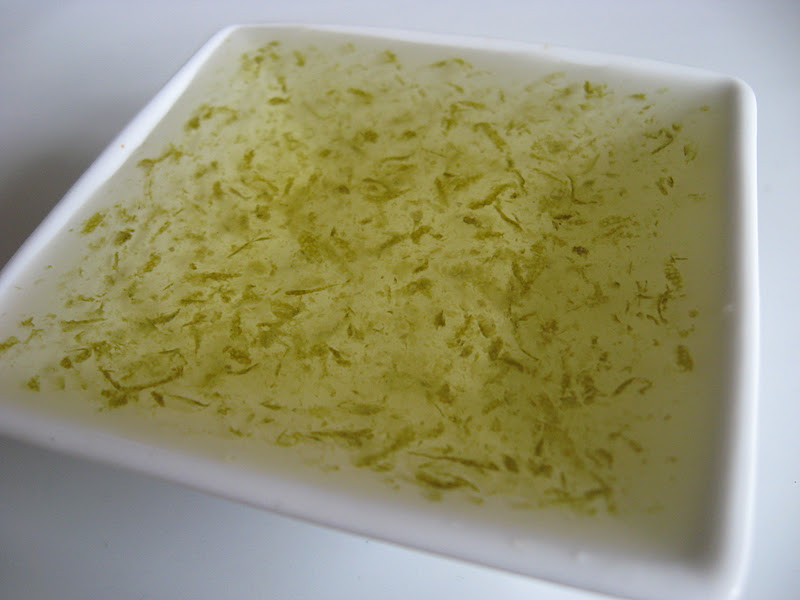
Kaffir Lime Syrup
Anna’s recipe. Makes 1 cup.
Ingredients:
1 cup water
1 cup sugar
Zest of 1 kaffir lime
Method:
1. Combine all ingredients together and heat on the stove until the liquid starts to bubble.
2. Simmer for 3 minutes until syrup thickens then remove from heat and pour into a jar.
3. Heat will seal the jar, which can be kept in the cupboard until needed. Keep in the fridge after opening.
The next dish is a beautiful and incredibly rich rice, coloured by turmeric and flavoured with bay leaves, fresh ginger and kaffir. The rice is cooked using coconut milk instead of water and is simply delicious.
Nasi Kuning (fragrant turmeric rice)
Anna’s recipe. Serves 4.
Ingredients:
400ml coconut milk
1 cup long grain rice
1 teaspoon turmeric powder
2 kaffir leaves
2 bay leaves
½ teaspoon freshly grated ginger
Pinch of salt
Fried shallots, for garnish
Method:
1. Combine turmeric powder, salt, bay leaves, kaffir leaves, fresh ginger and coconut milk.
2. Add rice then bring mixture to a boil.
3. Reduce heat and cook, covered, for around 12 minutes.
4. Remove from heat, keeping cover on, and allow to sit for 15 minutes.
5. Check that rice is soft and all liquid is absorbed. Remove bay leaves and kaffir leaves.
6. Pack rice into a greased bowl and turn out onto a serving platter. Serve hot, garnished with fried shallots.
I first tried this recipe at the Casa Luna Cooking School in Bali. It is so flavoursome and the kaffir lime really shines against the other ingredients. In her cookbook, Janet de Neefe describes this dish as a fusion of Balinese and Mediterranean flavours and that’s accurate. Be sure to check out the link to Janet’s cookbook as she has so many other recipes included and descriptions on each.
Sambal Tuwung (roasted eggplant salad)
Recipe from Fragrant Rice by Janet de Neefe. Serves 4.
Ingredients:
2 small black eggplants
2 long red chillies
3 small red chillies
2 kaffir lime leaves, finely shredded
2 medium tomatoes
5 cloves garlic, peeled
2 small kaffir limes
1-2 teaspoons kecap manis
2 teaspoons grated palm sugar
Oil, for baking and frying
Lime wedges, for garnish
Fried shallots, for garnish
Method:
1. Preheat the oven to 180’C.
2. Slice the eggplant in half, lengthwise.
3. Combine eggplant and garlic in a roasting pan. Drizzle with oil and roast until soft (about 30 minutes). Set aside to cool.
4. Halve the tomatoes and chop the chilli into small pieces.
5. Heat oil in a wok and fry chillies, garlic and shrimp paste until lightly brown.
6. Add the tomatoes and fry until they are softened. Strain and set aside.
7. Using a mortar and pestle, grind the chilli, tomatoes, garlic and palm sugar gently into a coarse pulp. Add some oil if it’s too dry.
8. Skin the eggplant and, using your hands, pull the soft flesh into strips.
9. Using your hands again, mix the eggplant with the pulp, kecap manis, kaffir leaves and crushed limes.
10. Serve garnished with lime wedges and fried shallots.
Kaffir limes (Citrus hystrix) are native to Malaysia and Indonesia but are known grown worldwide and are a popular backyard plant. In fact Jonas and I have one in a large pot on our balcony and it seems to be doing very well.
The fruits are around the same size as Tahitian or Key limes, but their skin is a little darker and has bumps and grooves all over it. The fruit contains a lot of seeds and the juice is extremely sour, seeming unpalatable from older fruit.
The kaffir tree has beautiful, elegant branches with long, sharp thorns. Leaves have hourglass shapes that seem like two leaves stuck together end-to-end. The leaves are edible and are used, dried or fresh, to flavour many dishes. They can even be kept in the freezer to maintain freshness.
Kaffir leaves and zest are used to flavour curry paste, tom yum soup, barbecued fish, roasted chicken, prawn salads, herbal vinegars and tea.
Unfortunately the word kaffir has taken on some terrible connotations in South Africa, where the word was used as a derogatory name for black Africans the way nigger was applied to African Americans in the US. The lime is pronounced quite differently than the insult, but the spelling is the same.
The origin of this racism, however, came from the Portuguese misunderstanding of Arabic and using the word kafur meaning “non believer” as a word for African tribesmen. Basically, it’s got nothing to do with the poor lime!!!
In South East Asia, where they are commonly included in cooking, the kaffir has many names:
Cambodia: krauch soeuch
China: fatt-fung-kam (Cantonese), thai-ko-kam (Hokkien/Minnan)
Malaysia: limau purut
Myanmar: shauk-nu, shauk-waing
Indonesia: jeruk purut, jeruk limo, jeruk sambal
Philippines: swangi
Sri Lanka: kahpiri dehi, odu dehi, kudala-dehi
Thailand: makrud, som makrud
Laos: makgeehoot
So this is my contribution to Weekend Herb Blogging, this week hosted by UK-based-Brazilian Valentina from Trem Bom. Be sure to check out the other herby entries from around the world.
References:
http://en.wikipedia.org/wiki/Kaffir_lime
http://www.luxury-thailand-travel.com/images/Kaffir-Limes-1.JPG
http://herb-stuff.com/wp-content/uploads/2011/06/Growing-Kaffir-Lime-Trees.jpg
http://www.herbsarespecial.com.au/free-herb-information/kaffir-lime.html
http://www.agric.nsw.gov.au/Hort/Fmrs/Asian_veg/kaffir.htm
http://www.burkesbackyard.com.au/1999/archives/25/in_the_garden/herbs,_fruit_and_vegetables/limes

Wednesday, 17 September 2008
rujak, spicy tamarind fruit salad
Surprisingly, yesterday I made an impromptu dinner and covered off another three 2008 Food Challenges! The first was to make rujak, a wonderful sweet and sour salad, popular in Indonesia and Malaysia, the second was to cook a Balinese feast and the last was to taste test crocodile meat.
Yes, that's right. Crocodile meat. And I can tell you it's very good!
My sister, Shamu, has been feeling a little down lately, so I decided to cook her Indonesian food since she learnt the language in school and has always had a fascination with the country.
Cooking the dishes was surprisingly easy and I was impressed with how well everything turned out. It was really yummy!
Here is what I cooked:
Rujak (spicy tamarind & fruit salad)
Sambal Tuwung (roasted eggplant salad)
Tahu Goreng Pedas (spicy fried tofu)
Buaya Tabiabun (long-pepper crocodile)
Acar (pickle condiment)
Nasi Kuning (fragrant turmeric rice)
Sago Gula Bali (sago in spiced coconut milk)
I will eventually post all the recipes, but be patient!!!
For now I will write about one of my all time favourite salads, rujak. Popular in both Indonesia and Malaysia, apparently this spicy, sweet-sour salad is a favourite afternoon snack in Bali for people of all ages.
I first tried rujak at a cooking class in Bali and have since seen the instructor’s recipe printed on this website, making it easy for me to reproduce the flavours.
Be careful not to make the dressing was too runny. It needs to be quite thick (almost like honey) and coat the fruit in a brown sauce. The key to this is making sure you cook your palm sugar syrup until very thick and sticky.
The flavours are delicious and I will make it again. It could become a summer favourite and will be a great salad alongside grilled meats and seafood.
Rujak (spicy tamarind & fruit salad)
Recipe from Fragrant Rice by Janet De Neefe. Serves 4-6.
Ingredients:Dressing:
1-2 red chillies, trimmed (use long for mild or small hot flavour)
3 tablespoons tamarind pulp
4 tablespoons palm sugar syrup
7 teaspoons lime juice (optional)
Sea salt, to taste
Salad:
¼ pineapple, peeled
1 nashi pear
1 apple
2 cucumbers
Method:
1. In a mortar and pestle, grind the chilli and salt.
2. Mix in the tamarind pulp, including the seeds (if using a food processor, the seeds will need to be removed).
3. Add palm sugar syrup. Add sea salt to taste and the lime juice, if using. It should resemble chutney.
4. Check flavours. It is important to achieve a balance of sweet, sour, salty and spicy.
5. Chop the fruit into bite size pieces and mix well with dressing. Serve at room temperature.
Note: Traditionally this recipe includes roasted shrimp paste. Put ½ teaspoon of shrimp paste on a small square of aluminium foil and grill under a pre-heated griller until slightly toasted (30 seconds). Add to mortar and pestle when making dressing.
Variations: rujak can be made with any combination of apple, starfruit, pineapple, pear, jicama, cucumber etc. The dressing is also delicious with grated carrot or grilled meat.
Palm Sugar Syrup
Makes around 1.5cups
Ingredients:
500 grams brown palm sugar
2 cups water
1 pandan leaf or vanilla bean
Method:
1. Put palm sugar, pandan (tied in a knot) and water in a saucepan.
2. Bring to boil and simmer for 15 minutes without stirring until liquid has reduced by nearly half. Syrup is ready when large bubbles appear on the surface (as when making coffee).
3. While warm, strain into jug and leave to cool. It will thicken up at this point. Store in refrigerator.
This recipe is my contribution to the blogging event No Croutons Required, which this month has a fruit theme. The event is an opportunity for bloggers to share vegetarian salad or soup recipes and is hosted by Holler, the Scottish author of Tinned Tomatoes.
Tags: morsels and musings food blog food and drink australia recipes rujak fruit salad salad rujak recipes rojak recipes tamarind recipes spicy recipes fruit recipes salad recipes balinese recipes balinese food balinese cuisine indonesian recipes indonesian food indonesian cuisine
Saturday, 21 July 2007
jamu kunyit
This post contains a recipe for a Balinese health drink, but before I get to that I thought I’d share some photos from our honeymoon in Bali (wedding photos here for those interested).
If you want to skip straight to the jamu, just scroll down to the bottom of this post. You can't miss the bright orange liquid!
~~~
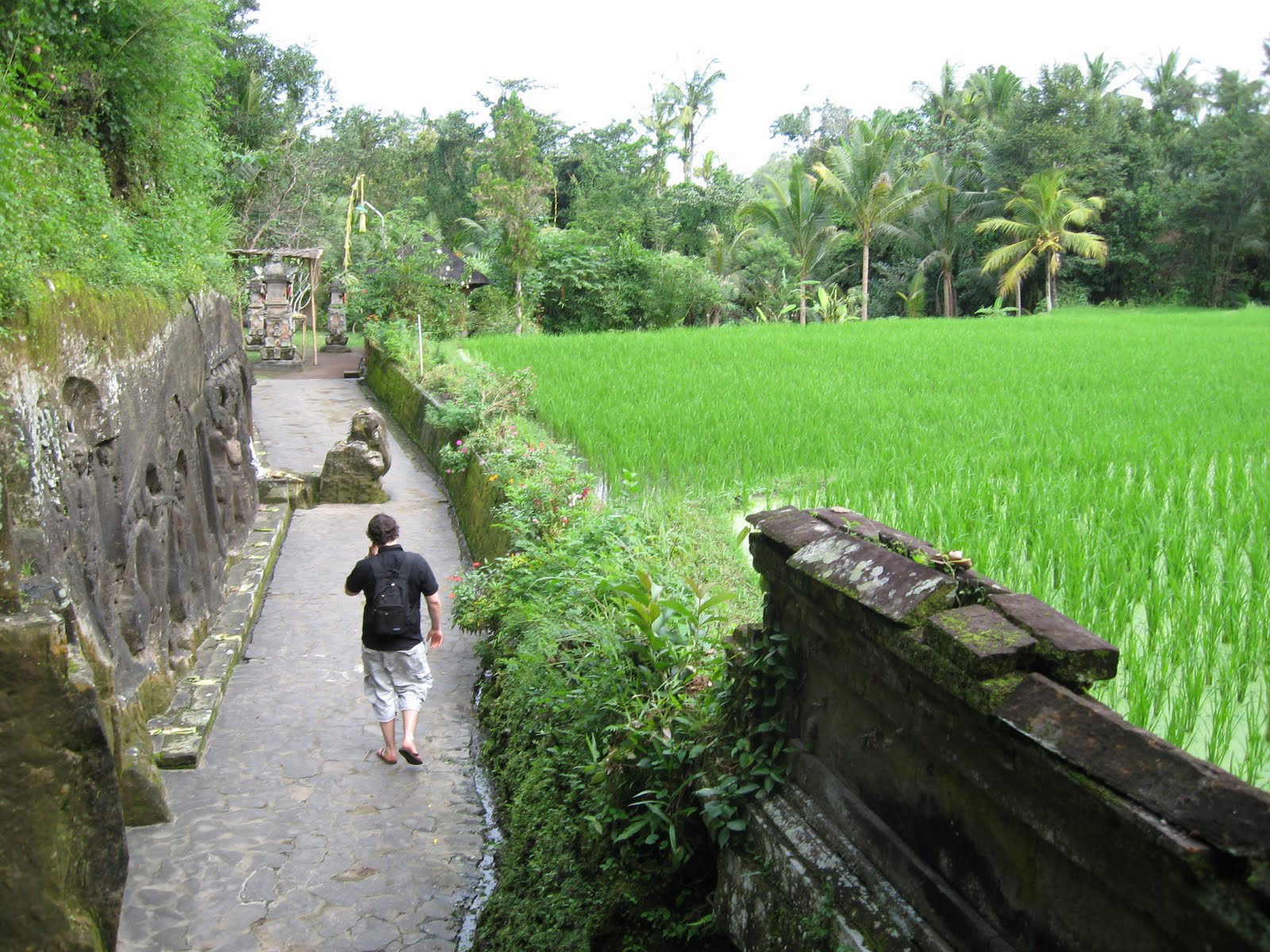
This first photo, up above, is Jonas walking along a rice field at Yeh Pulu near Ubud.
Pura Dalem Agung - a holy temple in the Monkey Forest of Ubud.
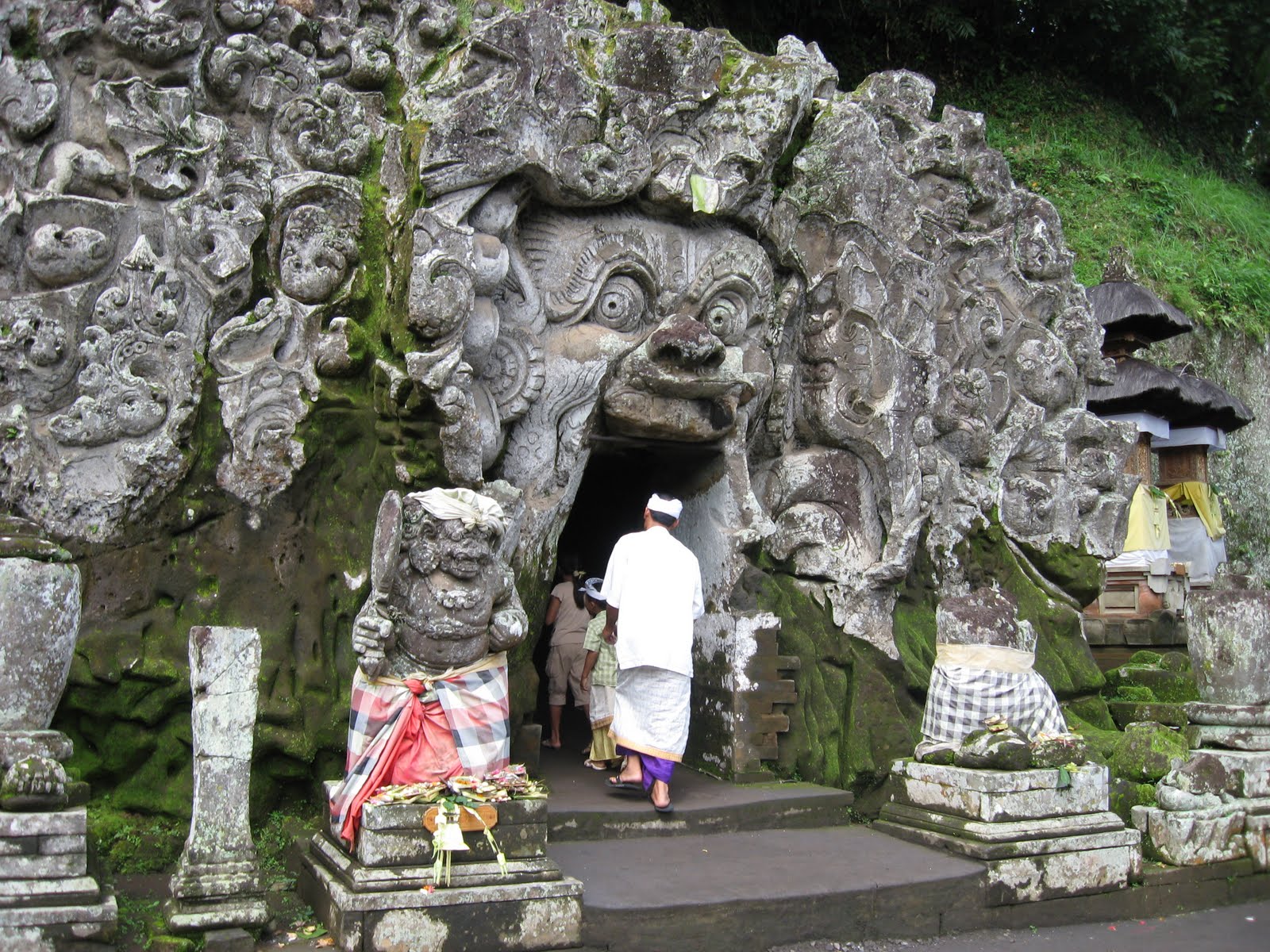
This is Goa Gajah (Elephant Cave) which was carved in the 11th century. During religious holidays the Balinese visit and make offerings.
Next to the Elephant Cave were these fountains of fresh water for bathing. The Balinese use the many fresh water pools and ponds to wash their clothes, do their cooking and clean themselves, but I suspect these baths spout holy water and are used for rituals since they were within the temple complex.
The spectacular rice terraces of Jatiluwih which means "truly wonderful". A farmer prepares the rice fields for planting.
In Hindu lore, Kumbakarna was said to be a giant and helped his evil brother Ravana, the demon king, to kidnap Sita then fight the god Rama and the monkey general Hanuman. Here he is fighting Hanuman's monkey soldiers.
In the village of Tapaksiring is Gunung Kawi, a series of rock cut candi (shrines) built in the 11th century. It's said to be Bali's oldest and largest monument. Each candi is said to represent various 11th century Balinese royals.
This old lady looks after this statue of Ganesh and encourages people to make offerings (ie give her cash). She flicked a lot of holy water on Jonas and I and said her only two words in English "mamma and pappa". I could tell she was a cheeky old bird!
Pura Ulun Danu Bratan - which translates to the temple at the end of lake Bratan.
The Balinese are Hindu and we happened to arrive during one of their most important religious festivals - Galungan - a time when the gods visit earth. There were a lot of ceremonies and religious procession and here you can see the Barong (a lion and dog hybrid) which is accompanied by drums and dances around like a Chinese dragon.
It's very interesting that the Balinese have no qualms about presenting statues of scary demons alongside those of friendly elephants or happy monkeys. There was something extra sinister about this lashing tongue and the terrified woman in the demon’s arms.
Pura Batu Bolong - the temple of the hole in the rock
This was our very first hotel. Barong Resort in Ubud. We had our own gorgeous courtyard and pool and they decorated our room with honeymoon flowers. Check out that massive bathtub filled with flowers!!!
And this was our second hotel, Sesari Bali in Seminyak. We had huge outdoor living spaces, a 3x7 metre pool and even an outdoor bathroom with massive tub and two showers.
Hope you enjoyed the holiday slide show ;)
Other Bali honeymoon related posts are:
Balinese cooking class
Dining out in Bali
Sirsak - soursop fruit
Salak - snakefruit
Now, onto my Weekend Herb Blogging.
Jamu Kunyit
I am glad I uploaded almost all of this post on Monday, since I have been seriously ill for the past few days. Jonas and I both caught a killer flu which we still haven’t shaken even after 5 full days in bed and we’ve been getting fevers of around 40’C (104’F)! Apparently it’s hitting the young and healthy the hardest since it preys on the body’s ability to protect itself so the stronger your immune system is the worse you get hit. Very scary.
So I’m glad that I only have to jot down a few sentences on top of notes and photos I’d already uploaded or otherwise I wouldn’t be joining in this week’s Weekend Herb Blogging. My ingredient this week, turmeric, is actually a rhizome rather than a herb, so I guess I’m cheating a bit.
Given my state of health at the moment though, it’s very apt that I’m presenting a jamu, a drink recommended by the Balinese cooking instructor at Casa Luna as a cure for almost any ailment.
Jamu basically means “tonic” or “cure-all” and is a system of local healings throughout Indonesia. It seems that most jamus are elixirs, but some can be body treatments such as creams or poultices.
In this jamu, fresh turmeric root is juiced then mixed with honey, lime juice and water to create a refreshing, earthy drink.
The brightly coloured turmeric stains your tongue but you can feel it seeping through your body doing good things to you. I only wish I could get my hands on the ingredients, but since both of us are sick we’re cooped up in our home relying on home delivery.
Jamu Kunyit
Anna’s version of a Balinese medicinal drink. Serves 1.
Ingredients:
100g fresh turmeric root
100ml lime juice
1 ½ tablespoons honey
Water
Method:
1. Juice turmeric.
2. Mix with honey and lime juice.
3. Top with water, mix and drink.
Turmeric is heavily used in Ayurvedic medicine. It has antiseptic and antibacterial qualities, takes on similar effects as fluoride for teeth, heals psoriasis and joint inflammation, helps with digestive problems and more recently is being used to treat depression.
In the West they are realising that curcumin, the active ingredient in turmeric, can help all matter if ailments including pancreatic cancer, Alzheimer's and cystic fibrosis.
Tumeric is also used in the cosmetic industry in sunscreens, hair removal products and scar treatments.
It’s nice that this Weekend Herb Blogging is being hosted by The Chocolate Lady at In Mol Araan, because I imagine she’ll enjoy this Balinese tonic.
Tags: morsels and musings food blog food and drink australia recipes weekend herb blogging whb jamu drink honey lime turmeric jamu recipes healthy recipes drink recipes balinese recipes balinese food balinese cuisine indonesian recipes indonesian food indonesian cuisine
Labels:
drink,
janet de neefe,
south east asia,
travels,
weekend herb blogging
Thursday, 5 July 2007
balinese cooking lesson
After our beautiful wedding in March, we're back from a wonderful honeymoon in Bali! And I mean wonderful.
We spent time in both Seminyak and Ubud and the villas we stayed in were absolute luxury with our own private swimming pools and canopy beds romantically draped with gauzy mosquito nets.
And the people! I’d read everywhere that the Balinese are always smiling, always helpful, always friendly – yes, yes yes, whatever, they’re friendly, I get it – but we weren’t prepared for just how friendly they were.
Of course our culinary adventures were also superb and Bali certainly offers excellent eating whether it's local Balinese, general Indonesian or fab international fusion. I hope to do a few posts about our gastronomic experiences, but to whet your appetite I think I should start with some of the most exquisite dishes I ate in the trip and – even better – they came straight from a cooking class!
When we decided on Bali the first thing I did was investigate which cooking schools were top notch and Casa Luna was raved about in every online and hardcopy guide book. I booked Jonas and I in for a vegetarian cooking class for our very first morning.
Casa Luna is a restaurant, guest house and cooking school of Australian Janet de Neefe who married a Balinese man and got hooked on local food and culture.
Her Honeymoon Guesthouse on Jalan Bisma in Ubud was a beautiful building and the class was conducted on an airy open terrace that looked out across rooftops, shrines and rice fields. It was the perfect setting to learn about Bali’s cuisine, especially in Ubud which is hailed as a stronghold of Balinese culture including food, art and dance.
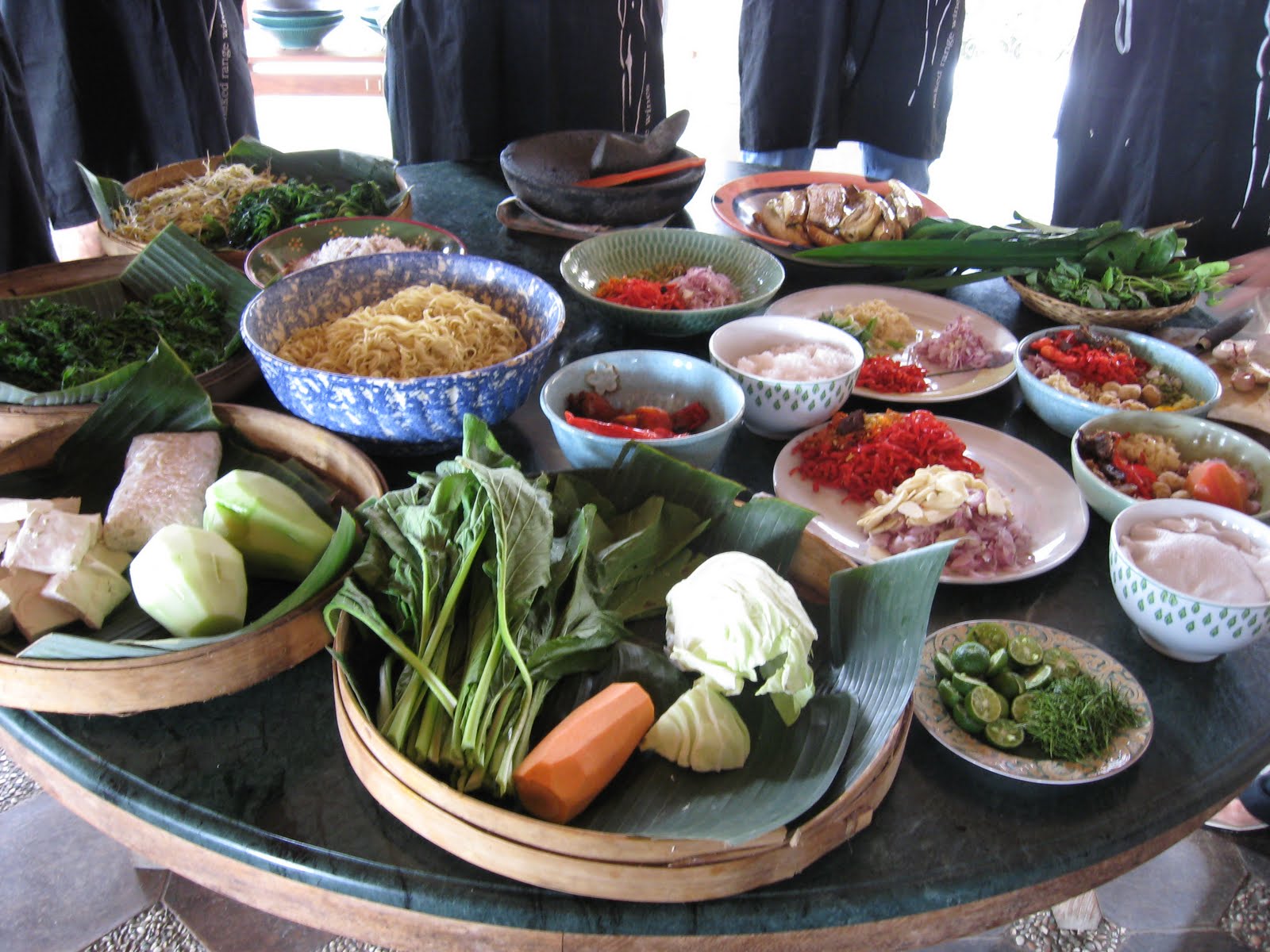
Before I launch into the dishes, I have to outline a little bit about Balinese cuisine in general. The main flavours are simple, fresh and punchy. The following is what I gleaned from the cooking lesson and my 10 days of three course feasting.
Turmeric and different gingers (ie galangal or torch ginger) play a central role and coconut can be found in various forms: fresh flesh, coconut juice, coconut milk, roasted coconut, coconut sambal.
Tiny kaffir limes are used for their juice and the leaves are shredded into salads and spice pastes, as is young lemongrass. Tamarind provides another sour component to many dishes whereas palm sugar has a caramel sweetness and is said to add the magic touch to complete any dish.
![]() |
| Fern shoots |
In terms of herbs, salam is an aromatic herb that’s used in much the same as European cooking employs bay leaves – although the flavour is much more delicate and bays should never be used as a substitute. Pandan leaves are also used to perfume food, both sweet and savoury, the way vanilla is used in the West.
And one cannot forget the chilli – it plays a huge role in almost all Balinese dishes whether it's included in the cooking or served on the side in a sambal. I learnt that there are three main chillis used: long, red sweet chilli; squat, orangey-green lombok chilli; and then the tiny tabia krinyi which are green birds eye bullets that will knock your socks off.
Unfortunately for my curious food blogging pals the recipes from Casa Luna’s cooking class cannot be reproduced without permission from the school, so while I find out whether I can post one or two of my favourites, I’ll tell you about each of the dishes we learned to cook.
We snacked on these crackers while we prepped our dishes for lunch.
| Kare Tempe - Tempeh Curry |
Tempeh in Bali was just so textured and you could see the gorgeous chunky soy beans in the tempeh blocks. In this curry slices of tempeh were paired with sweet choko (chayote) and were flavoured with a gorgeous curry paste made of ginger, galangal, chilli, salam leaves, garlic, coriander seeds, tumeric, candlenut, lemongrass and tamarind. This was fried until fragrant and finished with coconut milk.
| Urab Pakis - Fern Shoot Salad |
Urab is a wonderful discovery for both Jonas and I. It’s a ridiculously delicious salad that alternates the vegetables but always seems to include the same ‘seasoning’ of shredded, roasted coconut and kaffir lime with sambal goreng – a fried chilli sauce of shallots, chilli, garlic and belacan. In this version they used steamed pakis (fern shoots) which tasted like mild baby spinach but looked delightful with their frilly, curly fronds.
| Roasted chilli sambal |
Tomatoes and chillies were roasted with garlic then chopped into this spicy condiment.
| Sambal Tuwung - Roasted Eggplant Sambal |
This refreshing, slippery side dish was made of eggplants roasted with tomato and garlic and then smothered in a sauce of kaffir lime, chilli and palm sugar. They made this with their hands, squishing the tomatoes to create a sauce.
| Kuah Ikan - Fish w Lemongrass & Tomato |
This dish was deliciously light and fragrant but yet the flavours still invaded my mouth and set up an entire civilisation. Mackerel was cooked with a spice paste of garlic, belacan, tomatoes, palm sugar, shallots, chilli, lemongrass and coriander seeds. The dish is also flavoured with torch ginger, coconut milk, tamarind and salam.
| Mee Goreng - Fried Noodles |
A simple, fried noodle dish is always a crowd-pleaser.
I was so sad I didn’t get a photo of the Rujak (sweet & sour salad) because it was so wonderful although admittedly not very pretty. Apparently this dish is one of the Balinese women and children’s favourite afternoon snacks. It involves steeping chunks of apple, pineapple, jicama and cucumber – or any similar, juicy fruits or vegetables – in a sauce of chilli, tamarind and palm sugar syrup that’s been pounded in a mortar and pestle. The sweet fruit was perfectly matched with the tart, spicy dressing.
| Arak |
The Dadar Unti (green pancakes with coconut) was the best dessert I tasted on my whole holiday and I looked for it everywhere but to no avail. The Casa Luna staff flavoured the batter with pandan leaves and then stuffed the hot crepes with grated coconut that had been caramelised with palm sugar and pandan. It was so divine I ate it all before I took a photo!
I strongly recommend you take a cooking course on any holiday to a new location. It’s such a sensual way to introduce yourself to the new environment, flavours and ingredients and will provide you with a rich knowledge base to explore throughout the remainder of your holiday.
If you’re in Bali, try out Casa Luna’s school or at very least the restaurant!
Tags: morsels and musings food blog food and drink australia recipes bali casa luna ubud tempe tempeh pakis fern shoots ikan urab sambal balinese recipes balinese food balinese cuisine indonesian recipes indonesian food indonesian cuisine
Labels:
foodie education,
janet de neefe,
south east asia,
travels,
vegetarian
Subscribe to:
Posts (Atom)