Thursday, 1 July 2010
a fuego negro, san sebastian
San Sebastian’s pinxtos are fantastic, but after a few days those used to more a varied diet will start to get palate fatigue.
This is where A Fuego Negro becomes your saviour, by using traditional Basque ingredients but presenting them in unique combinations with pizzazz.
The kitchen only opens at 8pm, so don’t be caught out hovering around the bar too early with a grumbling stomach.
Each kosita costs around €3, higher than pintxos at most bars around the city, but certainly much more diverse that what’s offered elsewhere. In fact, ordering A Fuego Negro’s entire list of kositas might only set you back around €35 but would make a very satisfying degustation menu.
Of the kositas I tried, my two favourite dishes were the horse mackerel (txitxarro )and the ham and almond soup (café de jamón), both delicious and yet unexpected in terms of contents and flavours.
Txangurro, Aguacate, Regaliz
Spheres of shredded spider crab, avocado purée and a scoop of sweet liquorice ice cream, to be combined together in small mouthfuls.
Txitxarro, Oveja, Menta, Cereza
Cubes of horse mackerel with chopped mint and crumbled oveja (semi-hard sheep cheese), on a base of sweet cherry meringue.
Rissotajo con Hierbes y Matices
Simple risotto sprinkled with cinnamon and smoky paprika, topped with puffed rice, coriander and other herbs.
Merluza, Ajo, Perevil
A medallion of hake sits in a bowl painted with pastel green garlic and parsley sauce, topped with a sprig of parsley and of crunchy, roasted almond slivers.
Ensalada Sucia
The “dirty salad” gets its name from the black sesame dressing smeared decoratively across the glass bowl. Inside, fresh lettuce and grilled vegetables are tossed in a little more dressing.
Paloma, Tiro, Pum!
A soft, rare morsel of pigeon is served with cheeky artistry, presented at the end of the plate with a decorative spray of red sauce and an edible rice paper comic-strip “pum!” to emphasise the splatter. Some tiny mint leaves add colour and two shiny metallic cake decorations sit atop the pigeon meat. I’m sure this is in reference to something, but it’s over my head.
Café de Jamón & Molleja Cookies
Delicious hot ham soup is enriched in flavour and texture by roasted almonds and topped with coffee foam. It’s served with small crumbed sweetbreads that you dip into the soup like a savoury breakfast treat.
A Fuego Negro
Calle de 31 De Agosto (Abuztuaren 31-KO Kalea, 31)
San Sebastian (Donostia)
+34 650 135 373
www.afuegonegro.com
View San Sebastian, Spain in a larger map
Other Spanish posts:
Food from the Basque Country
Feasting in Galicia
Arzak, three Michelin star restaurant

Labels:
mediterranean,
north/west europe,
restaurant review,
travels
Tuesday, 29 June 2010
green goddess dip
After a month offline in Europe, it's time to start cooking again. It's been a while and I although I'll be blogging about the food we discovered for quite some time, I also plan to keep blogging recipes too.
It's winter back in Australia, but I'm still dreaming about the rays of sun I managed to catch in northern Spain.
This recipe captures the fresh flavours of summer well and is a great little dip to serve at a party or BBQ.
It tastes herby and fresh, and the saltiness from the anchovies leaves you wanting more.
Green Goddess Dip
Recipe from Williams-Sonoma. Makes 1½ cups.
Ingredients:
2 tablespoons roughly chopped fresh chives
2 tablespoons roughly chopped fresh flat-leaf parsley
2 tablespoons roughly chopped fresh basil
1 tablespoon roughly chopped fresh mint
2 or 3 anchovy fillets
1 shallot, roughly chopped
2 tablespoons fresh lemon juice
¼ cup mayonnaise
¾ cup sour cream
Chips and crudités, for serving
Method:
1. In a blender or food processor, combine the chives, parsley, basil, mint, anchovies, shallot, lemon juice and mayonnaise.
2. Blend or process until smooth, about 1 minute or about 15 pulses.
3. Transfer the mixture to a bowl and stir in the sour cream.
4. Cover with plastic wrap and refrigerate for at least 30 minutes or up to 3 days.
5. Serve with potato chips and crudités for dipping.
This is my contribution to Weekend Herb Blogging this week, hosted by Anh from Food Lover's Journey.
Sunday, 27 June 2010
food from the basque country
| San Sebastian harbour |
In early June, Jonas and I spent 6 days in Bilbao and San Sebastian, the two major cities of Spain’s Basque Country (Euskadi in Basque and País Vasco in Spanish).
This is an area laden with Michelin star venues, including Arzak.
Fiercely independent, and speaking an ancient language from before Indo-European arrival (7000 BCE), their food is focused on seafood and dominated by pintxos (tapas).
Txikito is the act of pintxo bar hopping and a cuadrilla is the squadron of revellers on a pub crawl. We certainly saw those!
Pintxos are a great way to eat. They are small bite-sized samples of local flavours and allow you to wander from bar to bar, drinking and eating for hours.
In fact, during our time in Spain we never got drunk or hung over. We drank as much as we would at home but the constant grazing meant perfect sobriety and a healthy morning after. It was great!
The only problem is that, although the prices and quality of the pintxos vary, they are pretty much the same formula at each bar. There’s a lot of bread, cream, seafood and specifically anchovies.
A typical pintxos bar |
I loved the pintxos, but be warned they’re delicious at the beginning but might become a bit tiring after a few days. Be sure to break up your meals with some of main dishes of the region too.
A typical pintxo of sliced bread topped with seafood goodness (in this case boquerones, tartar sauce and caviar).
Piquillo peppers stuffed with morcilla (blood sausage) and topped with bacon.
These little txangurro tarts (spider crab) are quite a common pintxo option around San Sebastian, flavoured with a little piquillo peppers.
| The Guggenheim in Bilbao |
Txakoli is a very green, very dry, slightly sparkling white wine made in the three local areas of Arabako, Bizkaiko and Getariako. The wine is drunk within a year of bottling and its poured from a height to allow aeration and increase the frothiness. It has a very crisp, acidic, young flavour and goes well with seafood.
A plate of smoked fish: cod, anchovy and salmon.
Gulas, or elvers, are tiny baby eels. Unlike earthy regular eels, gulas are smooth and squid-like with a lovely clean flavour.
| Al fresco dining in Bilbao's Plaza Nueva |
Txangurro (spider crab) meat sits on boiled eggs and is topped with Idiazabal, a local sheep cheese.
These peppers come from Gernika and are very similar to their cousins from Padrón (Galicia), only a bit bigger.
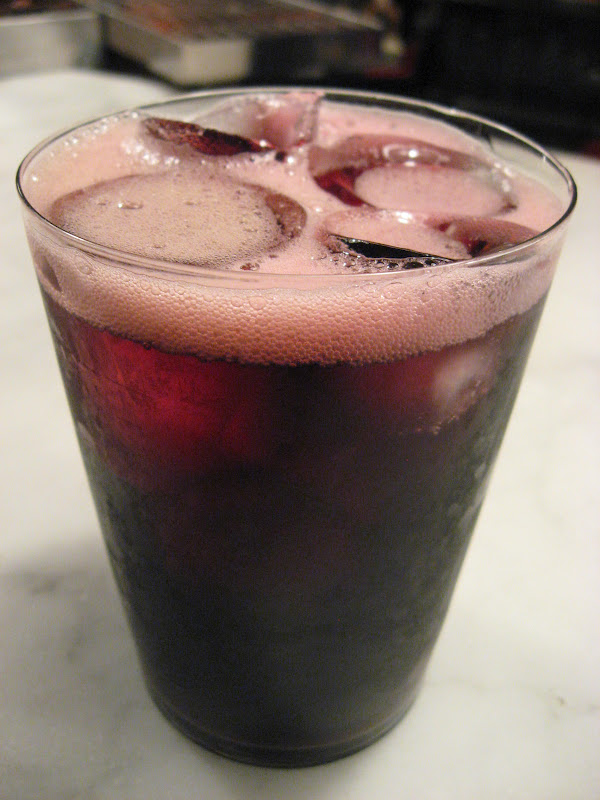
The kalimotxo is a strange drink: half cola, half red wine. It sounds terrible but on a hot San Sebastian beach it’s a quick-fix sangria.
Piquillos are spicy, sweet peppers stuffed with txangurro (spider crab) meat.
Txipirones en su Tinta are little squids with their legs removed and stuffed inside them, then cooked in a sauce made from their ink. Delicious!
Amazing deep fried balls of molten cheese and chilli.
| The busy marina in San Sebastian's harbour |
Basque apple cider is served in sagardotegi (cider houses) all over the Basque region, with quite a few in the hills around San Sebastian. It tastes similar to non-sweetened alcoholic apple cider found in other countries, like Germany and Switzerland.
Bacalao (salt cod) is grilled under cheese in a gratinade style pintxo.
Unfortunately there were a few things I missed out on:
• Lunch at the world famous grill house, Asador Extebarri, in Axpe
• Seafood at one of Getaria’s famous restaurants
• Kokotxas – hake cheeks
• Marmitako – tuna stew
• Bacalao al Pil-Pil – garlic cod
• Bacalao a la Vizcaina – cod in red pepper (capsicum) sauce
• Merluza en Salsa Verde – hake in parsley sauce
So what are my top picks for the Basque Country's two major cities?
BILBAO
El Globo
Calle de la Diputación, 8
Located in the centre of town and packed out with business people chowing down on delicious pintxos.
Irrintzi
Calle Santa María, 8
Small, funky bar serving basic pinxtos to a grungy, rock vibe.
Casa Víctor Montes
Plaza Nueva, 8
Fantastic lively pinxtos venue with friendly staff and celebratory atmosphere. Great food.
View Bilbao, Spain in a larger map
SAN SEBASTIAN - DONOSTIA
Arzak (Anna's review)
Avenida del Alcalde José Elosegi, 273
Amazing three Michelin star experience.
A Fuego Negro (Anna's review)
Calle 31 De Agosto, 31
Something a little inventive and unique. An excellent break from traditional pintxos.
Astelena
Konstituzio Plaza, 15
Great traditional pintxos with particularly good meat skewers and seating in the square.
Casa Tiburcio
Calle de Fermín Calbetón, 40
Packed with local people delivering an authentic charm. A few of the rarer regional specialities are on the menu.
View San Sebastian, Spain in a larger map
Other posts from our Spain trip:
Arzak, three Michelin star restaurant
A Fuego Negro, San Sebastian pinxtos bar
Feasting in Galicia
Labels:
mediterranean,
north/west europe,
restaurant review,
travels
Friday, 4 June 2010
paciencia, por favor
Hello friends!
I know I haven't been blogging a lot lately, but that's because Jonas and I are on the road.
We've had a great long weekend in Göteborg, celebrating the much anticipated wedding of Helena (Jonas’ big sister) and Christian (another Aussie in the family, yay!).
Now Jonas and I are cavorting through northern Spain: Galicia, Basque Country & Barcelona.
After that we're off to Zürich for and Tim and Livia's wedding, where I'm the "best man".
Please be patient with the lack of posts while I enjoy myself, and I promise to fill you in on all the delicious discoveries as soon as I get home to Sydney.
Labels:
travels
Wednesday, 2 June 2010
tokonoma
Another amazing dining experience in Sydney, this time at Tokonoma, the not-so-little-brother of Surry Hill’s famed Japanese haunt, Toko.The Tokonoma crew and Mark Communications hosted me and a few other bloggers to try out the chef’s tasting menu and check out the venue.
The fit-out rocks. It’s moody with retro curved booths and elegant, secluded alcoves. I heart.
Better still, the cocktail menu is the same as Toko, with some of my all time favourite cocktails in Sydney.
I rate very highly their Fuwa Fuwa Martini, as well as several others I’d like to list but can’t remember the names!!!
The amazing pineapple, ginger sugar, vanilla and rum mojito made my month. Seriously.
But what about the food?
Well, in one word, it’s sublime.
Head Chef, Regan Porteus, hails from NZ and spent time in London pursuing Michelin-quality experience before discovering modern Japanese cooking at Zuma in Knightsbridge.
“I want the food in Toko and Tokonoma to make an impact. I want it to please the eye, please the tastes . . . I want it to excite. I take the best of local produce, combine it with Japanese commodities and preparation techniques and try to deliver it with a modern touch.”
On discussing why Japanese food captured his imagination, Porteus said “It was a new world of ingredients, tastes, commodities, techniques and a whole new style of cooking, eating, dining and serving that kept me interested and continues to.”
Toro fans should keep their eyes peeled for the fast approaching tuna season, with farmed bluefin a potential menu item and, if Porteus can figure out a way to make the most of the kitchen’s 6-burner stove, he might just introduce a newly developed recipe of braised pork and mushroom kama meshi (Japanese rice hot pot) to keep away the cold during the winter months.
In the meantime, feast your eyes, and your stomachs, on the chef’s tasting menu ($70pp):
tuna tartar, barley miso, baby shiso leaves, taro chips
Sweet, honeyed flavor reminding me of ahi poke.
seared beef, pickled onions, mizuna, garlic chips
Amazing, my second favourite dish with smoky seared edges and an iron-rich centre.
crispy soft shell crab, wasabi mayonnaise
The crab had a great spongy crunch.
assorted selection of rolls and nigiri
The rolls had a sweet fish flavour with crisy, salty caviar bursts.
spicy fried tofu, avocado salsa, barley miso
Sweet, paprika-flavoured chilli threads over soft, fatty avocado and homely-soft tofu in crispy batter.
robata grilled scallop, sweet pickled apple, jalapeno garlic
The jalapeno salsa was a sweet, spicy hit and took on an almost chipotle flavor despite its bright green appearance. The apple and sweet scallop were complimented by it perfectly. My favourite dish of the night, and incidentally the chef’s pride and joy too.
scotch fillet steak, wafu sauce, garlic crisps
This buttery, fatty steak was simply divine. My third fav of the night.
zucchini, wafu sauce, sesame
Tangy vegetable cylinders offset the richness of the beef.
shiro miso
white miso, spring onion, tofu, wakame
This gentle umami soup was a perfect end to the savoury courses.
I’ll be back to Tokonoma soon. Very, very soon.

Photo of Toko interior from indesign.
Photo of Regan Porteus from Mark Communications.
Labels:
north asia,
restaurant review
Thursday, 13 May 2010
västerbottenostpaj - swedish cheese pie
It’s a little known fact that Sweden produces some spectacularly delicious cheese (ost in Swedish).
Herrgardsost is a very popular cow’s milk cheese with a slight grassy flavour, full-bodied tang and soft texture.
Hushållsost, which just means “household cheese” is a typical farmer's cheese being semi-soft and mild in flavour. It’s easily for sliced and melted which makes it good for cooking and eating.
My personal favourite is prästost, meaning "Priest Cheese" in Swedish. Apparently the name comes from the days when farms gave a tenth of their produce to local clergy. Prästost is strong, biting, moreish and reminiscent of tangy, soft Cheddar. It’s wonderful, and another cow’s milk product.
But we’re here to discuss Västerbottenost, the so-called emperor of Swedish cheeses, being reserved for the most special of occasions. It’s produced in huge wheels and aged for almost a year, making it hard, crumbly and strong. Its flavour is similar to a young Parmigiano Reggiano (which makes a good substitute) and it’s perfect eaten on its own as a decadent nibble.
Jonas made this pie and it was AMAZING.
It’s not healthy, so don’t even pretend. But it does taste wonderful.
On Easter Sunday we were hit with our first taste of winter’s cold winds and torrential rain. It was enough to make us retreat into my dad and stepmum’s cosy home to enjoy a slice of the fabulous pie followed by some sticky Middle Eastern Orange Cake and an excess of Lindt chocolate.
If you don’t have access to Sweden’s wonderful Västerbottenost, just substitute with a combination of parmesan and taleggio.
Västerbottenostpaj (Västerbotten Cheese Pie)
Jonas’ very own recipe. Serves 8.
Ingredients:
250g västerbottenost (or 200g parmesan and 50g taleggio)
1 brown onion
3 eggs, beaten
200ml thickened cream
Salt and pepper, to taste
Butter, for frying
20g extra västerbottenost (or parmesan), for garnishing
Prepared pastry shell, as per below
Method:
1. Preheat oven to 180’C.
2. Dice the onion very finely.
3. Heat the butter in a frying pan then cook onion until translucent and a little golden. Remove from heat and set aside to cool.
4. Whisk together the eggs and cream.
5. Add the salt and pepper, onion and cheese and whisk to combine.
6. Pour into the prepared pastry casing and bake in the oven for 25 minutes or until set.
7. Remove from oven and sprinkle with remaining cheese. Bake for another 5 minutes until the cheese has melted.
8. Remove from oven and allow to rest for 10 minutes. Serve warm.
Note: The pie can be made the day before and refrigerated overnight. The next day simply reheat and serve.
Savoury Shortcrust Pastry
Jonas’ very own recipe. Makes 1 pastry case.
Ingredients:
1 teaspoon salt
125g butter, chilled and cubed
1 cup flour
2 tablespoons hot water
Method:
1. Preheat oven to 180’C. Grease and line a springform tart tin.
2. Blend the ingredients in food processer until it forms a ball of dough.
3. Wrap in plastic and chill for at least 20 minutes in the fridge.
4. On lightly floured surface, roll out the pastry to about 5 mm thick.
5. Line the pastry tin and bake for 15 minutes until golden.
Labels:
cheese,
jonas original,
main course,
nordic/baltic region
Subscribe to:
Posts (Atom)