Sunday, 8 October 2006

fantastic! fresh! fennel!


One afternoon, Jonas was inspired. He went mad in the kitchen and started kneading pizza dough to make us a gorgeous margarita pizza.

Jonas is obsessed with pizza. It’s his food of choice and over the past two weeks, while I have been away, he confessed that he ate pizza on most days.

Don’t get me wrong, Jonas can devour seven pizzas and a case of beer easily, but he also has a refined palate. I guess when you work in fine dining, during your time off all you crave is junk food.

His sudden fervour to make homemade pizza was welcomed and so I settled into my evening with a feast in store.

In the end he made margarita pizzas (tomato base, mozzarella and basil topping) as well as my all time favourite salad: blood orange and fennel.

We paired it all with a Sauvignon Blanc from New Zealand.

Basic Pizza Dough
Recipe from the Italian Cooking Encyclopedia. Serves 4 for main or 8 for an appetiser.
Ingredients:
2½ tablespoons fresh cake yeast or 1½ tablespoons active dry yeast
1 cup (250ml) lukewarm water
Pinch of sugar
1 teaspoon salt
3 – 3½ cups (350-400g) plain flour
Method:
1. Warm a medium mixing bowl by swirling it with hot water. Drain.
2. Place yeast in the bowl and add the cup of warm water.
3. Stir in the sugar and mix with a fork. Stand until yeast dissolves and foams, approx. 5-10 minutes.
4. Use a wooden spoon and mix in salt and one third of the flour.
5. Mix in another third of flour, stirring until dough forms a mass and pulls away from the sides of the bowl.
6. Sprinkle some of the remaining flour onto a clean surface and knead dough, working in a little of the remaining flour a little at a time. Knead for 8-10 minutes until you have elastic and smooth dough. Form into a ball.
7. Put dough into a lightly oiled mixing bowl, cover bowl with a moistened tea towel and leave to stand in a warm place until the dough doubles in size (approx 40-50 minutes).
8. To test whether dough has risen enough, poke with two fingers and if the indentations remain it’s ready.
9. Punch the dough down with your fist to release the air and knead for another 1-2 minutes.
10. Divide dough into however many pizzas you’d like to make and form into balls. Roll out with rolling pin to 5mm or ¼ inch thickness.
11. Place on lightly oiled pan, folding the extra dough over to make thicker edges. It is now ready for baking.


Margarita Pizza

Jonas’ very own recipe. Serves 4 as a main or 8 as an appetiser.

Ingredients:
1 batch of basic pizza dough
3 – 4 cloves garlic, crushed
1 small onion, chopped finely
1kg ripe tomatoes, peeled and diced
1 cup (250ml) quality stock
1 tablespoon fresh oregano, chopped
¼ fresh basil, torn
2 ripe tomatoes, thinly sliced
400g mozzarella, grated
Sugar, salt and pepper
Olive oil
Method:
1. To make the tomato base, heat olive oil in pan. Fry onion and garlic until soft.
2. Add tomatoes, sugar, pepper and a splash of stock. Cook slowly until tomatoes breakdown (approx 30-40 minutes), adding stock if the mixture becomes too dry.
3. Once it becomes a thick sauce, taste for seasoning and add oregano. Cook for 2 minutes more and then remove from heat.
4. Preheat oven to 220’C – 230’C.
5. Spread tomato sauce over pizza base. Top with fresh tomato slices and generous amounts of mozzarella.
6. Bake in oven for 10-15 minutes or until base is sufficiently crispy.
7. Sprinkle with torn basil and a dash of olive oil. Serve!
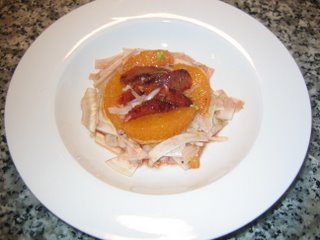
This was inspired by Spanish salads that combine the sweetness of orange with an acidic dressing and olives. We decided to use blood oranges to add a little colour and fennel to add texture and crunch. Even though I’m not at fan of fennel, I adore this salad.

Blood Orange, Fennel & Olive Salad
Anna & Jonas’ very own recipe. Serves 2-3.
Ingredients:
Salad
1 baby fennel
2 blood oranges
1 navel orange
½ Spanish onion
½ cup quartered kalamata olives
Dressing
2 – 3 tablespoons olive oil
1 tablespoon lemon juice
½ tablespoon white wine vinegar
½ tablespoon reserved orange juice
Method:
1. Segment navel orange over a bowl to catch the juices. Segment blood orange but do not retain juice (this will make the blood orange's colour stand out more brightly).
2. Shave fennel with potato peeler to get paper thin slices.
3. Slice onion into paper thin half moons.
4. Place fennel, onion, olive and orange segments into a bowl. Season with salt and pepper.
5. In a small bowl add olive oil, lemon juice, white wine vinegar and orange juice. Mix then adjust to suite your tastes, bearing in mind the dressing should be acidic to balance the sweetness of the fennel and orange.
6. Dress the salad and serve.
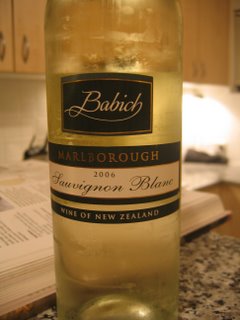
And as a grand finale, we even made our own tasting notes for the wine:
2006 Babich Sauvignon Blanc – Marlborough, New Zealand
Colour: pale straw with a greenish tint
Nose: strawberry hubba bubba; strawberry flavouring; gooseberry; passionfruit
Palate: sweet, passionfruit entry; citric middle; medium, acidic finish.
Verdict: enjoyable; good summer wine.

Which herb should be the focal point of this festa italiana for Weekend Herb Blogging?

We have basil, which I’ve blogged about before on a previous WHB; there’s oregano in the tomato base and a great fennel salad?

I think I’ll go with fennel on this occasion.
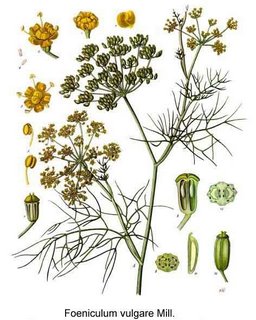
Fennel (Foeniculum vulgare) is native to southern Europe (mostly the Mediterranean) and south-west Asia. As part of the Umbellifereae family, fennel is closely related to parsley, carrots, dill and coriander.

It is an aromatic perennial, with aniseed flavours, and the bulbs, stalks, leaves and seeds are all edible.

In Ancient Greece and Rome, fennel was well regarded for its medicinal value. In Greek myth, it was in a fennel stalk that Prometheus carried coal from Mt Olympus and thus passed fire from the gods to people.

The English word fennel comes from the Latin fenum / fœnum (hay) into feniculum / fœniculum (little hay or fennel) through Anglo-Saxon fenol / finol into Middle English fenel / fenyl and finally into Modern English and the word we know today.

It’s also interesting to note that fennel gives us the word marathon also. After the famous battle between the Greeks and the Persians in 490BC, Pheidippides ran some 42km from Marathon to Athens to announce that the Greeks had won before collapsing to his death. His long distance run was named after the battle, but the plains of Marathon were so named because fennel had grown there in abundance μάραθον = marathon = fennel.

The Anglo-Saxons considered fennel sacred along side eight other sacred (and now quite unusual) herbs: mugwort, greater plantain, watercress, wild chamomile, stinging nettle, crab apple, chervil and viper's bugloss.

During the Medieval period, fennel was used as an insect repellent as well as to ward away evil spirits.
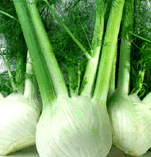
Fennel can now be found growing wild along roads and in fields throughout the world, since it is easily grown by seed. In fact in the USA and Australia it is often classified as a weed.

Today, the leading commercial growers are the United States, France, India and Russia.

The bulb of Florence fennel (F. vulgare Azoricum Group) is also eaten and has a much sweeter flavour than the seeds and leaves. Florence fennel was one of the three main herbal ingredients used to make traditional Absinthe, although modern day production usually omits it.

Fennel bulbs can be served raw in salads, braised, blanched or marinated.

Fennel seed is dried and used in cooking and in India the seed is coated in candy and eaten as a sweet treat or chewed as a breath freshener. They must be onto something because fennel is an ingredient in many natural toothpastes.

Fennel is also important in Chinese five spice mixes, satay, garam masala mixes as well as panch phoron, a Begali spice blend. In Italy it is used to flavour sausages and rye breads in northern Europe.

I was surprised to learn that fennel pollen contains the strongest fennel flavour, but as you can imagine it is expensive to come by.

Fennel’s flavour comes from its volatile oil anethole, also called anise camphor and aniseed oil. According to Wikipedia, “chemically, it is an aromatic, unsaturated ether” and is related to estragole, a compound in tarragon and basil. Anethole is 13 times sweeter than sugar but is also slightly toxic and can be an irritant in large quantities. Artificial hallucinogens synthesised from anethole (eg paramethoxyamphetamine) are used to make ecstasy tablets.

Traditionally fennel was used as a diuretic and to induce milk production for new mothers. It was also used to cure chills and digestive troubles in the form of fennel seed infused hot water. Fennel tea also assists babies with colic.

Today fennel is said to have a range of medicinal properties including anti-inflammatory and anticancer effects because the anethole shuts down a signalling process that triggers gene-alteration.

Fennel bulb is an excellent source of vitamin C and immune system boosters, preventing osteoarthritis, rheumatoid arthritis and recurrent ear infections as well as decreased risk of colon cancer.

Fennel is also a very good source of potassium, lowering high blood pressure.

Fennel essential oil is used in soaps, and some perfumes as well as cough medicine. The Garden Guides website also recommends fennel as a soothing eyewash.

That’s it for my Weekend Herb Blogging. This week’s recap is being hosted by Ruth at Once Upon A Feast in Canada. Be sure to check out her recap.


References & photo sources
http://en.wikipedia.org/wiki/Fennel
http://en.wikipedia.org/wiki/Anethole
http://www.whfoods.com/genpage.php?tname=foodspice&dbid=23
http://www.gardenguides.com/herbs/fennel.htm

Tags:

Saturday, 7 October 2006

jonas' caprese salad

Today is Jonas’ birthday.

Obviously he was meant to be in my family because Thursday was my mother’s birthday, Friday was my brother’s birthday and now Saturday is my Jonas’ birthday.

Every year I outdo myself with presents. Last year it was a full set of Global knives and once it was a weekend away in Melbourne (which got cancelled because the airline went bankrupt, but let’s not go there).

This year I have been travelling for the past two weeks and I didn’t get him anything. I looked for something but there wasn’t anything decent or exciting. Just crappity crap.

And so here I am empty handed.

It was heart breaking to see the look upon his face when he realised I wasn’t playing games and that I really didn’t have a present. I felt awful.

So Jonas, I promise I’ll get you something exciting. In the meantime here’s a tribute to you and your wonderful salad.

I love you.

Caprese Salad
Jonas’ take on an old Italian recipe. Serves 2 hungry adults.
Ingredients:
2 large, ripe tomatoes
Approx 10 cherry-sized bocconcini
1 tablespoon shredded basil
1 tablespoon (20ml) olive oil, good quality
½ tablespoon balsamic vinegar
Milled salt & pepper
Method:
1. Slice the tomato into fairly thin circles. Slice the bocconcini into circles.
2. Place the tomato slices on a plate, then place one or two bocconcini slices on each tomato slice.
3. Sprinkle the shredded basil over each tomato slice, then drizzle a little olive oil and balsamic.
4. Freshly mill salt and pepper over the salad and serve immediately.
Note: To avoid oxidation, shred the basil just before you make the salad. Also, use white balsamic vinegar if you do not want the darker vinegar to discolour the salad.

Tags:

Monday, 2 October 2006

recipe carousel #16 - pasta

This weekend was a long weekend in Sydney and other parts of Australia.

Three of my girlfriends (Shelley, Em & Vicky) and one of my sisters (Shamu) got together and organised a girly “bridal shower” weekend in the Hunter Valley – one of Australia’s oldest wine regions.

We spent three days tasting wines, eating cheese, taking group photos of us jumping in the air and we even indulged in a cooking class.

It was at this lesson that I learnt to cook gnocchi and for the first time EVER I actually enjoyed eating it. Usually I think of gnocchi as gluggly, starchy stomach bombs but these were light and deliciously flavoured with a vegetarian caponata style sauce. I’ll be cooking that again for sure!

So in honour of my new love of gnocchi, I've come up with seven other pasta dishes to rock your world.

Also, I just wanted to let everyone know that I'm travelling interstate for work this week so I'm afraid there probably won't be any posts until Sunday. Sorry about that!!!

Now here's the food . . .

Pumpkin, Sage & Goat’s Cheese Ravioli comes from pasta master JenJen in Australia (Milk & Cookies). JenJen had to overcome her doubting family who didn’t believe she was capable of making anything let alone a pasta production line. Check out the photos and her recipe to see just how wrong they were! Photo courtesy of JenJen.


Hilopittes & Peas. Stevi in Greece (Bread and Butter) uses flat square shaped pasta called hilopittes and combines them with freshly shelled peas, garlic, spring onions, pine nuts, vegetable stock and mint to create this light, refreshing pasta meal. Photo courtesy of Stevi.


Garlic Scape Pesto was a recipe drawn together from various web inspirations by Kalyn in the USA (Kalyn's Kitchen). Kalyn uses the garlic shoots to create a creamy, garlicky pesto for linguini. She also recommends serving this with fish, toasted bread or rice. Now this is more of a sauce dish than a pasta one, but pesto does go on pasta so I wanted it in! Photo courtesy of Kalyn.


Beetroot Pasta w Pine Nuts, Pear & Lime. This interesting concoction comes from Ilva in Italy (Lucullian Delights). As part of a Paper Chef comp, Ilva devised this wonderful looking pasta and flavoured the sauce with asparagus, pears and lime. The final colour combination was intriguing. Photo courtesy of Ilva.


Spaghetti Nicoise comes from Renz in the USA (Little Bouffe). Renz melds a famous salad with pasta to make a delicious summer meal. Eggs, beans, olives and tuna mix beautifully with spaghetti for a flavoursome lunch, dinner or glorious snack. Photo courtesy of Renz.


Rigatoni Al Forno may have been Nigella Lawson’s recipe but Plum in Australia (My Favourite Plum) makes it her own. A classic lasagne recipe is reinvented as a pasta bake. Meat sauce and béchamel are layered with rigatoni for the perfect winter feast for a hungry family or a casual dinner with friends. Photo courtesy of Plum.


Farfalle w Golden Beets & Gorgonzola is a golden dream from Catherine in the USA (Albion Cooks). Butterfly shaped pasta bows are served with steamed beets, caramelised onions flavoured with vermouth, cream, gorgonzola and some watercress. Photo courtesy of Catherine.


Add your own recipe!
If you want to link in your own pasta recipe and share the love around, just leave the link in the comments section. You didn’t have to invent the recipe yourself, just make it and post it on your site. The whole idea of Recipe Carousel is that good recipes are shared with people who love to cook.
Note: Usual comments are more than welcome but all html links must be recipe related (yours or others).

Check out other Recipe Carousel themes: yoghurt, crispy snacks, vegetable desserts, fruit in savoury food, made from scratch, strawberries, jam, bread, seafood mains, ice cream, soup, chocolate and drinks.


Tags:

Saturday, 30 September 2006

coriander two ways


This weekend is the one year anniversary of Weekend Herb Blogging, as started by Kalyn at Kalyn’s Kitchen.

Even though most weeks the “herb” flexibly includes vegetables, fruits and all things plant-like, this weekend we have to stick to herbs because Kalyn is taking a poll on the most popular herb.

This is an extremely difficult task.

Mint is so good in dips, cocktails and mixed through fruit salads.

Basil makes pesto, one of my all time favourite things to eat. It’s also wonderful in a caprese salad or on a magherita pizza.

Parsley is very diverse and makes such a fresh accompaniment to meals in tabouleh or on pasta.
Chives provide a kick to salads, soups and go so well with dairy food.

Rosemary reminds me of Greece, ANZAC Day, potatoes and lamb.

What to choose?

Well, my heart must go to coriander. (I’m sure Kalyn will be pleased to here this!)

I never ate coriander as a child. I still recall the first time I ever tried it. I was physically ill. No kidding. The flavour was so repugnant to me that I couldn’t continue eating and was nauseous all night. My mum thought I had food poisoning because I didn’t know what was making me feel so ill.

A few months later my mum started a herb garden and I helped her plant the young herb shoots. Patting the coriander plant into its pot I got a huge wiff and immediately experienced waves of nausea. I explained to mum that this was what had made me feel sick and she found it hilarious that little old coriander could make me gag.

I was also amazed with the power this herb’s mere smell had over my body and every day after school I’d go to the herb plot and break off pieces of coriander, daring myself to smell it, lick it and eventually eat it.

Thus I built up a tolerance . . . and an addiction.

It’s funny to think the herb that once made me vomit is now my favourite.

These days I use coriander in abundance. I can’t get enough.

I’ve made salsas with so much coriander that my father overdosed and hasn’t touched the herb since (that was about 10 years ago now!) and Jonas is starting to build up limits to how much he can ingest because of my obsession.

One of my favourite things of all time (and one I listed on my Top Five list for Foodbloggers Guide to the Globe) is Batata bil Kizibra. This Lebanese side dish is deliciously pungent and tangy from an excess of coriander and lemon juice. Jonas has elaborated and perfected a recipe given to him by an old colleague, Haas, who was a chef and of Lebanese origin.

Batata bil Kizibra (Potatoes Coriander)
Recipe by Jonas & Haas. Serves 4 as a side.
Ingredients:

1kg potatoes
Juice of 2 lemons
Pinch of chilli flakes
Pinch of salt
Pinch of pepper
1 heaped teaspoon ground coriander
1/3 cup chopped coriander
1/3 cup chopped parsley
5-6 cloves of garlic, crushed
2 tablespoons olive oil
Method:
1. Preheat oven to 180’C – 200’C.
2. Cube potatoes into 1cm cubes. Mix all ingredients in a large bowl until potatoes are well coated.
3. Put in large baking dish, lined with baking paper, and space so potatoes are not too crowded.
4. Bake for 45min to 1 hour or until golden brown and a little crispy.
5. To get the best results and crispier potatoes, turn them every 20 minutes and add a squeeze of lemon juice.
Note: You can also sprinkle in a pinch of citric acid to get very tangy results.

Another wonderful, spicy coriander recipe is Madhur Jaffrey’s chutney of chilli, yoghurt and fresh coriander. Beautiful with just-fried pappadums.

Coriander and Yoghurt Chutney
Recipe by Madhur Jaffrey. Makes 1½ cups
Ingredients
1 packed teacup of chopped fresh mint
1 green chilli
285g plain yoghurt
2 tablespoons lemon juice
½ teaspoon salt
½ teaspoon ground cumin
Pepper to taste
Method
1. With a mortar and pestle, blend the chilli, mint and 2 tablespoons of water to form a smooth paste.
2. In a non-metallic bowl, combine all ingredients to create sauce. Season to taste.
3. Refrigerate until use. Best eaten the same day it’s made.

By picking coriander I’m cheating a bit because it’s both a herb (leaves, stem, root) and a spice (seeds, which are actually the dried fruit).

Coriander (Coriandrum sativum), called by its Spanish name "cilantro" in North America, is an annual plant.

It was probably native to south-west Europe, which is amazing since it is rarely used in traditional European dishes. It was used extensively in medieval European cooking as its strong flavour masked spoilt meat, but it fell out of favour in the period before industrialisation. Now only the Portuguese area of Alentejo uses the herb in traditional dishes.

Coriander derives its name from two Greek words meaning bedbug and resembling because it is said to smell like crushed bedbugs (and people wonder why I gagged initially!!!)

It has been cultivated in Greece since 2000 B.C. where it was used as a spice, a herb and an ingredient in perfume (which is still is today).

The use of coriander seed is mentioned in the Bible (Exodus) and records show the Ancient Egyptians enjoyed it too.

Coriander arrived in North America in the 1670s and was one of the first spices grown in the new colonies by the settlers.

The herb has feathery leaves and all parts of the plant are edible. Coriander stems and leaves are used in soups, sauces and garnishes. Fresh leaves as used heavily in Thai, Vietnamese and Mexican dishes. In India the leaves are used as a garnish for many dals.

The roots of the herb as used mostly in Thai cooking.

People that grow their own coriander can make their own ground coriander by dry roasting the seeds then grinding them with a mortar and pestle.

Coriander leaves loose their flavour and freshness fairly quickly so it's best to consume them shortly after purchase. Similarly ground coriander looses it's flavour too and should only be ground when needed. Whole seeds can be kept indefinitely.

Coriander seed is used regularly in African, Moroccan, Indian, Malaysian, Indonesian and Arabic cooking. It is key to the Indian spice blend garam masala as well curry powders, Lebanese falafel, Egyptian dukkah, German sausages, Tunisian harissa, Russian rye bread, Ethiopian berbere and Belgian wheat beers where the flavour of the seeds is blended with orange peel.

The Arabic spice blend, taklia, is a combination of garlic and coriander seed crushed and then fried.

Coriander is believed to help flush lead, aluminium and mercury from the body and in the past it was used as a cure for stress, anxiety and insomnia.

Elizabeth and Ian “Herbie” Hemphill’s book Spicery divides spices into groups to assist the blending procedure: sweet (eg cinnamon, vanilla), pungent (cardamom, cloves), tangy (sumac, tamarind), hot (chilli, mustard) and amalgamating (paprika, sesame seeds).

They classify coriander as an amalgamating spice. They call amalgamating spices the “unsung heroes” that “make a very important contribution to spice blends” and say that “with coriander seed it is almost impossible to use too much” in your spice blend.

So my vote goes to the herby spice that inspires both revulsion and swoons of bliss.

Be sure to visit this week's Weekend Herb Blogging recap at Kalyn's Kitchen. Leave a comment with me or Kalyn to put in your vote for your own favourite herb. We'd all love to know which herb reigns.

Tags:

Tuesday, 26 September 2006

a stallion of a meal at pony

Pony Lounge & Dining
The Rocks Centre
Corner of Argyle Street and Kendall Lane, The Rocks
www.ponydining.com
Chef: Damian Heads

I was meeting Jonas after work so we could check out the section of the Botanical Gardens that we’d booked for our wedding ceremony. A slight detour to the pub ended all of that and since Nicki lived across the street we roped her into our mischief also.

This impromptu drink turned into an impromptu dinner and the three of us went in search of an interesting dinner venue.

Then we remembered Pony! Nicki had passed by when she walked to work and I had read press releases and snippets from Gourmet Traveller and the Sydney Morning Herald.

I was impressed that after being open for such a short time, Pony was already serving up some pretty good food. I guess that’s down to chef Damian Heads who was the 2003 winner of the Josephine Pignolet Award – ‘Young Chef of the Year’ as well as a regular on Ready Steady Cook at Channel 10.

Since it was still dewy-new no one had found the sparse outside deck with a great view of the street and a cosy position under the heaters. A long communal table dominated the space, but we chose a smaller table closer to the street.

The interior was like a space ship kitted out in western gear – shining metal surfaces and organic egg shaped light fittings alongside marbled brown and white cow hides and exposed dark wood beams.

Our waitress (Sheryn?) was fantastic and built a rapport with us immediately. It was a shame that another waitress - who seemed to be the floor manager - was significantly less genuine and bordered on rude. Our lovely waitress made up for it though!

A complimentary bowl of tiny Ligurian olives whet our appetites and so Nicki and I decided to order some small plates for entrées.

Butterflied sardines ($8.50) came with crispy breadcrumb, parsley and pine nut tops. The fish was wonderfully oily and rich and matched the herby breadcrumbs well.

Seared sirloin slices ($12.30) were wonderfully rare and topped with a tangy dressing of soy, lime, chilli and ginger. It was an attractive dish with an invigorating flavour.

For main there wasn’t too much choice for our vegetarian, so Jonas settled on the bintje potato gnocchi with gorgonzola and spinach ($24). He commented that the gorgonzola wasn’t as strong as he would have liked but that the texture and flavour of the gnocchi made from bintje potatoes was exceptionally good.

Nicki’s ocean trout ($28) looked exquisite, served with fennel, Jerusalem artichoke, blood orange slices and garlic mayonnaise. She was pleased with the overall flavour composition, but it was disappointing that a significant portion of her fish was raw (no, not rare, raw). This was only one half of the trout so we suspect it wasn’t the chef’s intention.

My lamb cutlets ($31) were also close to undercooked, but I was happy with the flavours in the parmesan crumbing. Three cutlets to one serve was generous and I couldn’t finish one of them. The roasted baby carrots and caramelised shallots matched the lamb perfectly and I was quite impressed with the overall dish.

A 2004 Chard Farm Rabbit Ranch Pinot Noir from Central Otago, New Zealand ($56) was a satisfying drop with light cherry and herbal elements, even if it didn’t really match the dishes we ate (another case of Jonas’ powerful addition to pinot noir).

I finished the meal with a fruit trifle ($12). A compote of rhubarb, raspberries and strawberries were layer with cream, jelly and a little sponge cake to make a fruity, but rich finale.

We enjoyed a fantastic spontaneous dinner and went home happy and very, very full.

Located smack band in tourist central, my only hope is that Pony doesn’t fall into the trap of its neighbours by dumming down the menu to feed bored tourists. Stick to your guns Pony!


Tags:

Monday, 25 September 2006

recipe carousel #15 - yoghurt

This week my Recipe Carousel is focusing on seven recipes using yoghurt.

As a wee lass I loved the ultra sweet flavours of banana or fruit salad Yoplait. In Italy, I became addicted to a rich strawberry flavoured tub from Danone and as an adult back in Australia I am a devotee of King Island Dairy’s Honey & Cinnamon yoghurt.

I have also acquired a taste for Greek style yoghurts. They are so versatile: over fruit or in curries or dips.

The following seven recipes are a mixture of sweet and savoury with heavy influences from Indian cooking. I have also included a recipe on how to create the curd yourself.

Enjoy . . .


Curd Rice or Dadhojanam is a delicious looking side dish from Vineela in the USA (Vineela's Cuisine). Translated from its Sanskirt origins, dadhojanam means yoghurt rice and it is made by combining sona masoori rice (short, fat grains) with yoghurt, chilli urad dal (split, black lentils) and ginger then mixing with a ghee heated seasoning of mustard & fenugreek seeds, asafoetida and cashews. Photo courtesy of Vineela.


Spinach in Yoghurt or Mor Kerai is a recipe from Priya in the USA (Sugar and Spice). A spice paste of fresh coconut, soaked rice and chillies is added to yoghurt, spinach, spices and coconut oil to create an excellent accompaniment to vegetables and curry. Photo courtesy of Priya.


Vanilla, Melon & Yoghurt Soup is the reconstruction of a wonderful entrée experienced by Béa in the USA (La Tartine Gourmande). Béa journeyed home to France where she ate a memorable soup at Bistro Pères in Paris. Her own version includes yoghurt, rockmelon (cantaloupe), a vanilla pod, mint and muscat wine. It sounds simply wonderful – a gorgeous summer starter. Photo courtesy of Béa.


Yoghurt Rice w Mango is a recipe from Indira in India (mahanandi), that cojures up memories of childhood and yummy school lunches. Traditionally left over rice was mixed with warm milk and yoghurt culture to form curds overnight. The rice disintegrates a little to meld with the curds and the whole dish is like a gratin. Sweet, ripe mango was chopped and scattered on top for a lovely midday meal or dessert. Yum! Photo courtesy of Indira.


Maampazha Pulisseri is a sweet, sour and spicy sauce eaten with rice. RP in the USA (My Workshop) provides this recipe using sweet, ripe mangoes, yoghurt, spices and chillies. After it is cooked tadka (oil, mustard & fenugreek seeds, curry leaves and whole red chillies) is added. Photo courtesy of RP.


Strawberry & Yoghurt Jelly is a summer treat from Sumitha in Switzerland (Kitchen Wonders). Fresh strawberries are puréed and sweetened with sugar then gelatine is added before the mixture is layered into glasses. Next a similar yoghurt layer is created and the jellies are unmoulded once set. With such little fuss this is sure to be a pure and fresh flavoured dessert. Photo courtesy of Sumitha.


Yoghurt from scratch is explained out step by step by Nandita in India (Saffron Trail). She writes that leaving milk and yoghurt cultures overnight in a warm place will cause curds to develop. She even provides an interesting tip for developing very thick yoghurt. Photo courtesy of Nandita.

Add your own recipe!
If you want to link in your own yoghurt recipe and share the love around, just leave the link in the comments section. You didn’t have to invent the recipe yourself, just make it and post it on your site. The whole idea of Recipe Carousel is that good recipes are shared with people who love to cook.
Note: Usual comments are more than welcome but all html links must be recipe related (yours or others).

Check out other Recipe Carousel themes: crispy snacks, vegetable desserts, fruit in savoury food, made from scratch, strawberries, jam, bread, seafood mains, ice cream, soup, chocolate and drinks.


Tags:

Saturday, 23 September 2006

artichokes with lemon & garlic

I am a huge fan of antipasto. The idea of snacking on a variety of different flavours and textures is so much more exciting than ploughing through a huge plate of one dish.

Italians, Greeks, Spaniards and Middle Eastern countries have perfected the antipasto/tapas/mezze tradition. Bliss.

Artichokes are particularly good in antipasto. They have a very mature flavour and the texture I would describe as softly toothsome.

I didn’t know much about artichokes until I did some research for this post. They are intriguing little veggies with an interesting culinary history.

I am also a huge fan of lemon and garlic. What better then to combine these three delights into a wonderful antipasto/appetizer that can be eaten hot or cold.

I discovered this recipe on the Williams-Sonoma website and the only changes I made was to increase both the lemon and garlic measurements.

Enjoy and please read on to discover some interesting tidbits about the artichoke.

Pan-Roasted Artichokes with Lemon & Garlic
Recipe by Williams-Sonoma. Serves 4 as an appetizer or side.
Ingredients:

3 lemons, quartered
4 large artichokes
½ cup olive oil
Salt and freshly ground pepper, to taste
10 peeled garlic cloves, crushed
Method:
1. Fill a large bowl with water. Squeeze the juice from the quarters of 1 lemon into the bowl.
2. Working with 1 artichoke at a time, remove the tough outer leaves to expose the light yellow core.
3. Peel the stem end of the artichoke, keeping about 1 inch of the stem intact and exposing the pale, tender core.
4. Trim 1 inch off the top of the artichoke and cut the artichoke in half lengthwise through the center. Using the tip of a spoon, scoop out the furry choke. Add the cleaned artichoke halves to the lemon water. Keep the artichokes in the water until ready to cook (they may be stored in the refrigerator for 1 to 2 days).
5. Just before cooking, spread the artichokes on paper towels, sliced side down, to drain and pat dry.
6. In a large sauté pan over medium-high heat, warm the olive oil until nearly smoking. Sprinkle the pan generously with salt and pepper.
7. Carefully place the artichokes, sliced side down, in the pan, making sure they lie flat.
8. Season with salt and pepper and slip the garlic into the spaces between the artichokes.
9. Cook, shaking the pan occasionally to keep the artichokes from sticking, until they are evenly browned underneath, 6 to 10 minutes.
10. Using tongs, lift 1 or 2 artichokes up to check they are ready.
11. Add the lemon to the pan, place a piece of foil over the pan and cover with a lid.
12. Reduce the heat to medium-low and cook for 5 minutes more. Remove the pan from the heat and keep covered.
13. Let the artichokes cool to room temperature, 30 to 45 minutes.
14. Transfer the artichokes to a serving platter. Squeeze the juice from the cooked lemon wedges into the pan and whisk to scrape up any browned bits stuck to the pan bottom. Pour the juice over the artichokes and serve. The word artichoke most commonly refers to the globe artichoke (Cynara cardunculus var. scolymus L.), a species of thistle that gets its name from Arabic ارضي شوكي ardi shauki or ارضي شوك ardi shauk which translates to "ground thorn".

The part of the artichoke that is eaten is the base of the head or bud, also known as the receptacle. It is considered a vegetable because the bud is harvested before fruit has a chance to develop.

The plants can grow to 2m tall, with silver-green leaves. The flowers develop in the edible bud and are a deep purple colour.

There is a great deal of deabte around the cardoon’s relationship to the globe artichoke. The cardoon (Cynara cardunculus) is said to be the wild version and the globe artichoke came from its cultivation over thousands of years. Some scholars believe that references to artichokes in Ancient Greek and Roman texts could have been referring to the cardoon not the globe artichoke we know today.

Globe artichokes originate in Southern Europe and the Mediterranean and are said to be one of the oldest foods know to humans.

In Ancient Greece and Rome, artichokes were considered an aphrodisiac. Perhaps this can be attributed to the legend of their origin: an Ancient Greek myth talks of a young woman called Cynara who attracted the attention of the alpha god Zeus. He made her a goddess and his mistress but when he caught her returning to the mortal realm to visit her family he grew angry and transformed her into the plant we know as the artichoke.

Records show artichokes being grown in Sicily as early 287B.C. In the 1st century A.D. rich Romans ate artichokes with honey, vinegar and cumin.

Once Rome fell, artichokes faded from the forefront of diets and then, around 800 A.D., became the domain of the Moors who grew them in their Spanish territories. This may be the source of the English word for artichoke (Arabic ardi shauk rather than Greek cynar).

Globe artichokes were cultivated again in Naples in the mid-1400s and at this time only men could eat artichokes because they were believed to have aphrodisiacal qualities that increased sexual prowess. This didn’t bother Catherine de Medici who introduced the artichoke to France and saw the acceptance of women’s consumption of the artichoke as a sign of modern progression.

In 1576, Dr. Bartolomeo Boldo wrote that artichokes "provoke Venus for both men and women; for women making them more desirable, and helping the men who are in these matters rather tardy."

German tourist in Italy, Johann Wolfgang Goethe (1749-1832) was horrified to see "the peasants eat thistles".

It was the Dutch who brought globe artichokes to the English speaking world and Henry VIII grew them in his garden.

They were spread to North America by French and Spanish settlers and Italian immigrants brought them to Australia. In my green grocer I most commonly see the Anzio variety from Lazio.

Artichokes have had a tumultuous history in the USA. In the 1920s, a Monterey County (California) landowner rented his property to Italians to start the country’s most prolific production zone. Needless to say he made a fortune.

During the same period, NYC Mayor, La Guardia, banned the presence and sale of artichokes in the city due to the serious “Artichoke Wars” led by Mafioso Ciro Terranova. Terranova was behind a complete monopolisation of all produce coming from the west coast as well as the destruction of farms and the intimidation of merchants and distributors. The ban lasted one week because even Mayor La Guardia admitted he loved the artichoke too much to go without.

Today, the globe artichoke is commercially grown mainly in France, Italy, and Spain and even though Castroville in California claims it is the global artichoke centre, this is not internationally accurate.

Artichokes can be steamed or boiled then their petals plucked. Diners can then dip each petal in flavoured butter or oil and suck the soft inner end before discarding the outer part. The base is also edible, although the hairy choke must be removed first.

Alternatively all the scaly petals can be removed before cooking to leave the edible heart. This can be preserved, sautéed and even battered and deep fried.

Artichokes are also used to make drinks such as Italy’s liqueur Cynar (named after the Greek beauty) or Vietnam’s artichoke tea from Dalat.

According to the Californian Artichoke Advisory Board artichokes are:
• low in calories,
• low in sodium,
• fat free,
• cholesterol free,
• a good source of fiber,
• a good source of vitamin C,
• a good source of folate,
• a good source of magnesium.

Be sure to visit this week's Weekend Herb Blogging recap at Kalyn's Kitchen.

Also, everyone should be aware that next weekend is the one year anniversary of Weekend Herb Blogging so Kalyn is asking all bloggers to write about their all time favourite herb and to contribute recipes that celebrate that herb. Afterwards she'll be doing a tally and will annouce what the most popular herb is. Those with blogs can post about their herb and those without can still take part by leaving a comment on Kalyn's blog. Hope you can contribute to this!

References
http://whatscookingamerica.net/History/ArtichokeHistory.htm
http://en.wikipedia.org/wiki/Globe_artichoke
http://en.wikipedia.org/wiki/Artichoke
www.artichokes.net/artichokes.asp

www.artichokes.org


Tags:

Thursday, 21 September 2006

buzo


Buzo Restaurant
3 Jersey Road, Woollahra
+61 2 9328 1600
www.buzorestaurant.com
To see all the photos, click here.

Back in August I made an impromptu decision to join friends for dinner at one of Fabio’s favourite Sydney restaurants: Buzo.

I was not disappointed.

The restaurant was hard to notice, just off the main drag of Oxford Street, and nestled into a refurbished terrace house. The interior had a Parisian café feel with the curved wooden chairs and French prints, but the food was clearly Italian.

The daily menu appeared and I had a tough time making my decision since more than one item caught my eye. For entrée I decided upon the house smoked eel ($17) which came atop a crostono (toasted baguette) and was hidden under a forest of dressed watercress and slices of boiled egg. The eel was sweet and perfectly textured, flaking into smoky morsels and matching perfectly with the egg and watercress. A wonderfully light and flavoursome start.

Fabio chose the pan fried quail as his entrée ($17). It was accompanied by pancetta and slices of pickled pear. Shreddings of radicchio treviso gave a perfect bitter contrast to the generous lashings of a rich, dark jus. Even though it was an intense and heavy start, I adored this dish and thought the flavours were paired skilfully.

Julia also chose her entrée well, with a terracotta pot of baked spinach, endive, gorgonzola and parmigiano ($17). The vegetables oozed with cheesy goodness and were topped with fresh chives. A vegetarian delight!

Jean-Philippe ordered the gnocco fritto ($17) which turned out to be ravioloni filled with goat’s cheese and covered with coppa, salami, shredded basil and generous mountains of parmigiano.

Our fabulous waiter Marty presented us with some chicken wings to share, deep fried bites topped with a salsa of chilli, garlic, basil and aged balsamic. They had a good flavour combination but were a little dry.

Upon Fabio’s suggestion, for my main course I ordered one of the most exquisite dishes I have ever tasted: vincisgrassi ($25). This layered pasta from the Marche region has been found in records dating back to the late 1700s. Buzo’s version of vincisgrassi is fairly faithful to the original recipe using pasta sheets sandwiched between porcini mushrooms, prosciutto and truffles. The intense flavour combinations were simply superb and I cannot recommend this dish highly enough.

Julia and Chantelle joined me and devoured their own servings of the divine vincisgrassi.

Jean-Philippe’s chargrilled scotch fillet ($28.50) was also delicious, smothered in a salsa di cipolline – shallots teamed with fresh parsley in a jus based gravy.

Fabio ordered slow roasted pork shoulder ($28.50), complete with a rich sauce and topped with crispy breadcrumbs flavoured with fresh herbs and garlic. This was also an excellent choice because the meat was so perfectly cooked, the breadcrumbs added a delightful texture and the flavours danced elegantly in the mouth.

With our mains we shared three contorni ($23.40): a mixed green salad, green beans dressed in olive oil and fried potato cubes scattered with sea salt. All were exceptionally good side dishes and worth a mention.

With dinner we indulged in some excellent wines. First was Fromm’s 2004 La Strada Pinot Noir from Marlborough, New Zealand ($82.50) was a silky pinot noir with strong berries and gentle spices. It was a deep, thick red hue and had mild tannins. Throughly enjoyable.

We also sipped upon Martinez Bujanda’s 2002 Rioja Crianza from Spain $36.50), which was bright red with purple tints, sweet-spice aromas from the American oak and an elegant, red fruit palate with hints of acidity.

Even though I was ridiculously stuffed I still decided to indulge in dessert. I chose the budino di matteo ($14.50) – a steamed vanilla pudding topped with plum jam and vanilla cream. The pudding’s warmth and sweetness were just to my liking, but the vanilla cream was a little thick and cloying. The overall flavour was comforting and mild.

Fabio and Julia shared the baked chocolate ($14.50) which had a soufflé like consistency and was sprinkled with flaked almonds. It was absolutely wonderful and came with a scoop of vanilla ice cream.

Jean-Philippe went for the simplicity of an affogato served with a nip of frangelico ($17.50).

Our lovely waiter Marty delivered a complimentary preserved blood plum tart ($12.80). Sweet latticed pastry encased jammy plum pulp. The tart was served with a scoop of double cream and dusted with snowy powdered sugar.

Marty had not yet dispensed the final surprise – digestivi of house made limoncello which Marty explained was an evolving and unique recipe of wine, spirits and, of course, lemons. Unlike traditional Italian limoncelli which are zesty and vibrant, this version was mild and restorative. A perfect finale.

Overall, the service was friendly and professional, the food was outstanding and the total cost for five people was not exorbitant for the standard and quality: $475 total or $95 per person (including a 12% tip).

I am not at all surprised to see that in the 2007 Sydney Good Food Guide, Buzo received a well deserved chef’s hat!

To check out all the food porn from the meal, visit my Buzo set at Flickr.

Buzo on Urbanspoon

Tags:

Monday, 18 September 2006

piña y menta

I think all those zany Mixologists in the northern hemisphere forgot about us southies when they developed this month’s Mixology Monday theme “Goodbye Summer”.

Hey guys, summer is just on it’s way for us!

I have decided to think of this theme as “Hello Summer” and I’m more than excited since I’ve recently plonked together a delicious drink – the Piña y Menta Fresca – which I plan to drink day-in day-out during this upcoming hot season.

I took a few bright green leaves from my tiny, long suffering mint bush and combined them with pineapple, lime, sugar and tequila. Add some star shaped ice cubes and Bobbito’s your uncle.

Simple but delicious!

Piña y Menta Fresca
Anna’s very own recipe. Makes 1.
Ingredients:
1½ parts tequila resposado
½ lime juice
3 parts pineapple juice
1 teaspoon brown sugar
6 chunks fresh pineapple
2 mint leaves, shredded
Ice
Method:
1. Muddle pineapple, 1 shredded mint leaf and sugar in a shaker.
2. Add a little ice, lime juice, pineapple juice and tequila. Shake.
3. Pour into a tumbler with extra ice. Garnish with remaining shredded mint leaf.


When I suggest tequila to most people, the common reaction is “Oooohhh no, not tequila. I always feel sick from tequila. I got trashed on tequila too many times that I just can’t drink it anymore.” Or the second most popular reaction is “Tequila is disgusting”.

I just can’t relate to this. Tequila is probably my favourite spirit of all time.

When I was young I never got drunk on tequila. Fortunately for me I have no nauseous flash backs of university days, tequila slammers and self-inflicted overdoses.

I have also never drunk the common and potentially disgusting mainstream brands that turn most people off tequila for life.

My introduction to tequila came a few years ago when Roberto and Vicky brought a few prized bottles of the good stuff back with them after a trip home to Roberto’s family in Mexico. They allowed me to taste the different styles and qualities, and then whipped me up a few drinks so I could experience good tequila in action.

I was hooked.

When the Spaniards arrived in Mexico, the Aztecs were already making pulque, a type of beer made from the sap of the agave plant. The Spanish taught the Aztecs the art of distilling and the Aztecs started to make mescal.

Tequila is a superior form of mescal, having been distilled twice, and is subject to quality and production controls like most DOC liqueurs and wines.

Some tequilas mix sugar cane spirits but in order for a product to be called tequila, it must contain a minimum of 51% agave juice.

To make tequila, the leaves of the blue agave plant (which is actually not a cactus) are removed to leave the stem, heart or pina. This is steamed, chopped, pressed and then its juice fermented and distilled twice: first the same way as mescal and then a second time in a copper pot still. It is then matured in wood casks before bottling.

Like wine, the flavour of the tequila depends on the soil and climate where the agave grew (altering sugar and mineral levels). The production methods and processes also impact heavily on the flavour of the final product.

Tequila flavours range from earthy, sour, sweet, smoky and woody.

Joven / Blanco – bottled very quickly after distilling (aged less than 60 days), clear, sometimes golden, young flavour

Reposada – golden, aged in oak for 2-6 months, smoother flavour than blanco

Añejo – aged in oak for 12 months plus, rich golden colour

The agave juice is naturally very acidic, which is why tequila takes on a spicy, sour element. The addition of salt is said to enhance these natural attributes further.

In Mexico, where most foods contain significant levels of spice, tequila is an excellent accompaniment and is seen as a gastronomic drink as many European view fine wines or cognac.
Tequila absorbs flavours very easily and is a great spirit to use for flavoured liqueurs. Tequila blanco / joven can be combined with vanilla pods, cinnamon sticks, ginger, chilli, nuts and even fresh fruit to take on new and exciting attributes. This is known as tequila curados.

Tequila can be drunk in various ways: slammed with lime and salt, shaken as part of a margarita, mixed into a Tequila Sunrise or simply sipped along side a glass of sangrita.

Tequila is excellent paired with spicy and salty food and makes a great aperitif or beverage alongside a meal heavy with chilli or spice.

Be sure to check out the Mixology Monday VII recap at Paul's Cocktail Chronicles to see what summer sauce the northerners are bidding adieu and the southerners are welcoming in.

Tags:

Related Posts with Thumbnails
