Monday, 13 November 2006

coco baby bitters cocktail

Today’s Mixology Monday is hosted by Michael at A Dash of Bitters and the theme is (surprise, surprise!) bitters.

I considered buying some Cynar, but spending money on a liqueur made out of artichokes that I just know will be disgusting is frivolous.

Jonas is a huge bitters fan. He particularly loves Campari and Montenegro even more so.

A classic Italian digestive: run an orange wedge around the rim of a glass, throw in some ice, top up with a nip of Montenegro, squeeze in the orange juice then drop the empty orange wedge in. Eccolo! Un digestivo buonissimo!

For my cocktail I decided to explore the idea of a dash of bitters using the Angostura bitters I had in my liquor cabinet. I wanted to see whether the ingredients we use as cocktail flavour enhancers could become more prominent elements in their own right.

After doing a little research on Angostura bitters, which is headquartered in Trinidad and Tobago, I learnt the recipe was created back in 1824 by a German surgeon Johann Gottlieb Benjamin Siegert. He was fighting with Simon Bolivar in Venezuela and developed the concoction as a tonic and digestive aid for the soldiers.

Other producers often add the bark of an angostura tree (cusparia febrifuga) so they can legally call their product Angostura, but the original does not include this.

One trademark of the original Angostura bitters is that the label is oversized for the bottle. Rumour has it this was the result of the relaxed Caribbean culture and when someone ordered the wrong size label for the bottle they just made do.

Angostura bitters are pretty versatile. They are included in a huge number of cocktails and are also used in a lot of Caribbean cooking. Stories on the internet claim some people even use it as insect repellent.

Be warned though, when using Angostura bitters you’ll find that it stains easily and if given a chance to dry it will be near to impossible to remove.

My cocktail is based on an idea I saw on the Angostura website, but I’ve changed it quite a bit to suit my palate and the ingredients available in Sydney.

Coco Baby Bitters
Anna’s recipe. Makes 1.
Ingredients:

5 tablespoons coconut milk
1 tablespoon condensed milk
1 tablespoon gin
1 tablespoon coconut rum
1 teaspoon Angostura bitters
Ice
Method:
1. Mix coconut milk and condensed milk
2. Add gin, coconut rum and bitters
3. Add ice and shake.
4. Serve with more ice.

Check out the Mixology Monday recap for more bitters cocktail recipes.


Tags:

Sunday, 12 November 2006

recipes from my hunter valley weekend

Recently Shelley, Vicky, Shamu (also known as Joanne) and Em organised a girly weekend in the Hunter Valley as a sort of “bridal weekend”. Since only Vicky lives in Sydney, this was a chance for us to talk about the wedding planning and all the fun, girly things that come along with it.

What could be better than 3 days in wine country with your friends!

We had a busy schedule ahead of us, visiting wineries, cheese shops, olive festivals, top restaurants, picnics in the vineyards and even taking a cooking class. It’s a hard life really.

The Hunter Valley is about a two hour drive from Sydney and is famous for it’s semillon. I’m not a big fan of semillon (I find it too mild and almost sour), but I adore botrytis semillon! The Hunter is also known for production of verdelho, chardonnay, chambourcin, shiraz and cabernet sauvignon.

Apart from wines, the Hunter has a vibrant cheese industry with gorgeous products from various cheese shops such as the Smelly Cheese Shop, Binnorie Dairy and the Hunter Valley Cheese Company.

The Smelly Cheese Shop stocked all the local cheese products as well as imported products. They had plenty gourmet treats and a huge cheese room for leisurely perusal.

Binnorie Dairy made their own, mostly goat’s milk based, cheeses such as labna, fetta and even a gorgeous creamy concoction of gorgonzola and marscapone.

The Hunter Valley Cheese Company had a range of everything such as local parmesan, ash brie, edam and haloumi. They even had an amazing blue vein cheese that had been marinated in port and then sealed into a large ceramic pot. It was beautiful, both in taste and appearance, but pricey at AUD$43.05 per pot!After a visit to each of these cheese shops the five of us had bought enough preserves, breads and cheeses for a picnic in the vineyard next to our hotel room. With a few bottles of the Bimbadgen Sparkling Semillion it was all pure bliss!!! Only problem was picking the burrs off the rug later on.

We stayed at the Hunter Resort, right next door to the Blue Tongue Brewery who make a delicious alcoholic ginger beer. The accommodation included breakfast and a delightful discovery each morning was a sheet of fresh honeycomb for guests to break off and suck out the wonderful honey. It was gorgeous!

By the end of the weekend we had eaten at a wonderful restaurant and certainly visited a lot of wineries! I think my favourite winery was Misty Glen Cottage where I bought the 05 semillon (one that finally tasted good!), the 05 chardonnay and the 04 cabernet sauvignon. I was really surprised by these wines and couldn’t say no.

Misty Glen was also the site of our cooking lesson, led by Barry Meiklejohn who is the chef at Club Azzurri in Highfields. He was a strange man: kind-hearted, very absent-minded and yet knowledgeable about food and flavours. He turned out to be very inventive with simple ingredients.

Barry also managed the impossible: he converted me to a gnocchi lover.

For as long as I can remember, I have disliked gnocchi. I thought it was the world’s worst excuse for pasta and that the little balls of gluggy gloop couldn’t be improved regardless of the sauce you drenched them in.

Now I am a changed woman.

Barry cooked two gnocchi dishes and I loved both of them. The first was homemade gnocchi and it was wonderful. The second used baby gnocchi and I was even happier to find a commercial variety that I enjoyed.

As a huge gnocchi lover, Jonas has a lot to thank Barry Meiklejohn for.

On the cooking menu at Misty Glen Cottage was:

Homemade gnocchi with caponata
The fresh vegetables break down slightly providing flavour, texture and zing to this salsa. The gnocchi are pure perfection.

Baby gnocchi & king prawns with curried butter
Pan-fried king prawns can be served on their own or you can easily add cooked baby gnocchi to the pan to soak up the flavoured butter.

Lemon risotto cake
A sweet risotto is mixed with pinenuts and eggs to make a sticky torte.


Gnocchi
Recipe by Barry Meiklejohn. Serves 4.
Ingredients:

1.5kg potatoes, washed and unpeeled
4 egg yolks
250g plain flour
Method:
1. Roast potatoes until tender then peel.
2. When cool enough to handle, grate them on a coarse grater.
3. Knead the potato, flour and egg yolks until well mixed.
4. To make the gnocchi, take about 1 tablespoon of dough and roll into ball, then flatten with fork.
5. Poach in well salted boiling water until they rise to the surface of the water. Leave for 1 minute longer then drain and immediately toss with sauce to prevent sticking.

Caponata Sauce
Recipe by Barry Meiklejohn. Serves 4.
Ingredients:
1 small eggplant, semi peeled
1 onion sliced
3 oven roasted tomatoes, skinned
2 garlic cloves, crushed
3 fillets anchovies
1 tablespoon capers
2 tablespoons olives, pitted and chopped
Chopped parsley and rosemary
Olive oil
Salt and pepper
Method:
1. In a large pan, heat olive oil and lightly fry the onion, garlic and eggplant.
2. Add remaining ingredients and fry until tomatoes and anchovies break down to form a sauce.
3. Can be served as pasta sauce, bruschetta topping or as a salsa with fish or meat.

Baby Gnocchi & King Prawns with Curry Butter
Recipe by Barry Meiklejohn. Serves 4.
Ingredients:

Butter
125g salted butter
2 teaspoons seafood curry powder
6 cloves of garlic, chopped roughly
1 teaspoon ginger, chopped roughly
Chopped parsley
1 teaspoon salt
Chilli to taste
Remainder
16 king prawns
Store bought baby gnocchi (2 packs)
Baby spinach
Method:
1. To make butter, put everything in the food processor and combine well. Wrap in plastic and return to fridge.
2. Boil water for pasta.
3. With scissors, snip down the back of the prawn shell. Remove the intestine and slit the prawn to make a cavity. Fill with flavoured butter and pan fry.
4. Meanwhile, while grilling prawns add gnocchi to boiling water and cook until they are floating. Check for softness and remove when ready.
5. Add cooked gnocchi to prawn pan and stir to absorb butter. Stir in parlsey and serve hot.
Variation: You could omit the curry powder and use your own combination of spices.

Lemon Risotto Cake
Recipe by Barry Meiklejohn. Serves 8.
Ingredients:

2½ cups milk
150g Arborio rice
4 tablespoons pinenuts, toasted
4 lemons, zested and juiced
5 eggs, separated
½ cup sugar
Pinch of salt
Method:
1. Preheat oven to 180’C-200’C. Grease a non-stick cake tin and line with baking paper. 2. Bring milk to the boil, add salt and rice and simmer for 10 minutes. Stir occasionally for a further 10 minutes. Transfer to a bowl and cool.
3. Stir in the pine nuts, lemon juice, lemon zest, sugar and egg yolks.
4. Beat the egg whites until frothy then fold them into the mixture.
5. Pour into cake tin and bake for 30 minutes. Cool a little and serve warm with cream and stewed fruits.
Variation: I thought this cake could do with a little more flavour. It was big on lemon but the rice makes it a little glutinous. Perhaps adding some cinnamon or fresh vanilla would be a nice touch. Or some honey. I would also toast the pine nuts and so I added that to the recipe above.

So, with a spotlight on potatoes, this gnocchi fest is my contribution to Weekend Herb Blogging. And why not throw in a cake for good measure.

Weekend Herb Blogging is being hosted by Meeta at What’s For Lunch Honey? Be sure to check out her recap.

Tags:

Saturday, 11 November 2006

food blogging event: festive food fair

Festive Food Fair

Calling all food bloggers!!!

CLICK HERE FOR THE RECAP

The festive season approaches. Whether it’s Christmas, Eid al Adha, Hannukkah, Mahayana, the birthday of Guru Gobind Singh Ji or New Year’s Eve, there are feasts to be had and food to be cooked.

What will you serve? What can you recommend? Does it have to be traditional for you or are you after new dishes to try? Are you curious about what other people eat?

Here is our opportunity to share our special moments with others and learn about food from around the globe. And who knows, maybe your dish will be enjoyed by a family on the other side of the world!

A while ago I began a weekly recipe roundup called Recipe Carousel because the idea is to spread good recipes around and around and around . . .

This is an opportunity for us all to jump on the Recipe Carousel and share the special occasion food we cherish.

What to do?
Any time throughout November, blog about any festive or “special occasion food”. This can include drinks, appetisers, entrees, mains, salads, desserts etc. If it’s special to your family or culture, it’s special to us too!

Make sure you mention your post is part of the Festive Food Fair and include a link back here so others can find the recap.

Before Friday 1 December, email to morselsandmusingsATyahooDOTcomDOTau
your:
- permalink
- name
- blog name
- recipe name
- recipe type (drink, entrée, salad etc)
- city, state, country
- a photo of your food, if you'd like to include one

If you'd like to tag your post for Technorati use:

If you don't have a blog but still want to share your recipe, email me the details and I'll include you in the round-up.

I will compile all the recipes into a recap and then we can all sit back and enjoy the Festive Food Fair (but be gentle with me, this is my first time as an food blogging event host).

Hope you can make it!

(And a huge thanks to Mae from Rice and Noodles who made the wonderful logo!!! It's so nice to have such generous blogging friends!)

CLICK HERE FOR THE RECAP

Tags:

Friday, 10 November 2006

recipe road test: filo baked mars bar

I am guilty of some pretty serious gluttony.

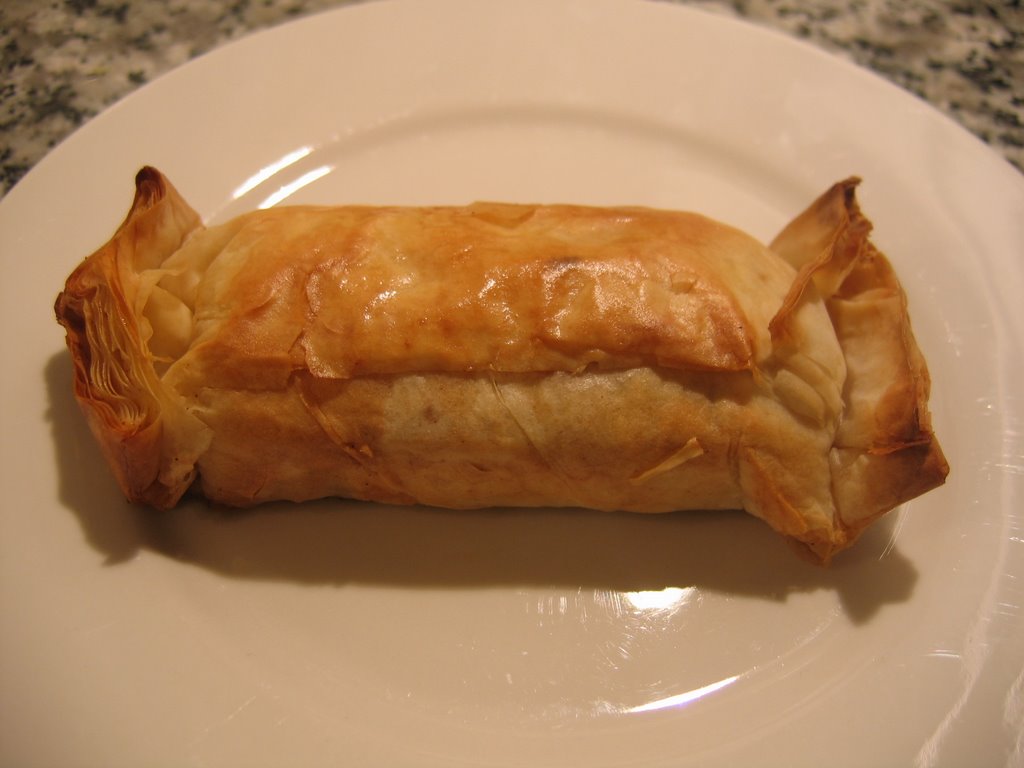
I recently stumbled across the Sydney Food Diary and Sean's recipe for Filo Wrapped Mars Bar. Intrigued, I simply had to replicate the experiment in my own kitchen.

It turned out nicely: the Mars Bar melts just enough to go all gooey and soft. A very indulgent and cheeky little dessert.

I'm pretty keen to try other candy bars now, for instance a flat pastry base with slices of Fry's Turkish Delight in an open tart. Hmmm!

Filo Baked Mars Bar
Recipe by Sean. Makes 1.
Ingredients:

Four sheets of thawed filo pastry
Honey
Melted butter
Cinnamon
Vanilla dusting sugar
Sesame seeds
Method:
1. Preheat oven to 200'C.
2. First lay down one layer of filo and brush it with melted butter and dust with cinnamon. Layer all sheets on top of each other after brushing each with melted butter, honey and cinnamon.
3. Place the Mars bar at one end of the sheet and roll the filo into a parcel. Trim the ends to fit.
4. Brush the entire outside of the parcel with butter. Sprinkle with sesame seeds.
5. Bake until golden and crispy. Dust with vanilla dusting sugar and a touch of cinnamon.

Anna's Variation
1. Used maple syrup instead of honey.
2. Didn't dust with sugar or sesame seeds.

Tags:

Wednesday, 8 November 2006

hunter valley gem

Shakey Tables
1476 Wine Country Drive
North Rothbury, Hunter Valley
Australia
T: +61 4938 1744
www.shakeytables.com.au
Flickr set here.

When you leave the city and enter the country you leave behind the hustle and bustle. You leave your stress, anxieties and pressures. You leave the dog-eat-dog attitude of the city dweller rushing to and fro and enter the mellow pace of the country.

More often than not you also leave behind good service.

I recognise that the country is running on a different time concept than the city and that the water and bread don't need to land on the table a millisecond after you're seated, but there is such a thing as too slow, too easy going, too lax.

This was my experience on a recent 'bridal' weekend with my friends in the Hunter Valley. After three days of excruciatingly poor service, Shakey Tables was an oasis in the desert.

A friend, Ban-Foo, had recommended this restaurant to us and, knowing his fine taste, I was not at all surprised to find it to my liking.


What seemed to have been a log cabin was converted into an elegant space with candle light and tiny colourful bulbs sprinkled across the gable ceiling like a multi-coloured planetarium. Tables were vast reclaimed wood surfaces and chairs were cushioned and covered with bright, solid colours. Sideboards housed bottles of wine and a huge candelabra at the entrance was encrusted with years of candle wax, adding rustic, cathedral-like charm.

The walls were decorated with brightly coloured canvasses painted by the chef. Those with artistic know-how at our table weren't too keen on the paintings, but I liked them and thought the style and colours fit perfectly with the restaurant's overall look.

The second our ramshackle group walked into the restaurant we were greeted courteously and led through the crowded dining room to our very comfortable table.

We were served by winemaker, Simon Rengger, who owns Shakey Tables with his wife and who was more than happy to walk through the menu with us, pairing our choices with local wines, including a few of his own (the 2004 Shakey Tables Estate Shiraz was great).

In the kitchen, Paula Rengger devised some pretty spectacular fare.

An amushe bouche of clear tomato jelly was tiny with a salad of baby green leaves and a button of delightful basil sorbet. This was delish. We also received some cheesy tomato scrolls, which were substantial but a little dry.

Our mains were wonderful ($36). Vicky and Jo ordered the slow roasted Wagyu brisket, a perfect cut for the lengthy cooking. It was as a soft as butter and the flavour was certainly impressive. This came crowned with a bone marrow dumpling, sticky and pleasantly sweet. Caramelised onion and witlof and a steamed baby leek were placed upon a pool of celeriac puree and the whole dish was topped off with jus from the slow roasting process.

Shelley ordered the rainbow trout, which came rolled around green beans and its crispy skin on display. It balanced upon three garlic potato croquettes and the whole plate was encircled with toasted flaked almonds, caramelised onions (or it could have been leeks) and fresh chives. This was both decorative and delicious, adding flavour and crunchy texture to the meal. A burnt lemon butter sauce completed this dish.

Em and I opted for the roast pigeon, which startled the others a little. It always interests me how people compartmentalise animals, some being for eating and others certainly not. I don’t have that block in my mind and the only thing that would stop me from eating an animal is if a) it was endangered or b) it was extremely intelligent i.e. whale, dolphin, primate or elephant. To be honest, I’ve always had a flash of guilt when eating pigs for that reason. None the less, I enjoyed my roasted pigeon with piggy by-products.

The pigeon was stuffed with rich black pudding and sweet prunes then wrapped in bacon. The flavour of the prunes and pudding had seeped through the inner flesh while the bacon had braised the outer surfaces. This tight bundle of pigeon was placed upon two elegant cabbage parcels that were filled with fine breadcrumbs soaked in butter. A red wine jus surrounded the plate.

To offset these extremely rich main courses we had a baby spinach, pine nut and parmesan salad with orange dressing ($8). It was really good and we all tucked into it eagerly, but dessert was the jewel in the crown.

A fantastic cranachan ($16), described as a traditional Scottish wedding dessert, was reinterpreted into a modern ice cream terrine. Since it was a "bridal" weekend the cranachan was a perfect fit.

Three light, crispy tuille cigars were filled with whisky and almond praline cream. On top of this a chequerboard terrine of caramelised oatmeal and honey ice cream merged square by square with intense raspberry sorbet. We were all stunned with the wonderful flavour and I couldn’t get enough. I adored this terrine.

Overall, we walked out of the restaurant extremely satisfied. The prices were reasonable for the exquisite food and I really loved the feel of the restaurant with its log cabin design, bright colours and dreamlike art.

I thoroughly recommend Shakey Tables to anyone visiting the Hunter Valley. You will be delighted.
Check out the photos here.

Shakey Tables on Urbanspoon

Tags:

Monday, 6 November 2006

recipe carousel #21 - breakfast

They say breakfast is the most important meal of the day. Different people like different things for breakfast. Jonas likes a traditional breakfast whereas I’m happy to eat leftover chilli con carne or pasta.

In our house eggs rule supreme, but I have tried to mix it up a little every now and then since I'm not a huge fan of eggs in the morning.

After scouring the blogosphere for breakfast recipes, it seems the Americans take their breakfast pretty seriously and many blogs with American authors had a lot on offer.

Here are seven breakfast recipes to get your taste buds tingling at dawn.


Sour Cream Waffles. Heidi in the USA (101 Cookbooks) confesses that like many other cooking fiends she collect appliances that go unused. Determined to dust of the waffle iron, she whipped up this beautiful batch using sour cream. Doused in maple syrup, it could be heaven on earth. Photo courtesy of Heidi.


Granola. Suzy in Japan (Floating World Views) decided paying ¥600 for imported granola is exorbitant and instead used up her excess oats in this yummy breakfast cereal. Oats, almonds, seeds, cinnamon, brown sugar and vanilla are baked until golden and then raisins are added before eating. Delish! Photo courtesy of Suzy.


Scrambled Tofu is a clever twist from Amy in the USA (Cooking with Amy). Bored with eggs she fries tofu with shredded carrot, onion, celery and pepper then flavours it with curry powder, turmeric and tomato. A nice change of pace and a good hit of soy. Photo courtesy of Amy.


Savoury Breakfast Tart is a reconstruction of bacon and eggs from Sam (Becks & Posh). This US-based Brit knows how to turn a traditional English breakfast into an elegant, modern pastry in honour of Donna Hay. Mushrooms, tomatoes, eggs and bacon are assembled on blind baked pastry then put in the oven until the egg sets slightly. Photo courtesy of Sam.


Stewed Prunes w Citrus & Cinnamon is a brilliant recipe from Molly in the USA (Orangette). Molly does her best to convince everyone that prunes, or dried plums, have been given a bad rep and that they’re really very lovely. I love prunes, so it wasn’t hard to convince me, but this recipe seems particularly good. Photo courtesy of Molly.


Breakfast Couscous is a moist brekkie treat from Christiane in the USA (28 Cooks). The recipe couldn’t be easier: boil some water, chuck everything in and take off the heat. Ten minutes later, breakfast is ready! Christiane flavours her couscous with dried cranberries, raisins, milk, brown sugar, cinnamon and flax seeds. Photo courtesy of Christiane.


Savoury Cornmeal Cake comes from Burcu in the USA (Almost Turkish Recipes). Also known as Mısır Ekmeği, this savoury cake is made with cornmeal, fetta, yoghurt, olives, parsley and pepper. It’s baked in the oven and comes out light and moreish. Photo courtesy of Burcu.

And for those who noticed the glaring omission of pancakes from this list, stay tuned for next week's Recipe Carousel where I'll explore both sweet and savoury.

I have a few breakfast recipes of my own that I’ve posted previously:
Baked Eggs & Beans
Breakfast Crumble
Eggs & Yoghurt
Grape & Aniseed Schiacciata
Pears Poached in Passionfruit Juice

Now it would be remiss of me to write a post on breakfast and not mention the Breakfast Queen herself, Nandita from Saffron Trail. Nandita is the creator and host of the monthly food event “Weekend Breakfast Blogging”. Be sure to check out all the breakfast recipes she’s collected in her recaps and perhaps even join in the next Weekend Breakfast Blogging themed Baking for Breakfast and due on 30 November.

Add your own recipe!
If you want to link in your own breakfast recipe and share the love around, just leave the link in the comments section. You didn’t have to invent the recipe yourself, just make it and post it on your site. The whole idea of Recipe Carousel is that good recipes are shared with people who love to cook.
Note: Usual comments are more than welcome but all html links must be recipe related (yours or others).

Check out other Recipe Carousel themes: raw food, berries, dips, cocktails, pasta, yoghurt, crispy snacks, vegetable desserts, fruit in savoury food, made from scratch, strawberries, jam, bread, seafood mains, ice cream, soup, chocolate and drinks.

Tags:

Sunday, 5 November 2006

colombian clam soup

Sopa de Almejas

In 2001, I worked at an English language college. I recruited students, held conversational English lessons and organised social activities.
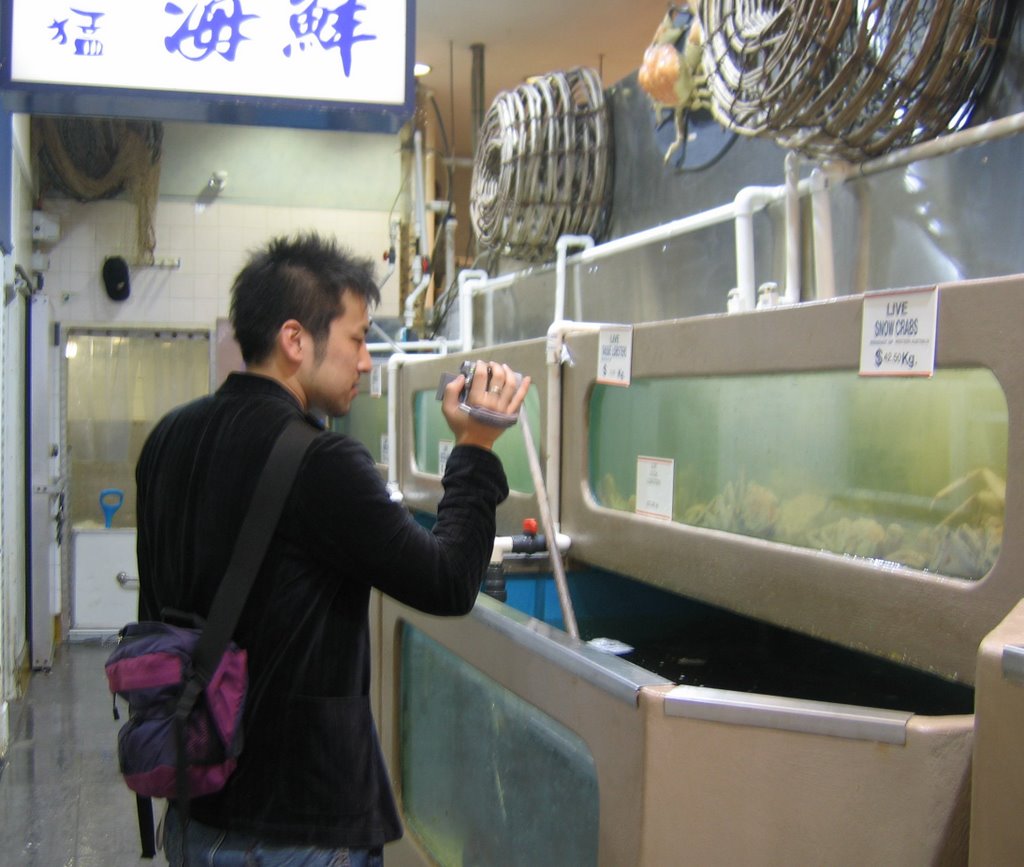
One of the students was a Japanese guy by the name of Takanori. We got on really well and when Jonas met him they got on swimmingly too. Pretty soon we were hanging out on weekends with Taka-san and his friend Testuya.

Recently Taka visited Sydney again and stayed at our house for a week. We had so much fun and I had forgotten just how namaiko (cheeky) he was.

Taka had a list of things he wanted to do while he was here and one of them was to go to the Sydney Fish Markets.

I took the day off work and we trundled over to the markets. It was great having a snap-happy friend in tow because I felt normal when the two of us lined up photos.

We ate a huge lunch of chips, calamari, battered fish, oysters and octopus. I also got Taka to try some Sydney Rock Oysters from Nambuca and a jumbo oyster from Tasmania. I was pleased I could pass on a lot of knowledge about oysters after the Manta Oyster Forum.Afterwards we bought ingredients for a feast and then came home to cook up a storm. It was a team effort with Taka chopping and peeling while I hammered through the recipes.

We made three dishes: Hawaiian ahi poke, Colombian sopa de almejas and Mexican tomato & almond sauce with prawns.

I have already blogged about the ahi poke, and I plan to post about Taka’s favourite, Camarones en Pipian, but this post is about my favourite, Sopa de Almejas.

I got this recipe from The Ultimate Soup Bible by Anne Sheasby. This chilli broth is said to come from coastal areas in Colombia. The book says it’s a perfect summer lunch, but I think this is a perfect main, entrée, lunch or dinner - all year round! I adored the fresh flavours and it was simple to make. I will make this again and again and again.

Sopa de Almejas (Clam Soup)
"The Ultimate Soup Bible" by Anne Sheasby. Serves 6.
Ingredients

1.3kg fresh clams/vongole
400ml canned plum tomatoes, drained
400ml fish stock
250ml dry white wine
30ml olive oil
1 large potato, peeled and diced
1 onion, finely chopped
3 garlic cloves
2 red chillies, seeded and finely chopped
1 tablespoon coriander, finely chopped
1 tablespoon flat-leaf parsley, finely chopped
Lime wedges
Method:
1. Heat the oil in a pot. Sauté onion for 5 minutes over a low heat. Stir in the garlic and chillies and cook for a further 2 minutes. Pour in the wine and bring to the boil, then simmer for 2 minutes.
2. Add the tomatoes, diced potato and stock. Bring to the boil then cover and simmer on low heat. Season with salt and cook for 15 minutes until the potatoes are beginning to break up and the tomatoes have made a rich sauce.
3. Meanwhile, wash the clams thoroughly under cold running water. Remove any grit or algae. Gently tap any clams that are open and discard those that don’t close.
4. Add the clams to the soup, cover the pot and cook for 3 – 4 minutes or until the clams open. Discard any clams that have not opened.
5. Stir in the chopped herbs and season to taste. Ladle into warmed bowls and squeeze lime wedges over soup before eating.

This week, Weekend Herb Blogging is back with its creator at Kalyn's Kitchen. Check out all the wonderful recipes at Kalyn's recap.

Tags:

Friday, 3 November 2006

breakfast crumble


I just wanted to share this fabulous breakfast treat that I get from Seed, the café near my office.

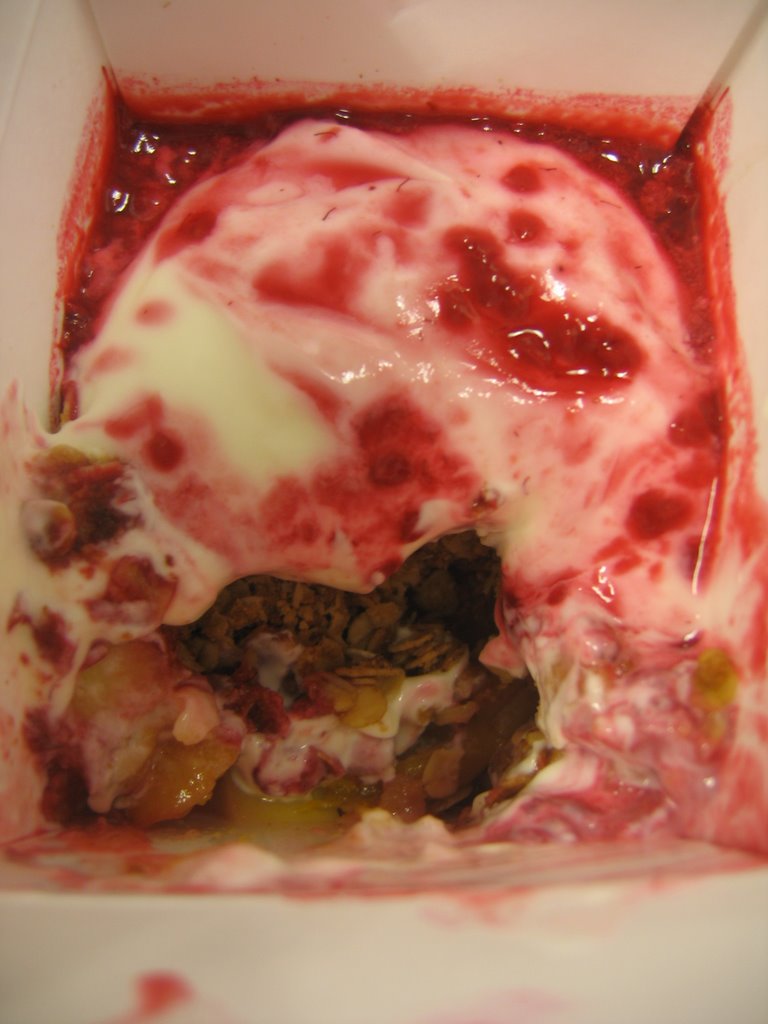
A little Breakfast Crumble comes in a Chinese takeaway box. It's simple and genius and would be so easy to replicate at home.

You could use fresh fruit when they're in season, or canned all year round.

Breakfast Crumble
Anna's version of Seed's recipe. Serves 2.
Ingredients
Fruit Base

200g can of apricots or peaches (or plums or nectarines)
1 apple, peeled, cored and slices into small wedges
3 tablespoons apple juice
3 tablespoons sugar
½ teaspoon cinnamon
Crumble
1 cup oats
1 teaspoon vegetable oil
1 tablespoon honey, warmed and melted
Topping
Unsweetened yoghurt
½ cup raspberries
Icing sugar to taste
Method:
1. For crumble, preheat oven to 180'C. Combine honey, oil and oats. Bake until golden and crunchy. Set aside to cool.
2. For topping, mash raspberries. Add icing sugar to taste to ensure raspberries aren't overly tart. Refrigerate until needed.
3. For the fruit base, throw everything into a pot and cook until the sugar dissolves and the apples soften. Add more sugar if needed.
4. Now you are ready to assemble everything. Divide the fruit between the bowls. Next divide the crumble and sprinkle over fruit. Top crumble with yoghurt and then raspberry puree.

This is so yummy!!!

For those in Sydney's CBD, Seed Café is on the Lower Ground Floor of Hunter Street Connection near Wynyard Station.

UPDATE:
Unfortunately Seed was sold and the Breakfast Crumble is no more.
But it's easy to make and you could use almost any fruit. Here is a photo of quince breakfast crumbles I made for a breakfast brunch that I had for my friends. They were a hit!
Tags:

Monday, 30 October 2006

ahi poke

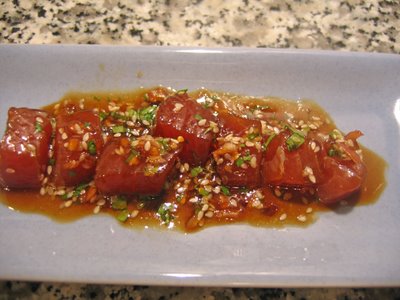
Ahi is the Hawaiian word for tuna and this marinated seafood dish comes from Hawaii’s Japanese population who have been in the islands for over 100 years.

Ahi Poke is available all over Hawaii in restaurants and sushi bars and is even sold, pre-made, in supermarkets.

I first tried ahi poke on a visit to Hawaii in 2004 and was pleasantly surprised by the modern take on traditional Japanese sashimi, as well as the successful addition of coriander and the sweet nutty sesame seeds.

This recipe is quick and easy so all you'll need is fresh tuna and a healthy appetite.

Ahi Poke
Recipe from Williams-Sonoma cookbook “Savouring America”. Serves 6.
Ingredients:
500g sashimi-grade tuna steaks, skin & bones removed
½ cup finely chopped sweet onion
3 tablespoons soy sauce
2 tablespoons finely chopped fresh coriander
2 teaspoons sesame seeds, toasted
Few dashes of sesame oil
Large pinch of coarse sea salt
Pinch of red chilli flakes
Coriander leaves for garnish
Method:
1. Using a sharp knife, cut the tuna into small 2cm by 2cm cubes.
2. Place tuna in a bowl and add all other ingredients.
3. Toss the mixture gently to blend evenly. Cover the bowl and refrigerate until well chilled, about 1 hour.
4. Serve garnished with coriander leaves.
Notes: Ahi poke is best eaten within a few hours of being made, but can be kept in the refrigerator for one day. Hawaiians use Maui onion, but for those of us outside the US, any sweet onion will substitute. Yellow-fin tuna is best for this recipe, although any other sashimi-grade is fine.

" Open Sesame"

Sesame is a plant widely cultivated for its deliciously nutritious seeds which contain high levels of copper, manganese, tryptophan, calcium magnesium, iron, phosphorous, zinc, vitamin B1, and dietary fibre.

In countries without oil groves, sesame oil is an important cooking oil. In fact sesame seeds are extremely rich in oil - an estimated 50% of the seed.

The origin of sesame is unknown, but studies show its closest cousins growing in Africa. The first records of cultivation come from 2000 BCE in Assyria and Babylon (modern day Iraq and Syria). It later spread throughout the Middle East and Asia.

The etymological root of the English word sesame shows its path through world cuisines. The Latin sesamum came from the Greek sēsámon which had fashioned itself after the Aramaic shūmshĕmā. This was a derivative of Babylonian shawash-shammu via Assyrian shamash-shammū. What amazes me more than anything is how close the English word remains to the original Assyrian source despite geographical distance and thousands of years.

Around 4000 years ago in China, records show sesame seed was burnt to create soot for making ink. In Ancient Greece, soldiers carried sesame seeds as emergency rations and in India, sesame is a good luck omen for Brahmins who use it as anointing oil.

It is said that The Arabian Night’s tale used “open sesame” as the magic access to the thieves den because the sound of a sesame seed being released from its pod is similar to a lock opening.

In the Middle East sesame seeds are used to make a nut paste (tahini) and a dessert (helva). In Syria and Lebanon it’s an important ingredient in a spice dip (zatar) and sesame seeds crown Turkey’s favourite snack food (simit). In Greece sesame seeds are set into slices sweetened with honey (pasteli) and they are also widely used in Indian, Korean and Japanese cuisine as a garnish and flavouring. In Europe, seeds are sprinkled over cakes and breads as decoration.

References:
http://en.wikipedia.org/wiki/Sesame
http://www.whfoods.com/genpage.php?tname=foodspice&dbid=84
http://www.theepicentre.com/Spices/sesame.html
http://www.jeffersoninstitute.org/pubs/sesame.shtml
http://www.apinchof.com/sesame1015.html


Tags:

recipe carousel #20 - raw is best

After another recent visit to the Sydney Fish Market where I spotted some excellent sashimi grade fish, I've been hankering to eat anything raw. This craving resulted in ahi poke.

Raw food can be so appealing. Absolutely fresh fish doused in acidic citrus or vibrant red beef flavoured with briny capers. Tartare, sashimi, ceviche and carpaccio - raw is best.

Hake Marinated in Pink Peppercorns is a recipe from Marcela in Argentina (La Majaluta). The post is in Spanish but I deduced that Marcela’s recipe uses extremely fresh hake cut into paper thin slices then marinated for 30 minutes or so in olive oil, lemon juice, pink peppercorns, juniper berries, ground black pepper, dried ginger and grated lemon rind. Photo courtesy of Marcela.


Cucumber Carpaccio is how Ed in the USA (Is it EDible?) used up an abundance of hot-house cucumbers. This recipe contains soy sauce, sesame oil, Hawaiian sea salt and some shichimi togarashi (Japanese seven spice seasoning often made from red chilli, black pepper, sesame seeds, dried mandarin peel, nori seaweed flakes, prickly ash pods, hemp seeds and poppy seeds). This vegetarian dish takes 5 minutes to prepare and provides an aesthetic accompaniment to any meal. Photo courtesy of Ed.


Shrimp Ceviche is a ploy by Elise in USA (Simply Recipes) to get her father to eat shrimp. The shrimp are cooked with lemon and lime juices and served with red onion, serrano chile, cilantro, cucumber and avocado. Elise uses cooked prawns in this recipe, but ceviche can be made just as easily with green ones. Photo courtesy of Elise.


Beetroot Cured Salmon is a colourful creation from Haalo in Australia (Cook (almost) Anything At Least Once). Haalo leaves a salmon tail overnight in a mixture of grated raw beetroot, vanilla extract, vanilla vodka, lime zest and fennel. The marinade firms the fish flesh and dyes the outer edges a beautiful royal cerise. Haalo also provides two recipes to use the salmon (here and here). Photo courtesy of Haalo.


Beef Tartare is a tasty tidbit from Johanna in the UK (The Passionate Cook). As part of an amuse bouche feast she made tiny spoons of diced raw beef seasoned with mustard, worcester sauce, shallots, cornichons, pepper and chopped capers, then topped with a raw quail egg. Served with grissini and garlic chips, Johanna swears by this delicious appetiser. Photo courtesy of Johanna.


Scallop Ceviche & Kumquats is another beautiful recipe from Béa in the USA (La Tartine Gourmande). Spain is the inspiration as Béa cooks the delicate conquille St Jacques with lemon juice. Cumquats are also used to provide a sweet, citrus flavour alongside the cucumber, red onion and chives. A sprinkling of cayenne pepper adds a perfect touch of heat. Photo courtesy of Béa.


Trio of Tuna Tartare is a gourmet meal at home for Aun in Singapore (Chubby Hubby). According to Aun, the best way to cook tuna is not at all and I think I can agree with that. Aun’s three tuna tartare options include spicy red chilli and garlic; shitake, soy sauce and sesame; and the jalapeño, ginger and avocado. This is another recipe that appeared in my original two Recipe Carousels and has been posted again under a relevant theme. Photo courtesy of Aun.

Add your own recipe!
If you want to link in your own raw recipe and share the love around, just leave the link in the comments section. You didn’t have to invent the recipe yourself, just make it and post it on your site. The whole idea of Recipe Carousel is that good recipes are shared with people who love to cook.
Note: Usual comments are more than welcome but all html links must be recipe related (yours or others).

Check out other Recipe Carousel themes: berries, dips, cocktails, pasta, yoghurt, crispy snacks, vegetable desserts, fruit in savoury food, made from scratch, strawberries, jam, bread, seafood mains, ice cream, soup, chocolate and drinks.


Tags:

Friday, 27 October 2006

tomato carpaccio

Sometimes I'm bored of green salad. I'm bored of Greek salad. I'm bored of rocket and parmigiano.

On one of my "bored" days, Jonas came to the rescue with this wonderful Japanese style salad dressing. We eat it all the time now. On mixed greens, on rice, with fish, with chicken and now on thin slices of tomato.

It's tangy, healthy and great for summer.

Oh, and it's bloody easy too.

Tomato Carpaccio
Jonas' very own recipe. Serves 2.
Ingredients:
3 egg (Roma) tomatoes
4 tablespoons rice wine vinegar
1 tablespoon shoyu (or light soy sauce)
1 teaspoon sugar
1½ teaspoons sesame oil
2.5 cm piece of ginger, finely grated
Chopped green shallots (ecshallots), optional
Method:
1. Slice the tomatoes as thinly as possible (our photo was a rush job but it's nicer if it's thinner)
2. Mix the remaining ingredients together and pour over the top.
3. Eat with gusto.

Tags:

Thursday, 26 October 2006

goodies

Recently Jonas and I received three international care packages.

To our utter delight our very thoughtful friends and family brought us back some treats from recent holidays.

First, Roberto came back from Mexico with Jonas’ drug of choice – Valentina sauce. He also brought the smoky flavours of chipotle in the form of Mexico’s famous Lucero sauce. I was not forgotten with a tetra pak of salsa verde, my favourite sauce because of the tangy, sourness of the tomatillos and the fiery chilli.

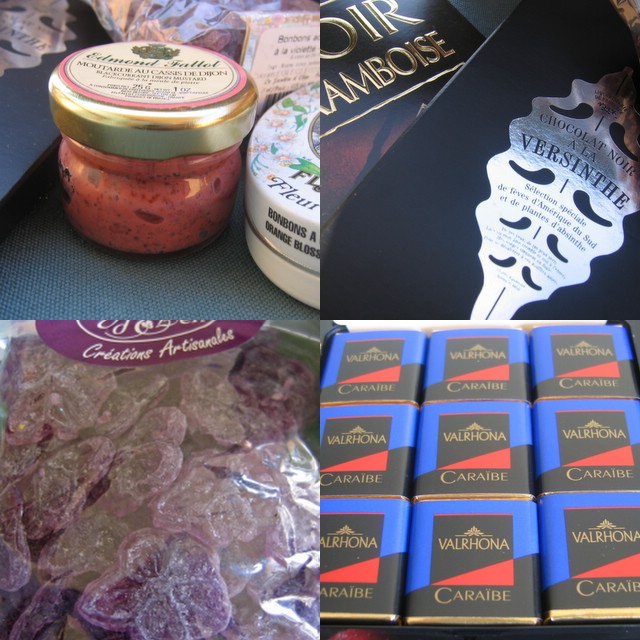
Next arrival was Vicky’s magnifique assortment of goodies from her month in Lyon: orange blossom lozenges, Dijon mustard flavoured with currants, a dainty bottle of Poire William eau di vie, Versinthe and raspberry infused dark chocolate and a small tin of Valrhona chocolates. Little did Vicky know of my obsession with violet flavoured candy and so the surprise pièce de résistance were the hard violet bonbons.
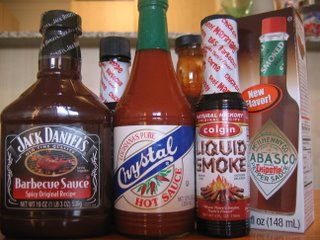
Last but not least was the final restocking of our extensive sauce cabinet courtesy of my father and stepmother. They hauled back bottles of sauces from the US which are impossible to find in Sydney: Jack Daniel’s BBQ sauce, Liquid Smoke to add flavour to Jonas’ veggie burgers, smoky chipotle flavoured Tabasco and my all time favourite chilli sauce, Louisiana Hot Sauce (flavoured with cayenne and vinegar).

With friends like these, who needs to go shopping!

Tags:
Related Posts with Thumbnails