Showing posts with label food memories. Show all posts
Sunday, 1 July 2012
smoked apple & chestnut ravioli w cinnamon apple butter
Back in 2007, a few days after our wedding, Jonas and I visited Rockpool, back in it's original iteration when it was one of Sydney's finest, and ordered their extensive degustation menu with premium matching wines. It still stands as the most expensive meal of my entire life, and with the same money we could have bought an overseas airfare and possibly accommodation. Don’t ask, suffice to say it was expensive.
But the memory was also priceless, as it was our wedding gift to each other and many of the dishes we ate on that evening have remained with us.
One in particular was an apple and chestnut ravioli, a dish served to Jonas in his vegetarian days. It was a confusion of sweet and savoury apple and cinnamon and herbs. A clever combination that was executed perfectly.
This year, as one of my 2012 Food Challenges, I decided I needed to recreate recipes I had experienced at restaurants. This was one of them, but I decided to put my own twist on it by using smoked apples, that I hot smoked myself in my Nipper Kipper smoker.
While it was a somewhat complicated recipe (a lot of steps to go through), I feel really rewarded for my efforts.
It was a very elegant dish and would be a big hit at a swanky dinner party.
Unfortunately for me, every shop I visited was out of wonton wrappers so when I finely found some they were square rather than round. Please go with the round versions, they will be much prettier.
And be sure to top your dishes with fresh herbs. They really cut through the intensity of the rich glaze sauce.
I used butter and chicken stock, but you could easily make this a vegetarian version with veggie stock or a vegan version with olive oil instead of butter and go with non-egg-based pasta.
Any leftover ravioli filling can be set in the fridge and eaten as a vegetarian paté.
Smoked Apple & Chestnut Ravioli w Cinnamon Apple Butter
Anna’s very own recipe. Serves 4.
Ingredients:
Smoked apples
2 green apples
Smoker
Wood chips
Ravioli
32 round egg wonton wrappers (for 16 ravioli)
2 tablespoons chopped sage
1 tablespoon butter
1 teaspoon smoked salt
½ white onion, chopped
1 garlic clove, chopped
1 teaspoon freshly milled black pepper
1½ smoked apple, chopped
100g chestnut purée
Butter for frying
Beaten egg, for sealing wonton wrappers
Butter Sauce
50g butter
1 teaspoon onion powder
½ teaspoon ground cinnamon
¼ cup verjuice
Sprig of lemon thyme, picked over
½ smoked apple, chopped
½ cup chicken consommé
¼ cup boiling water
1 teaspoon sugar
Black pepper
Salt
Fresh sage leaves, small and picked over
Method:
For the smoked apples
1. I peeled mine but left the core in.
2. Then I sprinkled about a tablespoon of dampened apple wood dust over some aluminium foil, placed my rack above it, then placed the two apples in and shut the top.
3. With the mentholated spirits lit, I removed the apples after about 20 minutes. This was probably about 5-10 minutes of heating up and 5-10 minutes of pure smoking.
4. When I removed them, they were warm, still fairly white and the outside was mildly soft but the inside was still hard.
5. I didn’t want to cook them any more than this as the smoke flavour would become overwhelming and somewhat acrid, ruining the balance of the dish.
6. Core each apple and chop into cubes: 1½ apples will go into the ravioli and ½ an apple will go into the sauce.
For the sauce
1. In a pan, heat the butter, onion powder, ground cinnamon, black pepper and salt until butter starts to brown and bubble.
2. Add verjuice and lemon thyme and bring to the boil.
3. Add apple, sugar, chicken consommé and boiling water, then bring to the boil and reduce for 5 minutes.
4. The sauce is done when the apple is soft and the liquid has reduced to a dark brown glaze (about ½ cup).
5. Keep warm while you cook the ravioli.
For the ravioli
1. Using a little butter, sauté onion and garlic until soft. Set aside.
2. Heating a little extra butter, add the sage leaves and heat until almost crispy. Set aside.
3. Using the sage-scented butter, add the chopped apples, smoked salt and pepper and fry until the apple is browned and soft.
4. Put the chestnut purée, cooked apple, onion and sage into the food processor and blend into a purée.
5. Line a tray or plastic container with baking paper, for the ravioli.
6. Lay wonton wrappers out on flat surface and brush with beaten egg (egg wash).
7. Put small dollops of purée on half the wrappers, then top them with the remaining wrappers, being sure the gently press out any air pockets when sealing them.
8. Lay the finished ravioli on the baking tray, with paper baking between layers to prevent sticking. Refrigerate for 5 minutes (to firm) or until ready to cook.
9. Bring a pot of salted water to the boil, then simmer ravioli until it rises to the surface and the pasta is cooked through.
10. Drain onto paper towels then plate, drizzling with sauce and apples, sage and thyme leaves.
Labels:
anna original,
entree/starter,
food challenges,
food memories,
fruit,
pasta/noodles,
vegan,
vegetarian
Saturday, 2 October 2010
redzepi & radishes
Last night was the launch of the Crave Sydney International Food Festival and I listened with absolute pleasure to René Redzepi talking through his inspirations founding and building Noma.
I was more than a little proud when Redzepi asked the very same question I had proposed when I reviewed his book: why don’t more Australian chefs become locavores and use native Australian ingredients?
Chefs Ben Shewry (Attica) and Mark Best (Marque) joined food critics Joanna Savill and Terry Durack to discuss the concept of Australian cuisine and the applications of native produce.
From his Victorian property, Shewry had foraged some amazing wild produce including red salt berries; butterfly-leafed wild sorrel; verdant, crunchy sea succulents; and glistening strips of seaweed.
It was impossible not to be inspired by all the amazing and interesting herbs and I was restless watching them from my seat as they tasted each one on the stage. I wanted to taste them too! I already had my own recipe ideas bubbling away!
But we weren’t left out! At each seat was a small packet of leaves which we were encouraged to crush and smell, one by one. It was the first time I had smelt lemon myrtle, anisata or mountain pepper leaf in their fresh state. Normally I see them dried and, while they smell similar, the dried versions take on a stronger yet staler scent. The essential oils in the fresh leaves were simply marvellous.
As Redzepi pointed out, the wild food opportunities in Australia are endless given we have equatorial, tropical, subtropical, desert, grassland and temperate climates!
Redzepi challenged Australians to invent their own cuisine from the amazing array of cooking techniques, cultures and wild foods that we have at our disposal.
I hope some brave young Aussie chef takes up the challenge.
As we filed out of the auditorium, small tables of fresh vegetables and native leaves were a surprise extra gift from Redzepi. Seemingly civilised old women were knocking down children to grab what were really just good quality vegetables, and I almost didn’t bother throwing myself into the fray.
But I’m glad I did because this afternoon, when I sat down on my sofa to read the Noma newsletter and crunched into a small misshapen radish, I was instantly transported back in time to my maternal grandfather’s garden in Coffs Harbour. I would pull up radishes from his vegetable patch, dash into the house to wash off the dirt then bite into the red, crunchy root curling my toes in anticipation of the peppery hit I was about to get.
These days when I eat radish I feel like those memories must have been inaccurate because radishes never taste like much, especially not anything akin to the peppery-spice of my Grandpa's radishes. But when I tasted the radish Redzepi had given me it had an intensity of flavour and, finally, the elusive peppery heat I had been missing all these years.
Noma’s newsletter is predominantly about the early food memories of the restaurant staff, and I found it ironic that this radish had done the same trick for me.
It made me consider my own early food memories, in addition to the radishes:
• Riding my paternal grandfather’s back like a horse as he tended the vegetable patch and handed me exquisitely sweet tomatoes straight from the vine. I have only ever tasted a few tomatoes as good as these ever since.
• Hiding in the back garden when I was sulking and popping peas straight from their pods into my mouth. No wonder when we sold our home and moved closer to the city that I refused to eat the frozen peas my mum started serving me.
• My brothers bringing home trays of stone fruit from their summer jobs in a nearby orchard and my mother asking me to peel the peaches, her favourite fruit, because the fuzzy texture literally gave her shivers of repulsion.
• The smell of lamb chops under the grill and my parents begging me to eat the meat from the lamb chops, whereas I only wanted to eat the fat.
• Sucking overripe blood plums through the gaps of my missing front teeth and dripping deep red juices all over my clothes.
Now that I have a few fresh samples of wonderful Aussie herbs, I think I'll forge some new memories.
Now brace yourself as Crave Sydney International Food Festival begins!
And if you're a food bloggers, send the links to your posts this way!!!
Friday, 10 September 2010
passionfruit marshmallow hearts
I remember the first time I realised marshmallows don’t have to come in a package but could be made, fresh, at home.
So this year I made it one of my 2010 Food Challenges to make sure I stopped living in fear.
The big day came for my friend’s hens night and I pulled them off.
Soft and pillowy, tangy with tropical passionfruit and then topped with 70% dark chocolate.
Delicious!
Passionfruit Marshmallows
Recipe by Rockpool via Australian Gourmet Traveller. Makes 50 squares.
Ingredients:
180ml strained passionfruit juice (about 10 passionfruit)
20g powdered gelatine
500g caster sugar
2 eggwhites
Snow sugar, for dusting
Method:
1. Lightly grease and line a 17.5cm x 25cm shallow cake pan and dust base liberally with snow sugar.
2. Combine passionfruit juice and gelatine in a bowl and set aside.
3. Combine caster sugar and 1 cup water in a saucepan and cook over low heat, stirring, until sugar dissolves, then increase heat to medium and cook for 5-10 minutes or until syrup reaches 125’C on a sugar thermometer.
4. Remove from heat, add passionfruit mixture to syrup and stir until gelatine dissolves.
5. Meanwhile, using an electric mixer, whisk eggwhites and a pinch of salt until frothy.
6. Gradually add passionfruit mixture, whisking continuously on medium speed until mixture has doubled in size, then slowly decrease speed and mix until mixture is warm (about 40’C).
7. Pour into prepared cake pan, and, using a lightly oiled spatula, spread evenly, then dust top liberally with snow sugar. Stand at room temperature for 3 hours or until firm.
8. Using a sharp knife, cut marshmallow into 2.5cm squares and roll in snow sugar to coat. Store in an airtight container between sheets of baking paper at room temperature for up to 2 weeks.
Note: to make heart shapes I used an oiled cookie cutter and all the leftover bits and pieces were turned into rocky road.
I remember the first time I realised marshmallows don’t have to come in a package but could be made, fresh, at home.
I put it on my to-do list with awe but never dared attempt it.
So this year I made it one of my 2010 Food Challenges to make sure I stopped living in fear.
The big day came for my friend’s hens night and I pulled them off. Soft and pillowy, tangy with tropical passionfruit and then topped with 70% dark chocolate.
Delicious!
And if you want to try your own marshmallows, how about some of these:
• Beetroot
• Cherry
• Chocolate • Cinnamon
• Lemon
• Orange Blossom
• Peanut Butter & Jelly
• Peppermint
• Raspberry
• Root Beer
• Strawberry
• Ube
• Violet
These marshmallows are my contribution to Weekend Herb Blogging with passionfruit as my theme ingredient. If you want to learn more about passionfruits I wrote a post about them back when I blogged this passionfruit curd.
Our host this week is Graziana from Erbe in Cucina (Cooking with Herbs). Be sure to visit for the round-up.
Friday, 1 January 2010
food memories
Sometimes, on our travels or eating out at restaurants, I stumble across dishes that stick in my mind long after the experience has ended. I mull over the flavours and ingredients and wonder how to make it again at home.
This post will now be a new fixture in my blog, where I list amazing dishes that I plan to replicate at home. It won't be an exhaustive list of the most wonderful things I've eaten, but rather the dishes that translate to a home kitchen.
Hopefully I'll be able to reproduce some of them again, or at least get as close as possible.
Food Memories
Ajo Blanco - MoVida
Almond Stuffed Dates rolled in Jamon w Lemon Salt - Alira
Baby Spinach, Egg, Breadcrumbs & White Anchovy Salad - Gigi's
Black Sesame Ice Cream - Passionflower
Bò Tái Chanh - Red Lantern
Cherry Crepe Gratin - Fichtekränzi
Chestnut Agnolotti - Rockpool
Chorizo, Artichoke & Lemon Tapa - Ash Street Cellar
Dadar Unti - Casa Luna
Edamame w Chilli - Wagamama
Honeydew Melon Soup w Sago & Basil Seeds - Pier Tasting Room
Horseradish Coleslaw - Fix St James
Lamb, Currant & Almond Sausage Roll - Bourke Street Bakery
Lemon Yoghurt-Custard Borek - Foodarama
Mandarin & Star Anise Jellies - Marque
Passionfruit & Jasmine Ice Tea - The Tea Parlour
Pavlova Martini - Arthouse Hotel
Payaasam (Indian Dessert) - Flying Fish
Polpette - Omerta
Pulled Pork Sliders - Mai Tai Bar
Red Cabbage, Blue Cheese & Walnut Salad - A Tavola
Snapper Sashimi w Truffle Oil & Pork Crumbs - Toko
Spaghettini w Spanner Crab, Chilli & Cherry Tomatoes - Manta
Straw Mushrooms w Coconut - Cochin
Tuna Tartare w Vietnamese Dressing - Pier Tasting Room
Vincisgrassi - Buzo
White Truffle Ice Cream - Tetsuya's
Yoghurt Baked Lamb - The Press Club
Labels:
food memories
Sunday, 1 November 2009
bò tái chanh - lemon sirloin w rice paddy herb
After perusing through Helen’s recent posts about her food tour in Cabramatta, I became ravenous for Vietnamese food and determined to cook my own Vietnamese feast.
Ms Correct and I set the GPS to John Street then chatted until we reached our destination: Cabramatta, effectively Vietnam in Sydney.
The place was buzzing. The fruit, herb and veggie range was extravagant and the prices were absurdly cheap. As Ms Correct correctly asks “Why don’t we shop here every week?”
The whole time we were there, we must have seen only six other Caucasians and we marvelled at how exotic, exciting and foreign Cabramatta felt, even though it was still in Sydney. Ms Correct is quite tall at the best of times, but among Cabramatta’s Vietnamese population she was like Gulliver in Lilliput. We were certainly identified as outsiders and blatantly stared at, but people were welcoming and we felt comfortable.
We both felt so excited that Sydney had such a beautiful microcosm to explore.
Both Ms Correct and I have visited Vietnam, and Cabramatta felt like a cleaner, better-dressed version of HCMC, even down to the architecture of crowded market arcades and busy main streets. The local government, Fairfield City Council, is always touting Cabramatta as a tourist destination for Sydneysiders and visitors alike, and now I have to agree with them.
Navigating the narrow market aisles was difficult, but in true Vietnamese style other shoppers took no offence, and in fact didn’t even notice, getting whacked with the odd shopping bag.
We bought a huge range of things, the highlights being (left to right):
Many of the shop and stall owners don’t speak English and your mere non-Vietnamese speaking presence can be a cause of anxiety for them, so make sure you bring your understanding and patience with you. Don’t take offence when people shrug and walk away without helping, they probably just don’t understand you. Instead, wander to the next shop until you find someone who can speak English. There are many who do.
Like the shop keeper Ms Correct and I discovered at the end of our day. She was full of good advice and helped us navigate the Vietnamese-only signs and food labels. After learning I planned to make ice cream, her suggestion to buy frozen soursop pulp instead of fresh fruit was genius. Not only was the pulp super ripe and flavoursome but it had been skinned and deseeded and when it was blended through the hot custard, the icy cold temperature chilled everything immediately making the base ready to churn on the spot.
Once we were loaded up with goodies, we headed back to my place to cook up a storm from the beautiful cookbook The Secrets of the Red Lantern (tick off another food challenge).
Siblings Pauline and Luke Nguyen, and Pauline’s partner, Mark Jensen, are Sydney’s tres-chic experts on both traditional and modern Vietnamese food and their first cookbook is full of amazing recipes and heart-wrenching stories (that made me blubber like a baby).
This first recipe I'm posting is a favourite of mine from their restaurant, Red Lantern.
Little Em, Stinky, M.E. and Tia Bicky joined Ms Correct and I to eat:
* Bò Tái Chanh (lemon-cured sirloin w rice paddy herb)
* Nước Chấm (dipping fish sauce)
* Nem Nường (lemongrass pork sausages)
* Rau Muống Xào Tỏi (water spinach w ginger & garlic)
* Gỏi Mực Bắp Chuối (banana blossom & squid salad)
* Canh Chua Cá (tamarind & pineapple broth w perch)
* Kem Mãng Cầu Xiêm (soursop ice cream)
* Kem Dưa Hấu (watermelon sorbet)
I will post these recipes one by one over the coming months, but first up is this amazing little starter of juicy raw beef topped with the most delicious, unusual herbs. The best description can only come from the recipe’s author, Luke Nguyen:
“This traditional salad is a perfect starter. It is a ‘rare’ treat – refreshing, crisp and aromatic. Described by some as a ‘Vietnamese carpaccio’, Bò Tái Chanh is a particular favourite . . . rice paddy herb and sawtooth coriander are essential for this dish and should not be substituted. The rice paddy’s sharp citrus character and the sawtooth’s powerful aroma perfectly match this lemon-cured dish.”I discovered that I love rice paddy herb (or ngò om). The flavours are like cumin and lemon and pepper altogether and I discovered it goes quite nicely on sweet pineapple slices too.
Sawtooth coriander (ngò gai) is also very special and is much more potent than regular coriander (cilantro), but I still think you could substitute them for each other if you needed to.
But you can’t substitute the rice paddy herb!!!
Bò Tái Chanh (lemon-cured sirloin w rice paddy herb)
Recipe from Secrets of The Red Lantern. Serves 6.
Ingredients:
400ml lemon juice
1 tablespoon fish sauce
1 teaspoon salt
2 teaspoons sugar
1 teaspoon fine white pepper
500g sirloin steak
1 garlic clove, finely chopped
1 large handful sawtooth coriander, roughly chopped
1 large handful rice paddy herb, roughly chopped
½ small red onion, finely sliced
1 large handful bean sprouts
2 tablespoons chopped roasted peanuts
1 birds eye chill, sliced
Nước mắm chấm, to serve (see below)
Method:
1. Trim the sirloin or fat and slice as thinly as possible.
2. Heat 1 teaspoon oil and fry garlic. Remove and reserve both garlic and ½ teaspoon of the oil.
3. Combine the lemon juice, fish sauce and mix through the salt, sugar and pepper.
4. Arrange the slices of beef in a single layer on a plate and marinate in the lemon juice for 10 minutes, ensuring the meat is entirely covered in the curing liquid.
5. Remove the beef from the lemon mixture and drain the excess juice,.
6. Combine with the garlic, garlic oil, herbs onion and bean sprouts.
7. Transfer to a serving plate and garnish with the peanuts and chilli. Dress with nước mắm chấm at the table.
Nước Mắm Chấm (Dipping Fish Sauce)
Recipe from Secrets of the Red Lantern. Makes 1 cup (250ml).
Ingredients:
½ cup (125ml) water
3 tablespoons fish sauce
3 tablespoons rice vinegar
2 tablespoons sugar
2 garlic cloves, finely chopped
1 birds eye chilli, finely chopped
2 tablespoons lime juice
Method:
1. Combine the fish sauce, rice vinegar, sugar and water in a saucepan.
2. Heat on medium, stirring, until just before boiling point. Cool.
3. To serve add chilli, lime juice and garlic and stir well.
Rice paddy herb (Limnophila aromatica) is native to tropical South East Asia and grows in water logged environments . . . like rice paddies! In the west it’s been used mostly as an aquarium plant but in Vietnamese (and some Thai & Khmer) cuisine it plays a strong role.
If all you’ve been doing is sticking in your fish tank, you’ve been missing out!
The leaves taste like lemon and cumin and is quite delicious.
Here’s some advice on how to grow your own: “Get some fresh stems from another plant or your local Thai or Vietnamese grocer. If placed in water, they will develop roots within one or two weeks; in the meantime, they must be covered with a plastic bag or the like to give them enough humidity. In this phase, direct sunlight will kill the plants, so put them in a shadowy but not dark place. When enough roots have been formed, plant the stems into a high, transparent container filled with soil to cover most of the roots. A mixture of ordinary soil plus small, porous grains of burned clay is perfect. Keep the plants warm and humid. After a few days, they will tolerate (and even appreciate) intensive sunlight.”
If substituted, it is often done so with coriander, sawtooth coriander, perilla, mint or basil.
Other names include:
Cantonese - séui fuh yùhng, tìhn hēung chóu, jí sōu chóu, séui fā
Mandarin - shuǐ fú róng, tián xiāng cǎo, zǐ sū cǎo
English - finger grass
Estonian - järvelemb
German - reisfeldpflanze
Indonesian - daun kerdemom, selasih ayer kecil
Japanese - shiso-kusa, rimonohira
Khmer - ma-om
Korean - soyeob, soyop, soyop-pul
Lithuanian - kvapioji pelkenė
Malaysian - beremi, kerak-kerak
Polish - limnofila pachnąca
Russian - амбулия ароматная ambuliya aromatnaya
Thai - ผักแขยง, แขยง phak kayang, kayang
This week our Weekend Herb Blogging hostess is Haalo from Cook (almost) Anything At Least Once.
References:
http://en.wikipedia.org/wiki/Limnophila_aromatica
http://www.uni-graz.at/~katzer/engl/Limn_aro.html
Friday, 19 December 2008
tan tan men
Another one bites the dust . . . another 2008 food challenge that is!
With loads of help from my gal in Tokyo, Courtney, I was able to make this absolutely delicious ramen noodle soup.
I first ate Tan Tan Men at Ichiban Boshi, a ramen chain in Sydney, and I have been in love ever since. Spicy, Asian style Bolognese sauce on delicious ramen noodles with a fiery broth. Wow!
My own version was (of course) not as good as the experts, but for a home attempt it was fantastic. Definitely one to make again!
Now what disappointed me immensely was not the recipe but my shaky photography! I must have taken more than 20 photos of the tan tan men and the image on this post is the only one that didn't come out blurry. Sorry about that folks!
Tan Tan Men (Spicy Japanese-Chinese Ramen Soup)
Anna’s version of various internet recipes. Serves 2.
Ingredients:
375ml chicken stock
200g pork mince
180g ramen
2 tablespoons sesame oil
1 tablespoon freshly grated ginger
1 tablespoon white sesame paste
1 tablespoon rice vinegar
1 tablespoon doubanjiang (Chinese spicy bean paste)
1 clove garlic, crushed
2 teaspoons tenmenjan (Chinese sweet miso)
1 teaspoon hot chilli oil
2 tablespoons finely sliced shallot (scallion), garnish
Method:
1. Heat the sesame and chilli oils in a pot.
2. Add garlic, ginger and doubanjiang then fry until fragrant.
3. Add pork and brown.
4. Next add sesame paste, tenmenjan and chicken stock. Bring to the boil then reduce to simmer.
5. In a separate pot, cook ramen as per the packet instructions. Drain.
6. Combine noodles, broth and meat in serving bowls and sprinkle with scallion garnish. Eat hot.
Anna’s variations: If you can’t find all the specialty ingredients then replace the doubanjiang with the Korean equivalent gochjung, the white sesame paste with tahini and the tenmenjan with a tablespoon or two of light soy sauce and a pinch of sugar.
This is my long overdue contribution to Presto Pasta Nights, an event started by Ruth but this week (the last of 2008) hosted by C from Foodie Tots.
Tags: morsels and musings food blog food and drink australia recipes tan tan men soup noodles main course pork recipes soup recipes noodle recipes tan tan men recipes pork soup recipes noodle soup recipes japanese recipes japanese food japanese cuisine chinese recipes chinese food chinese cuisine
Tuesday, 17 June 2008
sorbat susu
Sorbat Susu is a warm, sweet, spiced milk from Indonesia. At least I think it is.
I have only drunk it here in Sydney (Badde Manors Café in Glebe to be precise) and Googling the recipe has proved fruitless.
I know susu means milk in Indonesian, but what is sorbat? Can anyone shed some light on this?
My recipe is a take on what I drank at Badde Manors: sweet and warm gingery milk spiced with black pepper. The original recipe serves the ginger in the milk but this creates difficulty for the drinker, so I decided to infuse my milk and strain it before serving. It’s a much more pleasant experience this way.
Sorbat Susu
Anna’s version of the Badde Manors drink. Serves 1.
Ingredients:1 cup milk
2 tablespoons condensed milk
½ tablespoon grated ginger
½ teaspoon cinnamon
Pinch of freshly ground black pepper
Method:
1. Heat all ingredients over low heat. While heating, use an egg beater to whip milk into a slightly frothy consistency. Taste as it may need sugar.
2. Strain into a cup and top with a little freshly ground black pepper. Serve hot.
This is a perfect winter warmer, which suits me wonderfully these days as the rain and wind howls outside and curl up on the sofa under a blanket and get my Battlestar Galactica fix (I am completely addicted).
Some recent birthday presents are also proving inspirational.
First was Tia Bicky’s purchase of Creole, a Caribbean cookbook by Babette de Rozières.
I don’t know much about Caribbean food, but the book contains some really interesting recipes such as lamb in turmeric and wasabi, cocoa mustard rabbit or conch ravioli. It also touches on Caribbean classics such as salt cod acras, swordfish ceviche and Creole-style pigeon peas. Papaya jam, coconut flans and mirliton tarte tatins (choko/chayote) are among the exciting desserts.
And then last night Shamu delivered her gift to me, The Secrets of Red Lantern by the Nguyen family who run an exquisite Vietnamese restaurant in Sydney, where I have enjoyed many a meal.
The book covers some of my favourite dishes from the restaurant, such as Bò Tái Chanh (lemon-cured sirloin) and Muc Rang Muôi (salt & pepper squid) but also includes classics like Goi Ðu Ðu (green papaya salad) and Thit Kho Trúng (caramelised pork). I am also fascinated by the exotic Dua Cai Chua (pickled mustard greens), Ôc Luôc (steamed periwinkles), Che Trôi Nuóc (sweet mung bean dumplings in ginger syrup) and Kem Trái Bó (avocado ice cream).
But what’s even more wonderful about this book is the family stories sprinkled throughout, containing everything from migration to Australia, to moving family estrangement and coming full circle in a bittersweet reunion. I’ve already shed a few tears.
Drinking the sorbet susu and leafing through these great new cookbooks has been a wonderful experience, and checks off three of my 2008 Food Resolutions!
Tags: morsels and musings food blog food and drink australia recipes drinks ginger sorbat susu milk ginger recipes milk recipes drink recipes indonesian recipes indonesian food indonesian cuisine
Labels:
anna original,
drink,
food challenges,
food memories
Wednesday, 6 June 2007
asparagus soup w white truffle mash
Hopefully I am back on track with this blog, after one month offline.
First I was travelling and then we moved apartments and now we're waiting for AAPT and Telstra to pull their fingers out and get our ADSL connected!
Worse of all, I've been so busy at work and Jonas has been so busy with his assignments that I haven't had time or access to a computer to even read over other blogs. I'm feeling very isolated and behind the times here!!!
So now I'm staying back at work to put something up and have a gander at what's been going on during my internet exile.
In my previous post about German food I mentioned a delicious white asparagus soup that I ate in a Frankfurt Italian restaurant called Medici.
As one of our last big meals in our old apartment, I replicated the dish with green asparagus and the results were absolutely fantastic.
The best part of this dish is the unique addition of mash potatoes that have been flavoured, ever so delicately, with white truffle oil. Pungent and perfect.
Asparagus Soup w White Truffle Mash
The soup recipe is based on Delia Smith's but the overall concept belongs to Medici in Frankfurt. Serves 6.
Ingredients:
900g (2 lb) asparagus
50g (2oz) butter
1 medium onion, finely chopped
1 slightly rounded tablespoon plain flour
1 litre (1¾ pints) hot stock (vegetable or chicken)
150 ml (5 fl oz) pouring cream, plus 1 tablespoon extra
salt and freshly milled black pepper
2 potatoes
White truffle oil to taste
Method:
1. Prepare the asparagus by cutting away and discarding the tough, stringy white ends of the stalks, reserve 4 asparagus tips per person to garnish the soup, then chop the green parts of the rest of the asparagus into 1 inch (2.5 cm) lengths.
2. Melt the butter in a large saucepan over a gentle heat and cook the chopped onion in it for 5 minutes, keeping the heat low to prevent the onion colouring.
3. Stir the asparagus into the melted butter and onion, then put a lid on and let it sweat for about 10 minutes, giving it a stir now and then.
4. Sprinkle in the tablespoon of flour, stir again to soak up the juices.
5. Add the hot chicken stock, a little at a time, stirring after each addition.
6. When all the stock is in, bring to simmering point, season with salt and freshly milled black pepper. Keeping the heat low, let the soup barely simmer, partially covered, for 20-25 minutes.
7. Meanwhile clean, peel and dice the potatoes into small cubes. Boil until soft (approx 5-10 minutes). Add 1 tablespoon cream and mash with potato masher. Add white truffle oil to taste, adding a few drops at a time. Set aside but keep warm.
8. Allow the soup cool a little, then pour it into a blender and blend in batches (a large bowl is helpful here). Taste to check the seasoning.
9. Stir in the cream and the reserved asparagus tips. Re-heat gently for 3-4 minutes.
10. Arrange mashed potatoes in the centre of warmed soup bowls. Pour in soup around the potatoes and garnish with asparagus tips.
This German inspired soup is a fitting contribution to my return to Weekend Herb Blogging, since this week the host is Ulrike from Küchenlatein in Germany (Kronshagen).
Tags: morsels and musings food blog food and drink australia recipes soup asparagus white truffle white truffle oil soup recipes german recipes
First I was travelling and then we moved apartments and now we're waiting for AAPT and Telstra to pull their fingers out and get our ADSL connected!
Worse of all, I've been so busy at work and Jonas has been so busy with his assignments that I haven't had time or access to a computer to even read over other blogs. I'm feeling very isolated and behind the times here!!!
So now I'm staying back at work to put something up and have a gander at what's been going on during my internet exile.
As one of our last big meals in our old apartment, I replicated the dish with green asparagus and the results were absolutely fantastic.
The best part of this dish is the unique addition of mash potatoes that have been flavoured, ever so delicately, with white truffle oil. Pungent and perfect.
Asparagus Soup w White Truffle Mash
The soup recipe is based on Delia Smith's but the overall concept belongs to Medici in Frankfurt. Serves 6.
Ingredients:
900g (2 lb) asparagus
50g (2oz) butter
1 medium onion, finely chopped
1 slightly rounded tablespoon plain flour
1 litre (1¾ pints) hot stock (vegetable or chicken)
150 ml (5 fl oz) pouring cream, plus 1 tablespoon extra
salt and freshly milled black pepper
2 potatoes
White truffle oil to taste
Method:
1. Prepare the asparagus by cutting away and discarding the tough, stringy white ends of the stalks, reserve 4 asparagus tips per person to garnish the soup, then chop the green parts of the rest of the asparagus into 1 inch (2.5 cm) lengths.
2. Melt the butter in a large saucepan over a gentle heat and cook the chopped onion in it for 5 minutes, keeping the heat low to prevent the onion colouring.
3. Stir the asparagus into the melted butter and onion, then put a lid on and let it sweat for about 10 minutes, giving it a stir now and then.
4. Sprinkle in the tablespoon of flour, stir again to soak up the juices.
5. Add the hot chicken stock, a little at a time, stirring after each addition.
6. When all the stock is in, bring to simmering point, season with salt and freshly milled black pepper. Keeping the heat low, let the soup barely simmer, partially covered, for 20-25 minutes.
7. Meanwhile clean, peel and dice the potatoes into small cubes. Boil until soft (approx 5-10 minutes). Add 1 tablespoon cream and mash with potato masher. Add white truffle oil to taste, adding a few drops at a time. Set aside but keep warm.
8. Allow the soup cool a little, then pour it into a blender and blend in batches (a large bowl is helpful here). Taste to check the seasoning.
9. Stir in the cream and the reserved asparagus tips. Re-heat gently for 3-4 minutes.
10. Arrange mashed potatoes in the centre of warmed soup bowls. Pour in soup around the potatoes and garnish with asparagus tips.
This German inspired soup is a fitting contribution to my return to Weekend Herb Blogging, since this week the host is Ulrike from Küchenlatein in Germany (Kronshagen).Tags: morsels and musings food blog food and drink australia recipes soup asparagus white truffle white truffle oil soup recipes german recipes
Friday, 9 March 2007
mussels w spinach, leeks & blue cheese
I developed the recipe myself, but the inspiration goes to the Heritage Belgian Beer Café in Sydney where I ate this dish for the very first time.
I think my replication turned out pretty spot on. Maybe it was even a little bit better . . .
Anna’s very own recipe. Serves 2 as a main course.
Ingredients:
1 kg mussels
300g baby spinach
1 cup chopped blue cheese
2 leeks, finely chopped
1 cup white wine
2 garlic cloves, crushed
2 tablespoons chopped parsley
2 tablespoons butter
Juice of a lemon
Method:
1. Scrub mussels carefully and remove their beards (rough threads around the mouths).
2. Place mussels in a large bowl of water for 1 hour to cleanse them of any debris.
3. Melt butter in a pan over low medium-low heat. Add leeks and cook for 5 minutes or until soft.
4. Add garlic and soften for 1 minute.
5. Add white wine, lemon juice and blue cheese. Bring to a simmer.
6. Add mussels and spinach. Cover pot with lid and cook for 5 minutes until mussels open and spinach wilts. Be sure to rattle the pot a little to move the mussels around.
7. Discard any unopened mussels and ladled into bowls with cooking liquor. Serve with crusty bread and a blond Belgian beer.
Spinach is a wonderful little plant, yielding beautiful green leaves that burst with flavour. We all know Popeye adored the iron boost he got from spinach, but it’s interesting to know that spinach is one of the most nutritionally dense greens. It contains large amounts (in order of greatness) of vitamin K, vitamin A, manganese, folate, magnesium, iron, vitamin C, vitamin B2, calcium, potassium, vitamin B6, dietary fibre, vitamin B1, protein, phosphorous, zinc, vitamin E and omega 3 fatty acids. Whoa – what a list!The spectacular vitamins and nutrients contained in spinach are excellent protection against osteoporosis, heart disease, colon cancer, arthritis, eye disease, decreasing mental performance in the aged and high blood pressure.
In fact spinach is said to have such an amazing effect on blood pressure that a regular size serving of fresh or steamed spinach as part of a meal can show positive effects about three hours later.
Spinach only arrived in Europe, via the Moorish invasion of Spain, in the 1100s. It was spread through monastic gardens and by the late 1300s it was used in the English royal court kitchen.
In the 1500s, Catherine de Medici introduced unique spinach recipes to France from her native Florence. This is believed to be the reason why spinach based dishes often include Florentine in the name.
Today the largest commercial producers of spinach are the US and the Netherlands, but I’m sure the world eats it with equal gusto. Especially those Popeyes out there.
This week the Weekend Herb Blogging host is me! So stay tuned to this site for the WHB round-up.
References:
http://www.whfoods.com/genpage.php?tname=foodspice&dbid=43
http://en.wikipedia.org/wiki/Spinach
Tags: morsels and musings food blog food and drink australia recipes weekend herb blogging whb main stew musselsblue cheese white wine leeks spinach belgian recipes belgian food belgian cuisine belgian belgium
Monday, 16 October 2006
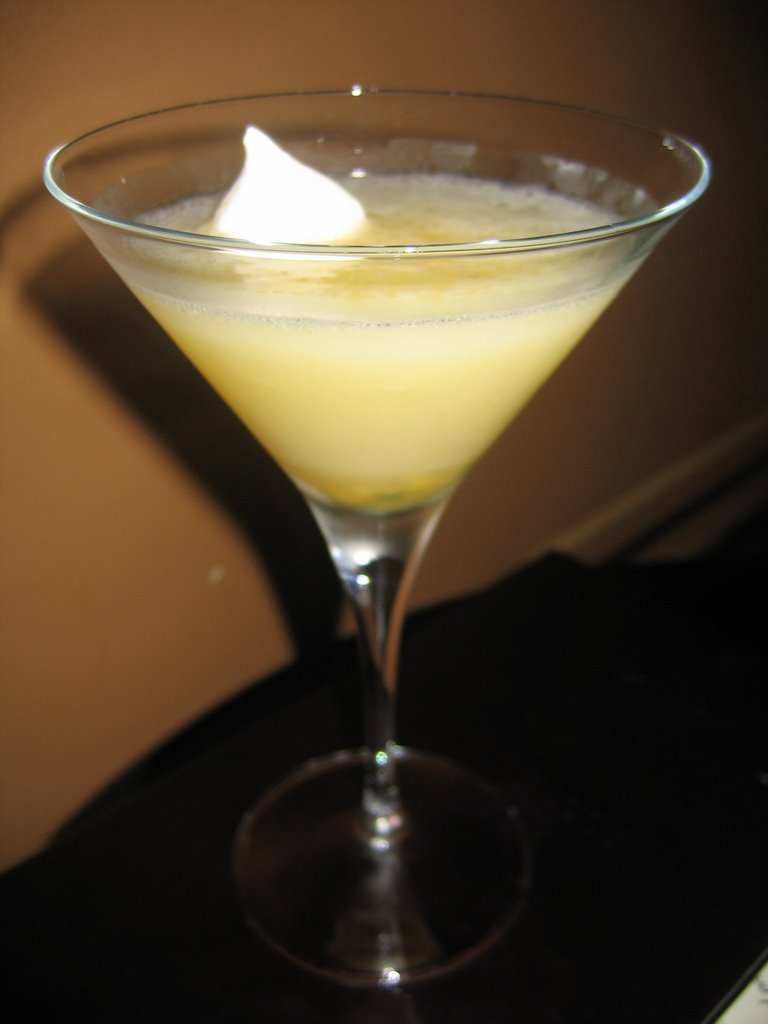
pavlova martini

It's Mixology Monday again and this time the theme is exotic drinks.
I had to think long and hard about this since what is exotic to one person is common to another.
I decided to write about a cocktail that takes something Australian and turns it into a drink and the pavlova martini is the result.
The Arthouse Hotel boasts one of the most interesting and innovative mixologists around. Ben Davidson takes random ingredients and spirits and turns them into delightful signature drinks. He seems to be influenced heavily by the hotel's kitchen and has devised some very interesting cocktail degustation menus, where cocktails are matched to courses of canapès, both savoury and sweet.
In fact, he is a master of liquid desserts such as the blackberry crumble, the sticky date martini, the toffee apple frozen cocktail and, my own favourite, the pavlova martini.
The pavlova is true blue Aussie (it's also an All Black shade of Kiwi too, but let's not go there). What could be better than a base of meringue topped with cream and fresh fruit. Yum!
This strong cocktail combines the delicious elements of the wonderful pavlova into a liquid dessert suitable for any sweet tooth.
Be sure to visit the round-up by Meeta at What's For Lunch Honey?
Enjoy!
Pavlova Martini
Anna's guess on Ben Davidson's recipe. Makes 1.
Ingredients:
90ml 42 Below Passionfruit Vodka
30ml Crème de Framboise
30ml Alizé Gold
30ml egg white, whipped
Method:
1. Combine alcohol with ice and shake until chilled.
2. Pour into martini glass then top with whipped egg white.
3. Garnish with meringue.

Tags: food and drink australia sydney recipe cocktail alcohol vodka pavlova passionfruit liquid dessert mixology monday mxmo mxmoviii
Sunday, 13 August 2006
sahlep, salep, sahlab
I first discovered sahlep in my final year of high school. After a cold day foraging through the second hand clothes at Glebe Markets, we crossed the road to the Badde Manors Café where Emily suggested I try this warm, creamy drink.
I fell in love.
It was also the beginning of a beautiful friendship.
Sahlep, a Turkish winter drink, is made from the dried powdered roots of a mountain orchid. The powder is then heated with milk, sugar and cinnamon to make a thick dairy beverage.
In modern day Turkey, sahlep is used to cure sore throats and coughs and is only served during the cold months. Luckily for me the warm weather started late this year so when I visited Istanbul in April I caught the very end of the season!
Sahlep
Ancient recipe. Serves 2.
Ingredients
1 teaspoon sahlep powder
2 teaspoons sugar
Pinch of cinnamon
1½ cups milk
Cinnamon for dusting
Method:
1. Place all ingredients in a saucepan.
2. Boil, whisking continuously, for 2 – 3 minutes.
3. Pour into two cups, dust with cinnamon and enjoy.
The orchids used for sahlep grow in the mountains of southern Turkey (Orchis Latifolia / Orchis Anatolica). Their tubers are pulled from the ground while the plant is flowering and then they are boiled (in water or milk) before being dried and then ground into a powder.The orchids contain a nutritious starch-like polysaccharide (complex carbohydrate) called bassorin, which accounts for the drink’s thickened consistency.
In Maras, the famous Turkish ice cream Salepi Maraş is a thick sahlep infused concoction. This dessert is boiled, stirred, aerated and churned to produce a chewy substance that doesn’t melt and can even be eaten with a knife and fork.The name “sahlep” refers to the powder, although it is rather unfortunate that this pretty word is an abbreviation from the Arabic “hasyu al-tha`lab” which translates to “fox testicles”. Apparently the tubers look like fox testicles when they first come from the earth.
It’s not surprising then that sahlep is considered an aphrodisiac and, anecdotally, even the word “orchid” derives from the Greek word for testicle.
Before tea and coffee spread so widely, it is believed that sahlep was the beverage of choice in Europe and the Middle East and variations, known as satyrion and priapiscus were certainly consumed in Ancient Roman times. As Priapiscus was a god of fertility and the satyrs were often thought to be a debauched lot, it is assumed that the Ancient Roman drinks were considered aphrodisiacs too.
In Greece in the 1960s, sahlep caused some controversy for local rock band Aphrodite's Child, who noted on their album record sleeve “this album was recorded under the influence of sahlep”. Many thought it was some kind of illegal drug!
Sahlep is my offering to this week’s Weekend Herb Blogging, hosted by Kalyn at Kalyn’s Kitchen. Be sure to check out the ever-growing list of veggie, herb and plant related recipes from around the world.
References:
http://www.mymerhaba.com
http://www.allaboutturkey.com/icecekler.htm
http://www.sbs.com.au/worldfeast/glossary.php?char=S
http://en.wikipedia.org/wiki/Salep
Subscribe to:
Posts (Atom)