Showing posts with label roasts. Show all posts

Wednesday, 1 September 2010

chicken w sumac, za’atar & lemon (m’sakhan)


How does a recipe for Palestinian M’sakhan, a London restaurant, an Aussie blogger, a birthday present and Barcelona all come together into one story?

Because my wonderful pal , Nicki, gave me this cookbook from the London restaurant Ottolenghi for my birthday when we celebrated together in Barcelona!

This birthday I gained an extremely unwanted year, forcibly prodding me into a new decade, something I was not at all pleased about.

Despite this anxiety-ridden turn of events, I managed to celebrate the hideous day with some of my closest friends and my sisters in Barcelona.

Who can complain about that?

Well, I still cried a little but when I blew the candles out.
It’s my party and I’ll cry if I want to, right?

But seriously, what are the chances that so many of your peeps can be on the other side of the world at the same time to meet you in one of Europe’s party cities? It was amazing!

And with my June birthday now a distant memory, last weekend I spent my time busily leafing through the Ottolenghi cookbook, marking out the most beautiful recipes.

There are so many that have caught my eye, but I want to share these particularly exciting options with you:
• Cucumber & Poppy Seed Salad
• Puy Lentils, Sour Cherries, Bacon & Gorgonzola
• Jerusalem Artichoke & Rocket Soup
• Lamb & Beef Meatballs Baked in Tahini
• Roast Pork Belly w Gooseberry, Ginger & Elderflower Relish
• Seared Tuna w Pistachio Crust & Papaya Salsa
• Cheddar & Caraway Cheese Straws
• Lavender & Honey Teacakes
• Plum, Marzipan & Cinnamon Muffins
• Prune & Brandy Truffles

But my cookbook will be used first to make this adaptation of the Palestinian Roast Chicken with Sumac, Za’atar & Lemon (M’sakhan).

As the Ottolenghi crew explain, it’s great served with a garlicky-yoghurt sauce with lemon and warm pita bread. I also made an Ottolenghi salad of Radish, Broad Beans & Green Tahini to go on the side.

The results? DELICIOUS!


Palestinian Roast Chicken w Sumac, Za’atar & Lemon (M’sakhan)

Anna’s adaptation from Ottolenghi: The Cookbook. Serves 2.

Ingredients:
2 chicken marylands
Red onion, finely sliced
4 garlic cloves, crushed
1 teaspoons ground cinnamon
1 teaspoon smoky paprika
¼ teaspoon allspice
2 tablespoons sumac
1 lemon
200ml chicken stock
1 teaspoon smoked sea salt
1 teaspoon freshly milled black pepper
2 tablespoons za’atar
50g pine nuts
20g butter
2 tablespoons chopped flat-leaf parsley

Method:

1. Wash then juice the lemon, then cut the juiced fruit into slices.

2. In a large bowl, mix the chicken with the onions, garlic, lemon juices and slices, cinnamon, smoky paprika, allspice, sumac, salt and pepper. Marinate overnight or at least a few hours.

3. Preheat oven to 200’C.

4. Put the chicken and all its marinade in a baking dish, ensuring the chicken is flat and not touching each other. Put the chicken skin side up.

5. Sprinkle the za’atar over the chicken and onions then roast for 30 – 40 minutes until the chicken is coloured and just cooked through.

6. In the meantime, melt the butter in a frying pan and sauté the nuts with a pinch of salt until golden, stirring constantly. Drain on kitchen paper.

7. Transfer the hot chicken to serving plates and finish with chopped parsley, toasted nuts and a drizzle of olive oil.


I've blogged about sumac before as a Weekend Herb Blogging ingredient, so I'm going to pinch the content directly from my own post. Apologies to myself.

Commence!

Sumac is the name of all 250 species of flowering plants from the genus Rhus.

Also known as sumach, sumak, summak, tanner’s sumach, sommacco, zumaque and sammak, in this particular case sumac refers to the spice created from grinding the Rhus coriaria’s dried berries. This produces a tart, sour deep red-purple powder which is extremely popular in Arabic, Levant, Persian and Turkish cuisine.

Sumac berries form tight clusters of red drupes or bobs. They are harvested just before ripeness and sun dried. In growing regions you can buy whole dried berries whereas the rest of us need to make do with sumac powders. The powder keeps in an airtight container for several months.

The Rhus coriaria comes from the Mediterranean but sumac in general grows in subtropical and warm temperate regions throughout the world. It has been used in Mediterranean cooking since Ancient Rome and is a major souring agent in Middle Eastern cooking, replacing lemon juice, tamarind and vinegars.

There are numerous ways to employ sumac in your kitchen:
• on kebabs, fish or chicken before grilling
• popular in salad dressings, marinades, stews and casseroles
• enhances the flavour of fresh tomatoes and avocados
• mixed with yoghurt and fresh herbs as a dip or sauce
• dusted over feta or labneh cheese
• mixed with olive oil as a dip with bread
• common ingredient in za'atar (a spice mix)

North American sumac is also employed for culinary purposes. Native Americans used smooth sumac (Rhus glabra) and staghorn sumac (Rhus typhina) to make rhus juice, also known as sumac-ade or Indian lemonade. They would soak the sumac berry clusters in water to remove the essence then strain and sweeten the liquid.

Other North American sumac includes Rhus glabra, an excellent leather tanner which produces flexible, light weight and almost white leather products, and Rhus toxicodendron, also known as Poison Ivy.

Sumac is said to have diuretic effects and the assist bowel problems and fever. In the Middle East a sour drink is made from sumac to relieve indigestion.

And one last weird fact: dried sumac wood glows under UV lighting. Who would have thought!

That’s it for WHB for another week. Check out the recap with our host Janet from The Taste Space.

References & Photo Source:
http://en.wikipedia.org/wiki/Sumac
http://en.wikipedia.org/wiki/Image:SumacFruit.JPG
http://www.theepicentre.com/Spices/sumac.html
http://www.taste.com.au/how+to/articles/52/sumac

Sunday, 25 April 2010

harissa roasted lamb


One evening I came home from work to the mouth-watering aromas of this lovely lamb dinner. After I’d mentioned I was craving meat, Jonas prepared this wonderful roast smothered in spicy, tangy harissa. It’s divine served pink with a Moroccan cucumber salad and a side of yoghurt & herb chickpeas.


Harissa Roasted Lamb
Jonas' very own recipe. Serves 4.
Ingredients:
1kg boneless shoulder roast
3 tablespoons harissa (see below)
Salt and pepper, to taste
Method:
1. Cover lamb roast in harissa. Refrigerate for a few hours to absorb flavours.
2. Preheat oven to 160’C.
3. Roast for around 40 – 60 minutes until an inserted knife produces clear juices.

Harissa (North African chilli paste)
Anna’s very own recipe. Makes 1 medium jar.
Ingredients:
2 small capsicums, char-grilled, skin & seeds removed
5 large red chillies, seeds removed & chopped
5 large red chillies, chopped
3 garlic cloves
1 teaspoon cumin seeds, dry-roasted & then ground
1 teaspoon coriander seeds, dry-roasted & then ground
3 teaspoons olive oil
¼ teaspoon salt
1 tablespoon lemon juice
Method:
1. Purée all ingredients in a blender.
2. Pour into a jar and top with a little olive oil to seal. Keep in fridge.

Wednesday, 3 June 2009

roast pork fillet w cider & pistachios

 
This is another of my Autumn inspired dishes and it’s been perfect during the torrential rain Sydney has been experiencing lately.

But I imagine this dish would be equally good as summer afternoon roast if you sat outside and let the warm weather touch your skin.

The colours are so pretty and the flavours are quite elegant. I’m a big fan of this quick and easy roast.


Roast Pork Fillet w Cider & Pistachios
Anna’s recipe inspired by
Stephanie Alexander. Serves 2.
Ingredients:

350g pork fillet
¼ cup shelled pistachio nuts, chopped
1 red onion, sliced
2 garlic cloves, sliced
3 sprigs lemon thyme
½ cup apple cider
Fleur de Sel, to taste
Freshly milled pepper, to taste
Olive oil

Method:


1. Preheat oven to 180'C.

2. Trim the pork fillet of sinews and fat. Rub with olive oil, lemon thyme and pepper. Refrigerate for 30 minutes.

3. Heat some olive oil in a large frying pan. Saute the onions and garlic until oftened then transfer to a baking dish.

4. Heat a little more olive oil on high before browning the pork for 4 minutes then turn and brown the other side for 3 minutes.

5. Remove pork to the baking pan and sit on onions.

6. Deglaze the frying with apple cider. Simmer for 5 minutes until reduced a little.

7. Pour over pork then sprinkle pork with pistachio nuts and fleur de sel.

8. Bake in the oven for 20 minutes or until cooked through but still pink and tender.

9. Transfer juices to frying pan and reduce a little further.

10. Serve pork in slices, drizzled with pan juices and accompanied by a salad of bitter greens or roasted brussels sprouts and baked potatoes.


This dish relies heavily upon the fragrant flavours of lemon thyme, which is my theme ingredient for Weekend Herb Blogging.

Lemon thyme (Thymus citriodorus) is a cross between common thyme and the more aromatic thymus pulegioides. This hybrid produces a gorgeous citrus scented herb with medium green foliage and small lilac flowers.

Native to Europe, Asia, northern Africa it is used in the cuisines of most countries in these regions as well as the Caribbean

Thyme was used by the Ancient Egyptians for embalming, the Ancient Greeks in their temples, by Romans to purify their rooms and by Medieval Europeans to ward away nightmares. Hmm?

Thyme symbolises courage and is also known as a good source of iron.

This is my entry for Weekend Herb Blogging, hosted by WHB's very own manager Haalo from Cook (almost) Anything At Least Once.

Other lemon thyme recipes:
Dried Strawberries & Lemon Thyme Shortbread - Cupcake Muffin
Lemon Thyme Bars - Not Eating Out in New York
Lemon Thyme Chicken Nuggets - Butter & Sugar
Lemon Thyme Crème Brûlée - Chocolate & Zucchini
Lemon Thyme Cupcakes - Fresh Approach Cooking
Lemon Thyme Curd - Tartelette
Lemon Thyme Gimlet - Slashfood
Lemon Thyme Green Beans - Sugar & Spice
Lemon Thyme Sorbet - Andrea Meyers
Lemon Thyme Tea Bread - Cafe Lynnylu
Mushroom & Lemon Thyme Soup - Nami Nami
Noodles w Creamy Chicken & Lemon Thyme - A la Galadrielle...
Pan Seared Scallops w Lemon Thyme Drizzle - That's Not What the Recipe Says
Pork w Lemon Thyme Sauce - Bear Necessities
Ricotta Gnocchi w Lemon Thyme Butter Sauce - Technicolor Kitchen
Vodka-Thyme Lemonade - Appetite for China
Zucchini Carpaccio w Avocado & Lemon Thyme - The Wednesday Chef

References:
http://www.backyardgardener.com/plantname/pda_1be1.html
http://en.wikipedia.org/wiki/Thyme
http://www.villageherb.com.au/herb_info.htm

Saturday, 7 February 2009

warm roasted vegetable salad


Families come in all shapes and sizes.

Until I was 7 I grew up with a mother, a father and two brothers. Then my parents divorced and I suddenly had two extra sisters, a step father and an extra mum and two wonderful extra grandparents.

Not to mention my stepsisters' mother and her new husband and his kids. And my mother's two close female friends their children. Whoa!

You get the picture. It's a mega tribe that was not without its fights and frictions but now that we're all adults the bad egg was weeded out and the true, loving family members remain.

I'm reflective of all of this because one of my closest friends just had a baby. She had planned, so hopefully, to have a home birth but her son showed his first streak of parental rebellion. He refused to come out and too late grew too big for my friend’s tiny frame and she ended up having to have a caesarean.

I felt bad for her because she's wanted that home birth so much, but then I also felt so happy for her that she was able to make all the right choices throughout her 9 months that led to a beautiful, healthy boy - at 9.1 pounds no less (4.1kg)!!!

She is only my second friend to have a child so it's all very new (and frightening!) to me. It makes me think about my own family and when Jonas and I will decide to have kids.

To be honest, I'd rather someone just hand me a 2yr old and say "it's yours!" because babies and pregnancy do not interest me in the slightest. But I highly doubt some tired mother would hand over her toddler in the supermarket and let me keep it, so it looks like I'll just have to grow my own.

I am so jealous of men’s roles in the baby-making process. As a woman I feel utterly ripped off.


Somehow, this little whinge leads into the February Monthly Mingle theme of "healthy family dinners". The host is Michelle from What’s Cooking Blog.

Although most people think “kids” when they think “family” not everyone has kids and so my contribution to this healthy family dinner theme is a recipe for my own little family of two: Jonas and me.

Since he is a vegetarian, my recipe contains no meat. And since it’s winter in the northern hemisphere, where most of my blogging pals and readers reside, I decided to go with a recipe we cooked last winter.

Enjoy!


Warm Roasted Vegetable Salad

Jonas’ very own recipe. Makes ½ cup.

Ingredients:

250g cherry tomatoes
6 potatoes, chopped into chunks
¼ butternut pumpkin, chopped into chunks
1 parsnip, chopped into chunks
150g baby spinach
3 garlic cloves, crushed
1 teaspoon sumac
Olive oil

Method:


1. Preheat oven to 180’C.

2. In a baking tray, toss root vegetables with olive oil and crushed garlic.

3. Bake for 20 minutes. Then add another baking tray holding cherry tomatoes tossed with sumac and olive oil.

4. Bake for another 20 minutes until tomatoes are soft and starting to wrinkle and burst.

5. Check the root vegetables and remove when they are tender.

6. Drain the excess olive oil from the tomatoes and vegetables to use in sauce.

7. Toss the warm vegetables with the baby spinach and herb and mustard sauce (recipe below). Serve warm.

Note:
cheese in this salad would taste very good too.


Herb & Mustard Sauce
Jonas’ very own recipe. Makes ½ cup.


Ingredients:

3 tablespoons fresh chopped chives
2 tablespoons fresh chopped parsley
1 tablespoon fresh chopped dill
2 tablespoons wholegrain mustard
1½ tablespoons white wine vinegar
5 tablespoons olive oil (use oil from roasting vegetables)
Freshly milled salt and pepper, to taste

Method:

1. In a food processor or blender, combine the herbs, mustard and vinegar until pureed. Add salt and pepper.

2. With the motor running, slowly add the olive oil until it emulsifies with the sauce. Taste to ensure acidity is balanced and adjust as needed.

Note:
Use as much of the olive you can salvage from the roasted tomatoes and vegetables but ensure at least 5 tablespoons are added to the sauce.

Tags:

Saturday, 23 February 2008

roast chicken w lemon & thyme

One of the set of tasks within my 2008 Food Resolutions was to recreate certain food memories and one which is certainly close to my heart was my mother’s roast chicken.

I suppose since my mother died when I was only a young adult I’d never gotten the chance to learn her recipes or even to learn how to cook properly myself.

I’m only glad that I listened carefully when she talked about food and cooking. What had seemed like mum’s general chatter back in those days, has led me to recipes which would otherwise have been lost.

Her roast chicken is just once such dish. She said she’d read a Stephanie Alexander recipe and had been inspired by the flavours. I remembered her using lemon, garlic and thyme and stuffing the lemons into the chicken cavity but I couldn’t remember much more. With the internet I could Google the particular recipe and add my mother’s additions and variations to come up with the roast chicken I had adored.

My little sister, Amy, had memories of this dish too. She remembers mum, during the latter stage of her illness, perched on a stool in the kitchen and shouting orders on how to prepare the dinner. She was only 17 and putting her hand into the raw chicken cavity was a disgusting memory Amy still can’t erase.

I cooked this recipe for my two sisters in a little remembrance dinner one Sunday. We each poked and prodded and checked whether the roast was done. When we took turns carving the meat I was so excited to see that my very first roast chicken came out pink and moist and perfect. I guess mum was guiding me through it too.

Lemon & Thyme Roast Chicken
My mother, Kay’s, recipe. Serves 4.
Ingredients:

1 x 1.6kg chicken
2 lemons, cut into slices
3 cloves of garlic, roughly chopped
Bunch of thyme
Freshly milled salt and pepper for seasoning
Small knob of butter
Olive oil
Method:
1. Preheat oven to 180’C.
2. Clean the chicken and pat dry with kitchen paper.
3. Rub a lemon half all over the chicken skin and within the cavity. Do the same with a piece of cut garlic.
4. Stuff the lemons, garlic, thyme and butter in the cavity and more lemons, thyme and garlic between the breast and the skin. The skin should be loose enough to get pieces underneath.
5. Pat salt and pepper over the skin then drizzle with olive oil
6. Put chicken on a roasting rack in a large baking dish. Elevating the chicken means hot air with move underneath it and help even the cooking time.
7. Roast in the oven for 1 hour (fan forced) or 1.5hrs for a regular oven.
8. Chicken is ready when pierced with a skewer and juices run clear or when the drumstick is easily loosened when jiggled.
9. Allow to rest for 10 minutes before carving.
Note:
*The trick is to cook the chicken at 180’C for 20-30 minutes for every 500g of chicken (depending on your oven strength).
*If you want to turn the juices into gravy, remove chicken from baking dish and pour juices into a saucepan, removing the fat. Deglaze with white wine and scrap pan to clean and integrate flavours cooked onto the pan.
*You can also add vegetables, such as potatoes and carrots, to the roasting pan and bake together with the chicken.

The name thyme covers a genus (Thymus) of around 350 herbaceous plants and shrubs, native to Europe, North Africa and Asia. The stems are narrow and woody while the leaves are dense and evergreen in most versions.

Thyme has been used for millennia for a variety of different purposes: Ancient Egyptians used it for embalming; Ancient Greeks scented theirs baths and candles with it; Romans used it to flavour cheese and alcohol; and in Medieval Europe it was used to aid sleep and prevent nightmares.

It has been believed to bring courage since the times of Ancient Greece and during the Middle Ages in Europe knights and warriors would receive sprigs as gifts.

It’s essential oil contains 20-55% thymol, which is an antiseptic and apparently the active ingredient in Listerine mouthwash. Previously thymol was used to disinfect bandages; kill foot fungus; treat coughs, bronchitis and throat inflammation; and aid childbirth. Gargling water that has been boiled with thyme can be a useful mouth and throat antiseptic.

Unlike other herbs, thyme retains much of its flavour after being dried and is used widely in the cuisines of Spain, France, Italy, Turkey, Lebanon and the Caribbean. It pairs well with game meat, lamb, chicken, eggs, tomatoes and cream. Thyme is also a feature of famous spice blends such as bouquet garni, herbes de Provence and za'atar.

This is my contribution to Weekend Herb Blogging, of which last week’s recipe also featured thyme. It’s a herb I’ve only recently started to appreciate, so you’ll be seeing quite a few thyme recipes over the coming weeks.

Check out Lia's WHB round-up at Swirling Notions to see what everyone else has been cooking.


References & Photo
http://en.wikipedia.org/wiki/Thyme
http://farm2.static.flickr.com/1052/545212109_703ccc83c8_b_d.jpg

Tags:

Sunday, 18 November 2007

roast pork w apples & prunes

Next Thursday is Thanksgiving in the USA, but since we don’t get a public holiday in Australia I thought I’d cook my father his Thanksgiving lunch today instead.

I put on a bit of a feast:
Canapés
Pickled Nectarines w Ricotta & Prosciutto
Honey, Brie & Fig on Fruit Toast
Entrée
Parmesan Mousse w Red Wine Pears
Main
Roast Pork Loin w Prunes & Apples
Sides
Garlic & Lemon Broccoli
Green Beans w Truffle Butter
Baked Carrots w Cinnamon & Pine Nuts
Dessert
Pumpkin Pie w Candied Pecans

It was the first time I’d made most of these dishes, and I was particularly nervous about the Pumpkin Pie, but everything turned out well and my stepmother even ate a carrot, something she loathes doing.

I tried to choose dishes that symbolised Thanksgiving traditions and flavours, while recognising that it’s summer in Sydney and the weather is 31’C (90’F). I opted for autumn flavours but served most of the dishes chilled or at room temperature.

After composing the menu I noticed that all the savoury foods contained fruit and the dessert was made from vegetable!

I will slowly post all the dishes we ate, but today I’m blogging about the main course: Roast Pork w Apples & Prunes.

This is one of my favourite roast recipes. I first tried it in New York when I was living with Paola. She hosted a special dinner for some senior colleagues and made this scrumptious roast.

The pork is sweet and fatty so the acidity of the green apples cuts across this slightly while the prunes matches with sweetness. The fruits break down a little and provide a nice chucky sauce for the meat. Yum!

Roast Pork w Apples & Prunes
Anna’s very own recipe. Serves 4-5.
Ingredients:
1kg pork loin roast, without crackling
3 garlic cloves
3 green apples
250g pitted prunes
Olive oil
Salt and pepper to taste
Method:
1. Preheat oven to 180°C.
2. Peel apples, core and chop into cubes.
3. Crush all three garlic cloves and mix with apples and prunes.
4. Cut one garlic clove in half and rub over surface of roast.
5. Oil a baking dish, add pork and coat surface in oil. Roast in oven for 15 minutes.
6. Add apples and prunes to baking dish. Return to oven for another 30 minutes.
7. Check pork is cooked through by inserting a skewer: if juices run clear pork is done.
8. Check apples and prunes have softened.
9. Cover with foil and sit for 10 minutes after cooking.
10. Serve slices of roast pork with apples, prunes and juices.
Notes: Always cook pork for 45 minutes per kilogram. Check roast every 30 minutes to baste with juices. Fruit will take approximately 30 minutes to soften.
Variations: Omit apples and prunes for fig version instead. Mix 250g fig jam with ¾ cup orange juice and ¼ boiling water to make runny sauce. Combine 250g chopped dried figs with jam sauce, add salt and pepper to taste, mix well. Sit 15 minutes before adding to roast. You could also substitute with apricot or cherry.

Maybe I’m a little slow on the up-take, but it wasn’t until I was 19 and living in Italy that I realised prunes were dried plums. How did I figure it out? Well in Italy, the word for plum is “prugna” so it suddenly dawned on me!

Prune producers usually use Prunus domestica, but more than 1000 cultivars of plums are grown for drying. They are usually freestone cultivars, where the stone can easily be dislodged, rather than cling styles.

Prunes have high levels of unique phytonutrients classified as phenols. These antioxidants neutralise a very dangerous oxygen radical called superoxide anion radical prevent oxygen damage to fats. As WHFoods put it “Since our cell membranes, brain cells and molecules such as cholesterol are largely composed of fats, preventing free radical damage to fats is no small benefit.”

In a quarter-cup of prunes, a person can get 16.9% of the recommended daily intake of vitamin A, 9% of potassium and 12.1% fibre.

The fibre balances blood sugar levels and helps to prevent Type 2 Diabetes as well as treat constipation, lower cholesterol and increase iron absorption.


When selecting prunes choose ones that are shiny, soft, sticky and plump. Check carefully for mould, dryness or hardness.

Everyone’s favourite Klingon, Worf, declared that prune juice was a “warrior's drink!" and if Worf likes it, then prunes are OK by me.

Our WHB hostess this week is Vanessa from the brilliantly titled blog What Geeks Eat. I was only recently discussing how geeky all us food bloggers are as we snap away at dinner parties and restaurants. We really are a nerdy bunch, in the best possible way!

And in the lead up to Thanksgiving, don't forget about the Festive Food Fair, where you can blog about your special occasion food. Entries due by Sunday 9 December.

References:
http://www.whfoods.com/genpage.php?tname=foodspice&dbid=103
http://en.wikipedia.org/wiki/Prune


Tags:

Saturday, 10 February 2007

roasted apricots w apricot fool

I used to adore stone fruit as a kid. We lived on the northern outskirts of Sydney and many Greek and Italian migrants had set up orchards of peaches, apricots, plum and nectarines. You could buy them from the side of the road in big boxes and eat them fresh.

These days I find it very hard to get good stone fruit. They never have that strong ripe smell and the flesh is often floury rather than tender and juicy. One way to combat the sad side effects of mass food production is to cook stone fruits. I find this brings out the flavour and intensifies the sugars. Roasting, poaching, and grilling can make a difference to a bad batch.

I also like to make apricot or peach pies. My grocer sometimes sells bags of overripe fruit for just this purpose and Jonas is always happy when I bake shortcrust pastry filled with steaming fresh fruit.

In this particular recipe, I roasted the fruits then cooled them to room temperature before serving. The addition of lemon juice and zest to this mix makes for a slight sour citric edge so if you want sweet apricots, omit the juice. I think I will next time.

Roasted Apricots w Apricot Fool
Recipe from Australian Gourmet Traveller February 2007. Serves 6.
Ingredients:
110g (½ cup) golden caster sugar
11 apricots, halved and stones removed
180ml (¾ cup) dessert wine (I used Botrytis Semillon)
Juice and zest of 1 lemon
6 sprigs thyme
300ml thickened cream
Flaked almonds, toasted, to serve
Method:
1. Preheat oven to 190’C. Scatter sugar over the base of roasting tray. Place apricots, cut side down, over the sugar. Press firmly to coat then turn over.
2. Drizzle dessert wine and lemon juice over apricots, the scatter with lemon rind and thyme.
Roast for 25 minutes or until apricots are just cooked. Cool completely.
3. In a food processor, purée 4 roasted apricot halves and 2 tablespoons roasting juices until smooth.
4. Whip cream until soft peaks form. Fold through whipped cream to form a ripple.
5. To serve, spoon apricot fool into bowls, top with apricots and then roasting juices and scatter with almond flakes.

This week Weekend Herb Blogging is back at home in Kalyn’s Kitchen. Be sure to head over there to see what everyone else has been cooking.


Tags:

Saturday, 15 July 2006

italian veal roll w basil

Weekend Herb Blogging provides an excuse to cook delicious meals using fresh and unique herbs and vegetables. It also provides an opportunity to use common ingredients in new and exciting ways.

Take this Australian Women’s Weekly recipe which pairs basil with a stuffed veal roast. It is a great dish for summer buffets or picnics because it can be made up to two days beforehand and is eaten cold.

The only variation I made to this recipe was to increase the garlic from one clove to three, because you can never have too much garlic.

Also, I increased the number of salami slices. You’ll probably only use around 12 slices but it’s better to have more as a backup. You can use any leftovers in a sandwich anyway.

Italian Veal Roll w Basil
Australian Women’s Weekly recipe. Serves 4 as main or 8 with buffet.
Ingredients:
1 tablespoon olive oil
1 medium onion, finely chopped
3 cloves garlic, crushed
250g pork and veal mince
½ cup grated parmigiano
¼ cup basil, chopped
¾ stale breadcrumbs (45g)
16 slices spicy salami
¼ cup sun dried tomatoes, drained (35g)
1kg veal shoulder, boned
Method:
1. Preheat oven to 180'C.
2. Heat oil in pan, add onion and garlic and cook until onion is soft. Cool.
3. Combine onion, mince, parmigiano, basil and breadcrumbs in medium bowl.
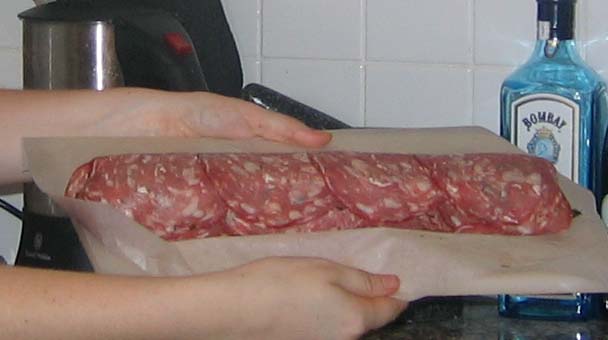
4. On a sheet of baking paper, arrange salami to form a 17cm by 21cm rectangle, overlapping the edges of the salami.
5. Spread the mince mixture evenly over the salami.
6. Place the sun dried tomatoes in a line along the centre of the mixture.
7. Roll up salami using paper as a guide.
8. Trim excess fat from veal. Pound veal with mallet until even thickness.
9. Place salami roll on veal, wrap veal around to enclose salami and secure with string every 3cms.
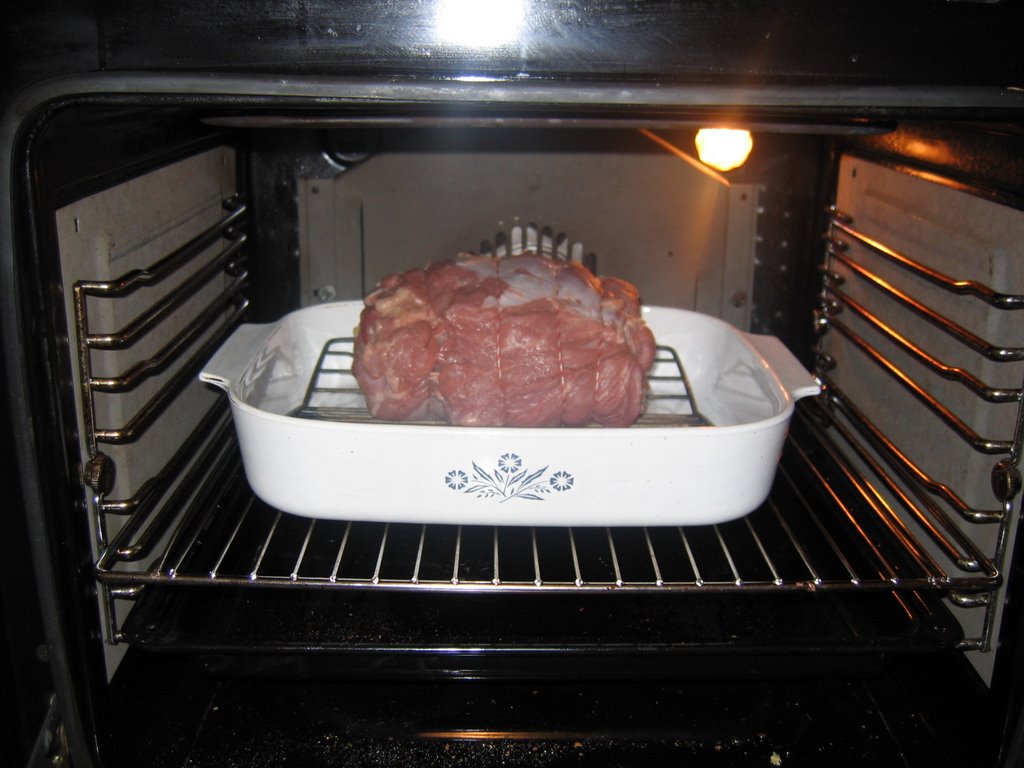
10. Place on a baking dish and bake in oven for approximately 1¼ hours or until cooked through.
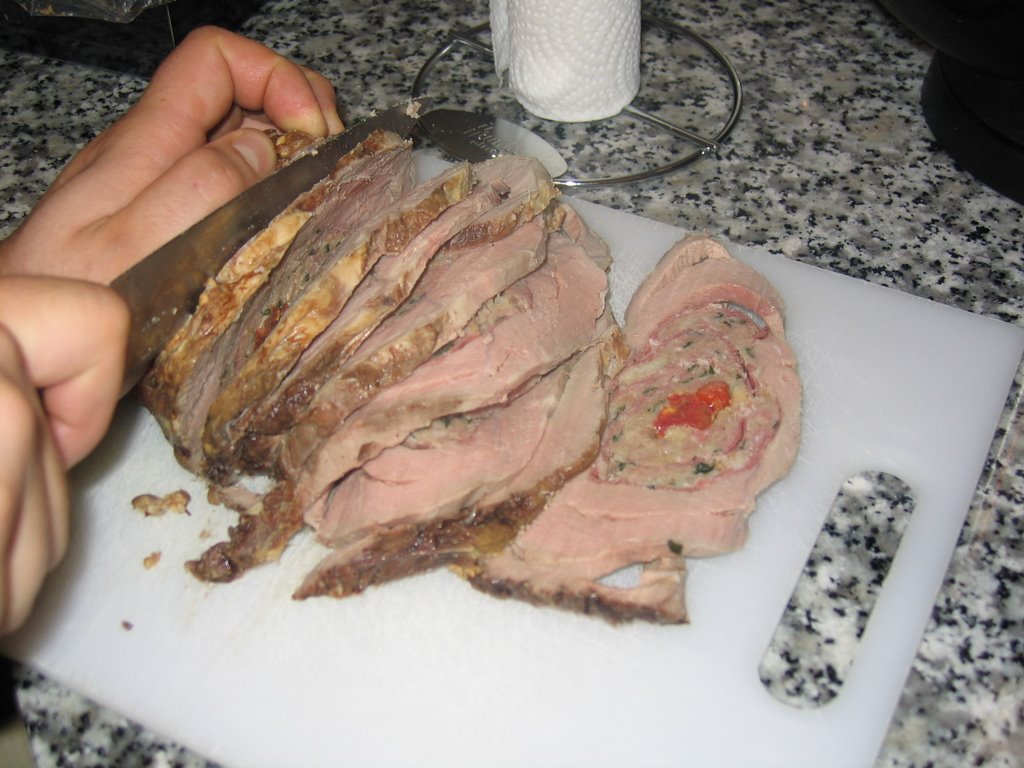
11. Cover and refrigerate for several hours. When cold, cut into slices and serve.

make a roll

bake until cooked through

allow to cool, then refrigerate

carve into slices and serve

Basil is a very versatile herb. From the Lamiaceae (Labiatae) mint family, it is an annual herb in cooler climates and a perennial in warm, tropical climates.

It adapts well to many different cuisines, but I think it's most at home in Mediterranean and South-East Asian food. Of course each cuisine uses different kinds of basil, but that’s half the fun.

There are over 40 varieties of basil ranging in size, flavour and foliage and flower colour. In English speaking countries, the most commonly known and grown is Ocimum basilicum “sweet basil” which has a slightly aniseed, peppery flavour. Asian basils are said to have more of a clove-like flavour, which I have experienced to be true.

It is believed that basil originated in tropical Asia (probably India), where is has been cultivated for around 5,000 years. According to one website, in India the herb is linked to the gods Krishna and Vishnu and a leaf placed on the chest of the deceased is said to be a token to gain them entry to heaven.

From the Bible, apparently Salome hid John the Baptist’s severed head in a pot of basil!

The English word for basil came from the Greek βασιλευς (basileus), meaning “king”, and according to Wikipedia it is believed to have grown above the spot where St. Constantine and Helen discovered the Holy Cross.

Basil is used all over the world in many different cuisines. Googling it I came up with a variety of ways to use it such as deep fried basil leaves with chicken (Taiwan); fresh shredded basil in soups (China); pistou (France); and as an addition to Vietnam’s staple meal pho.

In Italy it can be blended with pinenuts to make a pesto, torn over tomato and mozzarella in a caprese salad or for a sweet option it is paired excellently with strawberries, sugar and a little balsamic vinegar.

One type of basil I have never had the fortune to try is kemangi “'Lemon basil' has a strong lemony smell and flavour, very different from those of other varieties. It is widely used in Indonesia, where it is called kemangi and served raw, together with raw cabbage, green beans, and cucumber, as an accompaniment to fried fish or duck.”

Some basil seeds even swell and take on a jelly-like form which is used in drinks in Asia. I have tried these drinks before and, although I would consider myself an adventurous eater with a very tolerant palate, I found them to taste just like dirt. Yuck! Not for me.

In medicine basil has been used for almost every ailment you can imagine, but most commonly in the West for indigestion, wounds and bruises, flatulence and water retention. In Asia it was also used for indigestion as well as ear aches, inflammation, bad breath and kidney problems.

Take a moment to check out more Weekend Herb Blogging from around the world, hosted by Kalyn at Kalyn’s Kitchen.

Related Posts with Thumbnails