Sunday, 29 July 2007

thon à la provençale

If I have calculated correctly, this is my 50th time joining Weekend Herb Blogging, an event founded and popularised by Kalyn from Kalyn’s Kitchen. More recently (so Kalyn has more free time) the hosting of this event has been shared throughout the blogosphere and this week the host is another Anna (fab name) from Anna’s Cool Finds.

My recipe this weekend is a good cross-over recipe because it’s perfect for both summer and winter.
Thon à la Provençale (Provencale Tuna)
Recipe by Andy Harris in Gourmet Traveller Magazine July 2006. Serves 4.
Ingredients:
4 x 5cm thick tuna slices
60ml (¼ cup) red wine vinegar
2 tablespoons extra-virgin olive oil
1 large red onion, cut into 8 wedges
1 lemon, sliced and seed removed
5 fresh bay leaves
12 cherry tomatoes
125ml (½ cup) dry white wine
16 black Niçoise olives
250ml (1 cup) tomato passata
1 tablespoon finely chopped flat-leafed parsley, to serve
Method:
1. Preheat oven to 180’C.
2, Combine tuna and vinegar in a non-reactive bowl, cover with plastic wrap and stand for at least 30 minutes, then drain and pat dry on paper towels.
3. Drizzle 1 tablespoon of olive oil in the base of a large baking dish.
4. Overlap tuna, with two onion wedges, a slice of lemon and a bay leaf between them.
5. Scatter cherry tomatoes and remaining bay leaves on top.
6. Season to taste with sea salt and freshly milled black pepper, then drizzle remaining olive oil and pour over wine.
7. Cook for 30 minutes or until golden and liquid has reduced.
8. Add olives and passata to dish and cook for another 15 minutes.
9. Scatter with parsley and serve.


Tags:

Saturday, 21 July 2007

jamu kunyit


This post contains a recipe for a Balinese health drink, but before I get to that I thought I’d share some photos from our honeymoon in Bali (wedding photos here for those interested).

If you want to skip straight to the jamu, just scroll down to the bottom of this post. You can't miss the bright orange liquid!

~~~

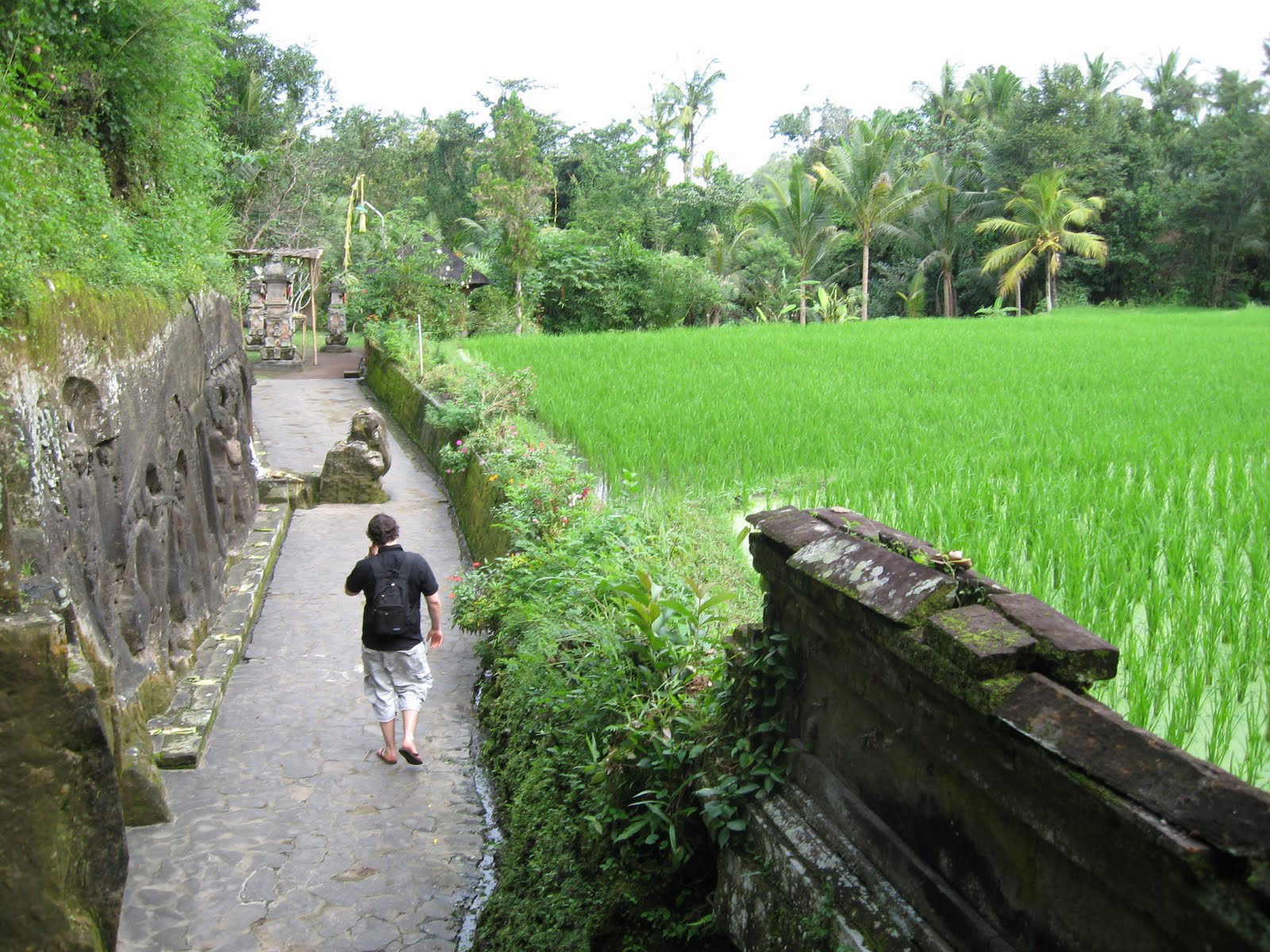
This first photo, up above, is Jonas walking along a rice field at Yeh Pulu near Ubud.


Pura Dalem Agung - a holy temple in the Monkey Forest of Ubud.


This is Goa Gajah (Elephant Cave) which was carved in the 11th century. During religious holidays the Balinese visit and make offerings.


Next to the Elephant Cave were these fountains of fresh water for bathing. The Balinese use the many fresh water pools and ponds to wash their clothes, do their cooking and clean themselves, but I suspect these baths spout holy water and are used for rituals since they were within the temple complex.


The spectacular rice terraces of Jatiluwih which means "truly wonderful". A farmer prepares the rice fields for planting.


In Hindu lore, Kumbakarna was said to be a giant and helped his evil brother Ravana, the demon king, to kidnap Sita then fight the god Rama and the monkey general Hanuman. Here he is fighting Hanuman's monkey soldiers.


In the village of Tapaksiring is Gunung Kawi, a series of rock cut candi (shrines) built in the 11th century. It's said to be Bali's oldest and largest monument. Each candi is said to represent various 11th century Balinese royals.


This old lady looks after this statue of Ganesh and encourages people to make offerings (ie give her cash). She flicked a lot of holy water on Jonas and I and said her only two words in English "mamma and pappa". I could tell she was a cheeky old bird!


Pura Ulun Danu Bratan - which translates to the temple at the end of lake Bratan.


The Balinese are Hindu and we happened to arrive during one of their most important religious festivals - Galungan - a time when the gods visit earth. There were a lot of ceremonies and religious procession and here you can see the Barong (a lion and dog hybrid) which is accompanied by drums and dances around like a Chinese dragon.


It's very interesting that the Balinese have no qualms about presenting statues of scary demons alongside those of friendly elephants or happy monkeys. There was something extra sinister about this lashing tongue and the terrified woman in the demon’s arms.


Pura Batu Bolong - the temple of the hole in the rock


This was our very first hotel. Barong Resort in Ubud. We had our own gorgeous courtyard and pool and they decorated our room with honeymoon flowers. Check out that massive bathtub filled with flowers!!!


And this was our second hotel, Sesari Bali in Seminyak. We had huge outdoor living spaces, a 3x7 metre pool and even an outdoor bathroom with massive tub and two showers.

Hope you enjoyed the holiday slide show ;)

Other Bali honeymoon related posts are:
Balinese cooking class
Dining out in Bali
Sirsak - soursop fruit
Salak - snakefruit

Now, onto my Weekend Herb Blogging.

Jamu Kunyit

I am glad I uploaded almost all of this post on Monday, since I have been seriously ill for the past few days. Jonas and I both caught a killer flu which we still haven’t shaken even after 5 full days in bed and we’ve been getting fevers of around 40’C (104’F)! Apparently it’s hitting the young and healthy the hardest since it preys on the body’s ability to protect itself so the stronger your immune system is the worse you get hit. Very scary.

So I’m glad that I only have to jot down a few sentences on top of notes and photos I’d already uploaded or otherwise I wouldn’t be joining in this week’s Weekend Herb Blogging. My ingredient this week, turmeric, is actually a rhizome rather than a herb, so I guess I’m cheating a bit.

Given my state of health at the moment though, it’s very apt that I’m presenting a jamu, a drink recommended by the Balinese cooking instructor at Casa Luna as a cure for almost any ailment.

Jamu basically means “tonic” or “cure-all” and is a system of local healings throughout Indonesia. It seems that most jamus are elixirs, but some can be body treatments such as creams or poultices.

In this jamu, fresh turmeric root is juiced then mixed with honey, lime juice and water to create a refreshing, earthy drink.

The brightly coloured turmeric stains your tongue but you can feel it seeping through your body doing good things to you. I only wish I could get my hands on the ingredients, but since both of us are sick we’re cooped up in our home relying on home delivery.

Jamu Kunyit

Anna’s version of a Balinese medicinal drink. Serves 1.

Ingredients:
100g fresh turmeric root
100ml lime juice
1 ½ tablespoons honey
Water

Method:
1. Juice turmeric.
2. Mix with honey and lime juice.
3. Top with water, mix and drink.


Turmeric is heavily used in Ayurvedic medicine. It has antiseptic and antibacterial qualities, takes on similar effects as fluoride for teeth, heals psoriasis and joint inflammation, helps with digestive problems and more recently is being used to treat depression.

In the West they are realising that curcumin, the active ingredient in turmeric, can help all matter if ailments including pancreatic cancer, Alzheimer's and cystic fibrosis.

Tumeric is also used in the cosmetic industry in sunscreens, hair removal products and scar treatments.

It’s nice that this Weekend Herb Blogging is being hosted by The Chocolate Lady at In Mol Araan, because I imagine she’ll enjoy this Balinese tonic.

Tags:

Wednesday, 18 July 2007

chorizo w apple cider vinegar

Chorizo is a strong, flavoursome sausage from Spain.

The spicy kick and fatty texture complement each other perfectly and the fresh, crisp apple in this recipe adds extra zing for a perfect tapas dish.

Chorizo w Apple Cider Vinegar
Anna’s very own recipe. Serves 4-6.
Ingredients:
4 chorizo sausages, sliced on the diagonal
1 apple, peeled, cored, seeded and julienned
3 tablespoons of apple cider vinegar
Method:
1. Heat a pan and fry chorizo until browned on each side.
2. Add apple cider vinegar to the hot pan and toss chorizo to coat.
3. Place in serving dish and scatter with apple pieces. Serve hot.

Tags:

Saturday, 14 July 2007

soupe d'avocat abidjanaise (avocado soup)


This recipe from Côte d'Ivoire seems to be all over the internet and would be great for those currently experiencing warm summer days in the northern hemisphere.

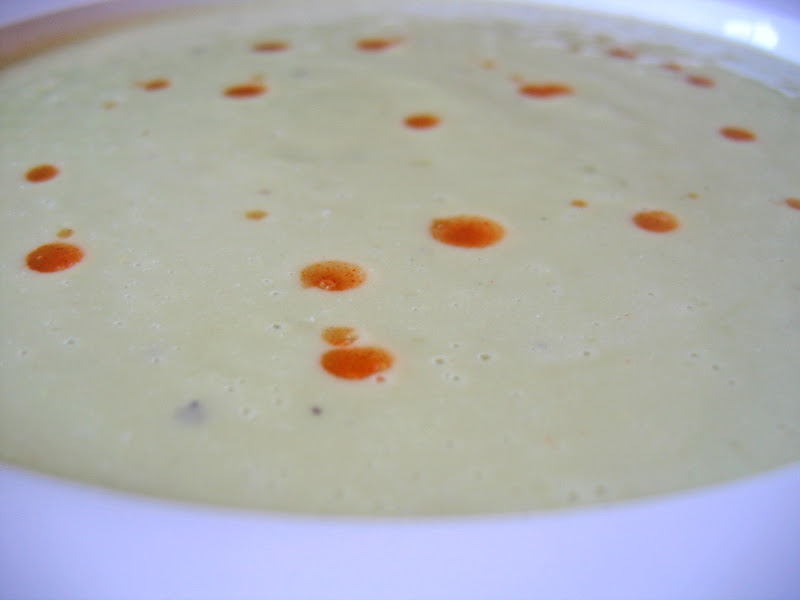
The thick soup has a wonderful creamy texture and the lime juice and spicy Tabasco cuts through perfectly.

In Côte d'Ivoire they have purple, thin skinned avocadoes which are not always readily found outside Africa, but other avocado types will do the job regardless.

Now that I've added Côte d'Ivoire, I've managed to cook and post recipes from 39 countries!


Soupe d'Avocat Abidjanaise (Abidjan Avocado Soup)

This recipe comes from Soup Song. Serves 2.
 

Ingredients:
1 very ripe avocado
400ml cups cold vegetable stock
¼ cup lime juice
3 heaped tablespoons plain yoghurt
2 generous splashes of Tabasco
Salt and black pepper to taste

Method:

1. Puree avocado flesh in a blender. Gradually add the stock and continue processing until smooth.

2. Blend in the lime juice, yoghurt, Tabasco sauce, and salt and pepper. Refrigerate for at least one hour.

3. When ready to serve, spoon into bowls, top each with a thin lime slice, and sprinkle a little Tabasco sauce over each portion.

Oil painting by Michael Naples


Côte d'Ivoire, or the Ivory Coast, is a small West African nation bordering Liberia, Mali, Guinea, Ghana and Burkina Faso. It gained independence from France in 1960 and was then led by moderate Félix Houphouët-Boigny until the 1990s. After he died the country feel into civil war. Although this disrupted their economic development, Côte d'Ivoire is still one of the most successful West African countries.

The people in Côte d'Ivoire are culturally diverse and have around 65 different languages between them. French is the official language that unites the population.

Most people are either Catholic or another form of Christianity, although there is an animist population and increased migration from neighbouring countries means a significant Muslim population also.

According to Wikipedia, 4% of the population is of non-African ancestry (mostly descendants of French colonists as well as Vietnamese and Spanish citizens and missionaries from the United States and Canada.


The word avocado comes from an Aztec language (Nahuatl) ahuacatl, via Spanish aguacate and means “testicle”. Perhaps because of its appearance, the Aztecs believed avocadoes were an aphrodisiac and called it "the fertility fruit". Apparently during avocado harvesting, virgins were kept indoors to prevent any promiscuity taking place.

This reputation stuck with the avocado for such a long time and many people in South America wouldn’t eat it because they wanted to appear wholesome. Companies had to undertake serious PR campaigns to dispel the myths and get the fruit out to the public.

The Nahuatl word ahuacatl makes up other words like ahuacamolli, meaning "avocado soup/sauce” which the Spanish transformed into guacamole.

In 2005, the world’s top ten avocado producing nations were, in order: Mexico, Indonesia, USA, Colombia, Brazil, Chile, Dominican Republic, Peru, China and Ethiopia. As trees need well aerated soils and subtropical or tropical climates to thrive, this makes sense.

Propagation by seed takes around 5 years to produce fruit and the quality is never as good as the parent tree. Commercial plantations therefore graft new seedlings.

Avocadoes mature on the tree but ripen once harvested. The fruit is high monounsaturated fat contents and contains 60% more potassium than bananas, vitamin Bs, vitamin E, vitamin K and folate.

In Brazil, Vietnam, the Philippines, Jamaica and Indonesia avocadoes are blended with sugar and milk to create a milkshake.

It is also interesting to note that avocado foliage, skin and pits are said to poison animals such as birds, cats, dogs, cattle, goats, rabbits and fish.

Weekend Herb Blogging is being hosted by Susan from Food Blogga but if herbs and veggies don't tickle your fancy then I recommend you check out her post on the biggest lobsters I've ever seen.


References:
http://en.wikipedia.org/wiki/C%C3%B4te_d'Ivoire#Culture
http://en.wikipedia.org/wiki/Avocado


Tags:

Wednesday, 11 July 2007

grilled chipotle oysters

I love seafood and although it seems to suit summer’s warmer weather, in the chill of winter I still crave it.

In order to satisfy my obsession with oysters I developed an amazing way of devouring these little things that just beats anything else I’ve tried.

The salty parmesan compliments the oyster and the chipotle’s smoky qualities give warmth and complexity. Delish!

Chipotle Grilled Oysters
Anna’s very own recipe. Serve 6 oysters per person.
Ingredients:
Chipotle Tabasco
Parmesan cheese, grated finely
Oysters, natural
Method:
1. Heat the grill
2. Splash a few drops of Tabasco on the uncooked oyster.
3. Cover with a sprinkling of parmesan.
4. Grill until cheese has melted and serve immediately.

Sooooooooo good. I swear!

Saturday, 7 July 2007

soursop - candy flavoured fruit


Fresh from Bali, I thought I’d bring a little tropical infusion to Weekend Herb Blogging.

Whenever Jonas and I make a visit to an Asian grocery store we’re always fascinated with the weird and wonderful selection of drinks and juices found in the cold section. We often buy a couple to try out like basil seed drink, mung bean juice and persimmon tonic.

One of my absolute favourites is soursop juice and since the brand I buy in Australia is Indonesian, I was determined to find this mysterious sirsak to eat fresh and ripe in Bali.

~~~

The soursop Annona muricata is also known as soursap, guanábana, graviola, sirsak, zuurzak, coração-da-índia, guyabano or corossol and is native to the Caribbean, Central and South America. It is related to pawpaw and custard apple and around 30 tonnes are grown in Australia every year in tropical north Queensland. In the USA it’s has limited production in Florida and it’s also grown throughout South East Asia.

In its native Caribbean it’s believed that a tea of boiled soursop leaves brings on sleep and is also used to soothe digestive problems. It’s health benefits include high levels of carbohydrates (mostly fructose), vitamin C, vitamin B1 and vitamin B2. Unfortunately recent research has seen some initial links between soursop consumption and unusual forms of Parkinson’s disease.

~~~


Alas June/July isn’t the soursop season in Bali and we wandered through markets looking for them without much luck. I came across some, but they were so blackened that I wondered if they were overripe or even rotten and couldn’t bring myself to buy one.

Later, in a Muslim market in the Tabanan province I found my prize and my helpful guide negotiated a 5000 Rupiah price – probably very expensive by Balinese standards but to me it was a ridiculous bargain (AU65c / US55c / EU40c).

The flesh was slimy, squishy and creamy: like an avocado or a custard apple and reminiscent of the starchy stickiness of a banana. I have to say the texture was a bit of a turn off.

The flavour was tropical, strong and pungent on entry but with a delicate ending and a soothing creamy aftertaste. They taste similar to lychees but also have a ripe purée pear and bitey pineapple edge to them. You could also say they taste remarkably like bold, fake watermelon flavoured candy.


Soursops are seriously delicious in flavour but terrible in texture. I wished I’d had a blender to turn the creamy flesh into a delicious juice. Instead I sat through the sliminess to devour the candy fruit.

Since the soursop has many large black seeds and a lot of fibres, it’s best puréed and strained. It can be drunk as a juice, blended into cocktails or used as a dressing for a fruit salad. It could even be made into a sauce for desserts, such as a mango sago pudding or other tropically themed dishes. The team over at Cape Trib Exotic Fruit Farm recommend mixing the purée through vanilla ice cream and they also have a recipe for Soursop Cheesecake.

This week’s WHB is hosted by Chris from Mele Cotte so be sure to pop on over to see what else has been going on in the world of herbs, fruits and veggies.

References:
http://www.agric.nsw.gov.au/Hort/Fmrs/Asian_veg/soursop.htm
http://en.wikipedia.org/wiki/Soursop


Tags:

Thursday, 5 July 2007

balinese cooking lesson


After our beautiful wedding in March, we're back from a wonderful honeymoon in Bali! And I mean wonderful.

We spent time in both Seminyak and Ubud and the villas we stayed in were absolute luxury with our own private swimming pools and canopy beds romantically draped with gauzy mosquito nets.

And the people! I’d read everywhere that the Balinese are always smiling, always helpful, always friendly – yes, yes yes, whatever, they’re friendly, I get it – but we weren’t prepared for just how friendly they were.

Of course our culinary adventures were also superb and Bali certainly offers excellent eating whether it's local Balinese, general Indonesian or fab international fusion. I hope to do a few posts about our gastronomic experiences, but to whet your appetite I think I should start with some of the most exquisite dishes I ate in the trip and – even better – they came straight from a cooking class!

When we decided on Bali the first thing I did was investigate which cooking schools were top notch and Casa Luna was raved about in every online and hardcopy guide book. I booked Jonas and I in for a vegetarian cooking class for our very first morning.

Casa Luna is a restaurant, guest house and cooking school of Australian Janet de Neefe who married a Balinese man and got hooked on local food and culture.


Her Honeymoon Guesthouse on Jalan Bisma in Ubud was a beautiful building and the class was conducted on an airy open terrace that looked out across rooftops, shrines and rice fields. It was the perfect setting to learn about Bali’s cuisine, especially in Ubud which is hailed as a stronghold of Balinese culture including food, art and dance.

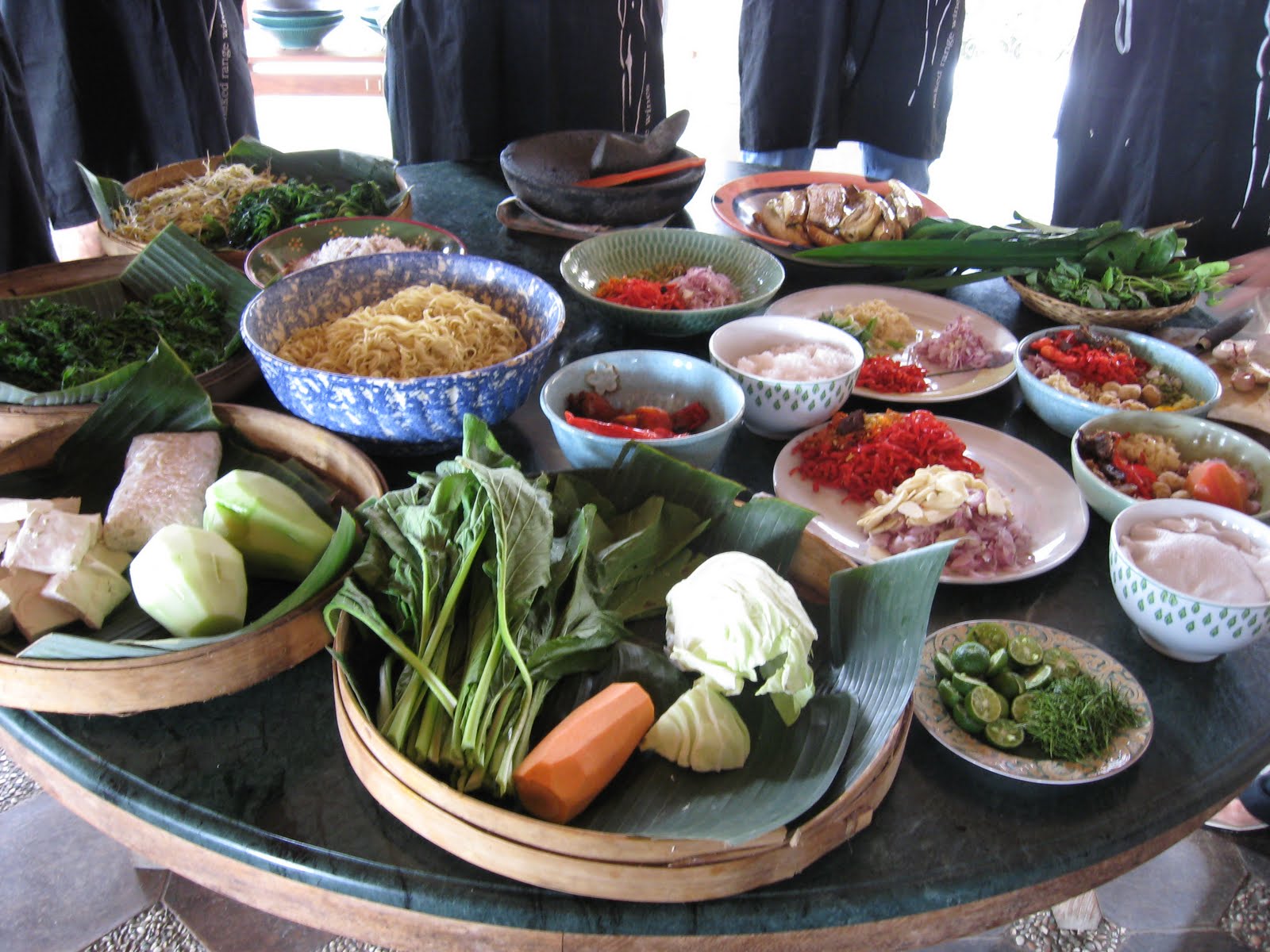
Before I launch into the dishes, I have to outline a little bit about Balinese cuisine in general. The main flavours are simple, fresh and punchy. The following is what I gleaned from the cooking lesson and my 10 days of three course feasting.

Turmeric and different gingers (ie galangal or torch ginger) play a central role and coconut can be found in various forms: fresh flesh, coconut juice, coconut milk, roasted coconut, coconut sambal.


Tiny kaffir limes are used for their juice and the leaves are shredded into salads and spice pastes, as is young lemongrass. Tamarind provides another sour component to many dishes whereas palm sugar has a caramel sweetness and is said to add the magic touch to complete any dish.

Fern shoots
Belacan, or shrimp paste, is used to provide saltiness and my cheeky Balinese teacher was accurate when she said “it smells like hell but tastes like heaven”. Garam (or sea salt) is very mild in Bali and is literally used by the handful rather than the pinch. It has a very elegant flavour which I prize highly. Kecap Manis is the soy sauce of Indonesia, salty and yet thick and sweet also.

In terms of herbs, salam is an aromatic herb that’s used in much the same as European cooking employs bay leaves – although the flavour is much more delicate and bays should never be used as a substitute. Pandan leaves are also used to perfume food, both sweet and savoury, the way vanilla is used in the West.

And one cannot forget the chilli – it plays a huge role in almost all Balinese dishes whether it's included in the cooking or served on the side in a sambal. I learnt that there are three main chillis used: long, red sweet chilli; squat, orangey-green lombok chilli; and then the tiny tabia krinyi which are green birds eye bullets that will knock your socks off.

Unfortunately for my curious food blogging pals the recipes from Casa Luna’s cooking class cannot be reproduced without permission from the school, so while I find out whether I can post one or two of my favourites, I’ll tell you about each of the dishes we learned to cook.


We snacked on these crackers while we prepped our dishes for lunch.

Kare Tempe - Tempeh Curry

Tempeh
in Bali was just so textured and you could see the gorgeous chunky soy beans in the tempeh blocks. In this curry slices of tempeh were paired with sweet choko (chayote) and were flavoured with a gorgeous curry paste made of ginger, galangal, chilli, salam leaves, garlic, coriander seeds, tumeric, candlenut, lemongrass and tamarind. This was fried until fragrant and finished with coconut milk.

Urab Pakis - Fern Shoot Salad

Urab is a wonderful discovery for both Jonas and I. It’s a ridiculously delicious salad that alternates the vegetables but always seems to include the same ‘seasoning’ of shredded, roasted coconut and kaffir lime with sambal goreng – a fried chilli sauce of shallots, chilli, garlic and belacan. In this version they used steamed pakis (fern shoots) which tasted like mild baby spinach but looked delightful with their frilly, curly fronds.

Roasted chilli sambal

Tomatoes and chillies were roasted with garlic then chopped into this spicy condiment.

Sambal Tuwung - Roasted Eggplant Sambal

This refreshing, slippery side dish was made of eggplants roasted with tomato and garlic and then smothered in a sauce of kaffir lime, chilli and palm sugar. They made this with their hands, squishing the tomatoes to create a sauce.

Kuah Ikan - Fish w Lemongrass & Tomato

This dish was deliciously light and fragrant but yet the flavours still invaded my mouth and set up an entire civilisation. Mackerel was cooked with a spice paste of garlic, belacan, tomatoes, palm sugar, shallots, chilli, lemongrass and coriander seeds. The dish is also flavoured with torch ginger, coconut milk, tamarind and salam.

Mee Goreng - Fried Noodles

A simple, fried noodle dish is always a crowd-pleaser.


I was so sad I didn’t get a photo of the Rujak (sweet & sour salad) because it was so wonderful although admittedly not very pretty. Apparently this dish is one of the Balinese women and children’s favourite afternoon snacks. It involves steeping chunks of apple, pineapple, jicama and cucumber – or any similar, juicy fruits or vegetables – in a sauce of chilli, tamarind and palm sugar syrup that’s been pounded in a mortar and pestle. The sweet fruit was perfectly matched with the tart, spicy dressing.

Arak
We got to eat this amazing feast with a glass of coconut and lemongrass juice spiked with Indonesia’s heady booze, arak, distilled from rice, coconut and palm.

The Dadar Unti (green pancakes with coconut) was the best dessert I tasted on my whole holiday and I looked for it everywhere but to no avail. The Casa Luna staff flavoured the batter with pandan leaves and then stuffed the hot crepes with grated coconut that had been caramelised with palm sugar and pandan. It was so divine I ate it all before I took a photo!


I strongly recommend you take a cooking course on any holiday to a new location. It’s such a sensual way to introduce yourself to the new environment, flavours and ingredients and will provide you with a rich knowledge base to explore throughout the remainder of your holiday.

If you’re in Bali, try out Casa Luna’s school or at very least the restaurant!


Tags:

Sunday, 24 June 2007

kelewele - spicy fried plantains

I’ve been wanting to cook plantains for a long time but I’ve never seen them in the grocery store. I guess that’s because I’ve been living in an Italian area for the past six years.

Recently Jonas and I moved into a new area. Initially I was a little sad and reluctant, because I’d moved away from a wonderful supply of ingredients, but now I’m beginning to brighten up.

I’ve discovered new ingredients from cuisines I’ve barely touched upon in the past. A specialist grocery store across the street contains an amazing array of items from the Pacific islands, India, Africa and Latin America. Fufu powder, palm oil, ajowan and tomatillos are just the tip of the iceberg.

And then I saw the plantains . . . a perfect final WHB before Jonas and I embark on our belated honeymoon in Bali, an island of Indonesia.

~~~

I’ve read that this Ghanaian snack is often sold by street vendors in Africa but that many Americans may be familiar with the dish through Kwanzaa cookbooks.

Traditionally kelewele are cubes of plantains, but I just couldn’t resist keeping the banana-like shape to remind me of the exciting source of this starchy snack.

I got this recipe from the www.Ghana.co.uk website, which has a variety of Ghanaian recipes gathered from various online sources.

We did tweak the final step a little, using smoked sea salt rather than regular salt. This added a beautiful earthy, smokiness to the crispy pieces.

Kelewele
Recipe from www.Ghana.co.uk. Serves 2-3 as a side dish or snack.
Ingredients:
2 plantains
1 teaspoon ground ginger
1 teaspoon ground chilli (cayenne)
1 teaspoon freshly grated ginger
1 teaspoon lemon juice
Vegetable oil for deep-frying
Method:
1. Mix the ginger root, chilli and salt then mix with water.
2. Toss together the plantain cubes and spice mixture. Allow to rest for at least 5 minutes.
3. Heat oil in frying pan then fry until golden on both sides, making sure they don’t gather together while frying.
4. Drain on paper towels, sprinkle with sea salt and serve immediately.
Note: some recipes use other spices such as ground cloves, nutmeg, cinnamon, red pepper flakes and water instead of lemon juice.

It’s really important to keep the spice count up as plantains can be a bit bland on their own. They taste of potato with a slight hint of banana.

Plantains are very starchy fruit which are used more like a vegetable. They must be cooked before being eaten and are low in sugar content, although I suppose a black plantain (at its ripest stage) may be eaten raw.

It seems that green plantains are best for savoury dishes but when they get a little riper you can use them for desserts too.

Green plantains are very hard to peel and I used a potato peeler to get into the starchy flesh. In fact it’s so starchy my hands were coated with sticky starch even after washing.

Apparently they come from tropical South East Asia, particularly the Malay Archipelago, but they feature heavily in the diets of the Caribbean and west Africa. There they use plantains the way Europeans use potatoes: they can be fried, boiled, mashed or baked.

In Vietnam and Laos the plantain flowers are used to make salads and soups and the large leaves can be used as plates or wraps when cooking food. As the plant will only fruit once, after the harvest the stalk can be peeled to reveal a soft shoot which is also eaten.

This Weekend Herb Blogging is hosted by Astrid from Paulchen's Food Blog. Check out her site to see what's happening in the world of herbal cooking.

See you all again in two weeks!

References
http://www.grabemsnacks.com/what-is-a-plantain.html
http://en.wikipedia.org/wiki/Plantains


Tags:

Wednesday, 20 June 2007

mxmo crème de la crème: round-up

Hosting this event was an interesting experience for me. I knew this theme would be a challenge – I’ve read from various industry sources that a serious mixologist wouldn’t touch cream liqueurs – which is why I provided the cream escape clause, but I was kind of surprised to learn two things:
1. that people don’t realise quite how many cream liqueurs there are out there
2. that people don’t reconcile cream liqueurs with summer drinks

Most of the MxMo gang are from the northern hemisphere, currently experiencing summer, and I noticed that many commented on a reluctance to use dairy in the heat. Fair enough.

So this theme probably wasn’t the most seasonally thought out: apologies for that!

Those of us in the southern hemisphere are only too painfully aware how frustrating it is to have sorbet and outdoor dining themes when it’s 15’C (59’F) and raining! I hope I didn't inflict dairy overload on those in sweltering heat.

Oh the woes of globalisation!

Despite the seasonal complexities, I was pleasantly surprised to see such a great turnout and some really imaginative drinks. Cream was by far the most popular theme ingredient, but soy cream, coconut cream and creamy condensed milk all made an appearance alongside a variety of creamy liqueurs.

So without further ado:

Coconut Margaritas
Mia from Nosh (Munich, Germany) was inspired by a recent book about paddling through the Pacific so she decided to recreate her own deserted Tongan beach with this delicious cocktail. Roasted shredded coconut garnished the rim while Coco Lopez (coconut cream and sugar cane), lime juice, tequila and Cointreau blended perfectly in the margarita bowl.

The Chasian Orgasm
With a name like this, Robert from Explore the Pour was always going to turn heads. His feature ingredient was Voyant Chai Cream Liqueur. He describes the flavour as quite sweet with an initial rum entry and a spicy chai palate. His orgasmic cocktail included Voyant Chai Cream Liqueur, Kahlua and Amaretto. The ingredients are shaken then poured over ice into an old fashioned glass and garnished with a cinnamon quill.

Vanilla Nut Rumtini
Chelsea from Bon Vivant (Colorado, USA) set out to make a summer cream-based drink that would entice the drinker back for seconds. The results saw Dooley’s Toffee Liqueur (yay, another cream liqueur), Frangelico and Jamaican rum shaken with ice and served up in a martini glass.

Crème Brûlée Cocktail
Darcy from The Art of Drink (Ontario, Canada) liquefies one of the world’s favourite desserts. Vanilla rum, heavy cream and Advocaat are shaken vigorously then strained into a martini glass. Dark caramel syrup is drizzled on the surface, satisfying both tradition and the drinker’s desire for pure indulgence.

Deep and Dark
Mysterious Mr H. from Paragraph One (Virginia, USA) overcame his aversion to sweet drinks and chocolate in this MxMo challenge. Carolan's Irish Cream, white Crème de Cacao and chilled espresso were stirred then strained into a lowball before being topped with Bell's Kalamazoo Stout. That’s one dark horse.

Lady Rebel Cocktail
Craig aka Dr Bamboo recently acquired a 1959 edition bartending guide that contained this classy drink with a kick. Bourbon, apricot brandy, white crème de cacao, heavy cream and grenadine are shaken with ice and strained to produce a frothy, pink cocktail.

Coco Blanco Dave from Dave’s Drinks came up with the clever name and this tasty cocktail. It’s based on Barceló, a new cream liqueur made from Dominican aged rum aged. The cocktail blends Barceló ice and coconut cream which is then served in a wide glass with an Amaretto float. This white (blanco) drink containing coconut (coco), is also the name of a native bird in Santo Domingo, where Barceló is made. Much too clever Dave.

Fizz a la Violette
Paul from The Cocktail Chronicles (Seattle, USA) created his own floral fizzy concoction. Gin, lime and lemon juices, crème de violette, cream, egg white and sugar syrup are shaken strenuously until gorgeous foam appears. Although Paul claims the drink was more gray than violet, his initial apprehension eased when the cream balanced out the potentially dominate flavour of violet.

Orange Chocolate Ball
Gabriel from Cocktail Nerd (Tulsa, OK, USA), took this challenge head on since he’s not too keen on cream liqueurs. For someone uninspired by the theme, Gabriel turned a Terry’s Chocolate Orange into a delectable cocktail using espresso, Gran Gala, Amarula and Godiva chocolate liqueur. These are shaken on ice then strained into a chilled glass. And don’t forget the orange twist as a garnish!

Rose Fizz
Seamus from bunnyhugs (Auckland, New Zealand) aimed for a “refreshing palate cleanser” to balance out the sweeter drinks he knew would grace this months MxMo. He used rose flavoured Hendricks gin, rosewater and grenadine in a traditional Ramos Gin Fizz recipe that involved a whole lot of scientifically measured shaking. Check his post which also includes a Ramos Gin Fizz as well as promises of an orgeat based Almond Fizz to come.

The Straight B
The Bottle Gang (Twin Cities, USA) put their heads together to come up with this yummy cocktail that resonates with “mellow blackberry”. The ingredients are simple Bs: B&B (mixture of Benedictine and Brandy), Bailey's Irish Cream and blackberry brandy. The combination is served in a lowball over ice and sounds dreamy.

White Russian
Anita from Married With Dinner (San Francisco, USA) paid homage to the biggest lazy bum in celluloid, the Big Lebowski, with her indulgent take on the White Russian. The Dude was seen sipping these beauties throughout the film and Anita’s version uses cream with the traditional Kahlua and vodka mix.

White Mink
Marleigh from Sloshed! (Los Angeles, USA) is a vegan, so this theme just sucked. Despite the set back, she forged ahead using brandy, Galliano, white crème de cacao, soy cream and vanilla rice cream to make a creamy dessert drink that vegans can indulge. Unfortunately she wasn’t thrilled with the results and felt like it needed something more. Work in progress.

Ramos Rye Fizz
Sarah from Avenue Food (Queens, NY, USA) wanted to make a traditional Ramos Gin Fizz but discovered she was out of gin. Hubby Brian came to the rescue with his improvised cocktail using rye instead. They used powdered sugar, orange bitters and the usual egg white, cream, soda, acidic lemon juice and a whole lot of shaking. Sarah declared it a triumph “mellow and rich with a pronounced rye flavour”.

Carrot Punch
Sarina Nicole from TriniGourmet (Port of Spain, Trinidad & Tobago) brings a unique angle with condensed milk, carrot juice, bitters (Angostura of course!) and beer. She recommends serving this punch ice cold over cracked ice and describes the flavour as light and fruity. I must say I am intrigued!

Morganthaler’s Irish Cream
Jeffrey from the self titled Jeffrey Morganthaler (Eugene, Oregon, USA) gets extra points for planning and dedication when he made his very own Irish Cream. He amalgamated a variety of online sources to suit his tastes then charged ahead without fear. So what goes into Morganthaler’s Irish Cream? Why half-and-half, sweetened condensed milk, Irish whiskey (of course!), espresso, chocolate syrup, vanilla extract and almond extract. This is chilled and “should” keep itself together for a month (although please don’t hold Jeffrey liable).

White Winter
Haalo from Cook Almost Anything At Least Once (Melbourne, Australia) used this cream theme to find a cocktail suitable for the chilly winter weather. Drambuie Cream, vodka and Kahlua are shaken vigorously then served up a martini glass.

And if the above contributions weren’t enough, the team over at eGullet came up with their own creamy inventions:
* bostonapothecary made two: the Maillard Fizz (chocolate cream liqueur, rye and egg white) and the Kingston Snake Charmer (Irish moss cream, applejack and apry/creole shrub)
* Leo Engal came up with the Kalidoor which, like Advocaat, gets its creaminess from egg yolks, Benedictine, raspberry syrup and champagne.
* Dan Ryan created a grasshopper variation called The Cavalletta using Branca Mint instead of crème de menthe.
* eje revamped the Barbary Coast Cocktail using gin, whisky, crème de cacao and cream on ice.

Creamsicle Martini
Gwen from Intoxicated Zodiac was running a little late with her entry for MxMo. Better late than never! Her Leo inspired cocktail uses freshly squeezed orange, soy cream, sugar syrup and vanilla infused whiskey. Hear the lion roar!

And last is my own cocktail, The Scottish Elephant. I used African fruit based Amarula cream and Shetland’s very own Jago Vanilla Vodka Cream. These were blended with milk, banana and ice to make a decadent dessert shake.

Phew! That’s the round-up!

Thanks for letting me host this week and thanks to everyone for their contributions. I hope some of you have been inspired to try something new. Isn’t that what MxMo is all about?

Tags:
Related Posts with Thumbnails